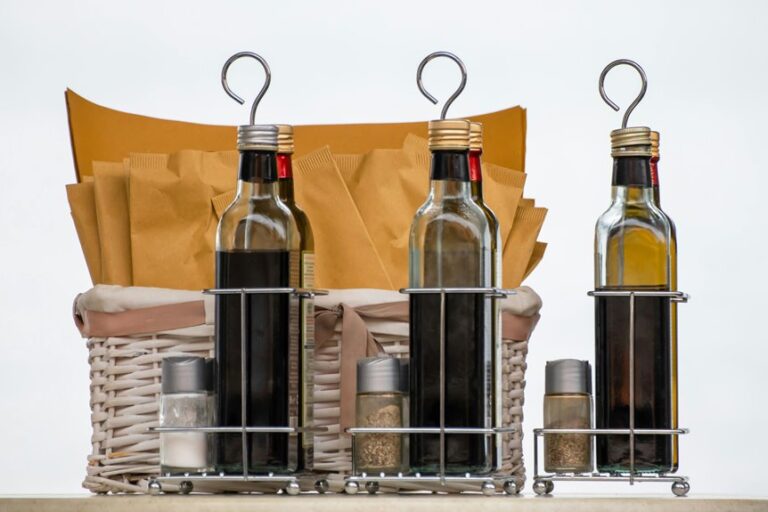
Vinegar reacts with a surprising mix of everyday items. It dissolves limescale, weakens eggshells, and can strip some rust and tarnish. It also bubbles hard with baking soda and can affect fabrics and cookware. Here’s a quick look at nine common household reactions.
What Vinegar Dissolves Best?
Vinegar dissolves best on calcium carbonate-based materials, especially eggshells, because its acetic acid reacts directly with the mineral structure and releases carbon dioxide gas. You’ll see immediate bubbling, which signals fast acid-mineral contact.
This same chemistry can soften thin mineral deposits on surfaces and weaken certain shell-like residues. It doesn’t act equally on all materials, though: dense polymers, glass, and many metals resist this reaction.
On organic matter, vinegar might only alter texture or color; fruit skins can wrinkle or lose surface integrity, but they don’t truly dissolve in the same way. Should you’re comparing household targets, look for carbonate content initially. That’s the key predictor of breakdown, and it helps you choose where vinegar works efficiently and where it won’t.
How Vinegar Removes Limescale
Limescale is one of vinegar’s most reliable targets because it’s mostly calcium carbonate, the same mineral found in eggshells, so acetic acid can break it down through the same acid-base reaction. You’ll see scale buildup removal work best when vinegar stays in contact with the deposit long enough to penetrate the crust.
- Envision cloudy white rings on a kettle.
- Visualize a faucet tip sealed with chalky grit.
- Envision a showerhead with narrowed jets.
- See a glass surface losing its dull haze.
As the acid reacts, you get mineral deposit softening, then gradual loosening, then wipe-away removal. For your shared household routine, use soaked cloths or brief soaks, then rinse thoroughly. You’re not alone in this; vinegar gives you a reliable, low-cost descaling tool.
Why Vinegar Fizzes With Baking Soda
When you mix vinegar with baking soda, you combine an acid with a base, so a neutralization reaction starts immediately. You see fizzing because the reaction releases carbon dioxide gas. That gas escapes as bubbles, which makes the mixture foam and surge.
Acid Meets Base
Because vinegar is acetic acid with a low pH of about 2 to 3, it reacts quickly with baking soda, or sodium bicarbonate, which is mildly basic. You’re watching acid neutralization in action, where each proton transfer shifts the solution toward a nearer-neutral state.
In your kitchen, pH indicators would show that shift through changing color, though the change is subtle in this mix. The reaction feels familiar because it’s safe, predictable, and easy to share with others who like simple chemistry.
- A clear glass.
- White vinegar pooling at the bottom.
- Fine baking soda grains sinking and dispersing.
- A brief, bright foam rising at the surface.
You can use this setup to compare acidity, measure reaction speed, and explain why bases counter acids.
Carbon Dioxide Release
As the acetic acid in vinegar meets sodium bicarbonate, the reaction rapidly generates carbon dioxide gas, and you see it escape as fine bubbles and foam.
You’re watching gas release from a simple acid-base neutralization, where sodium acetate and water remain in solution while CO2 leaves the liquid phase.
That gas expansion drives bubble formation, because dissolved gas nucleates on tiny surface defects and grows into visible foam.
When you’ve ever felt unsure about the chemistry, this is the part that makes it tangible: the fizz tells you the reaction’s moving fast and efficiently.
For a shared kitchen experiment, that’s the key signal—your mixture isn’t just changing; it’s venting pressure through carbon dioxide release.
What Happens to Eggshells in Vinegar?
When you place an eggshell in vinegar, the acetic acid attacks its calcium carbonate structure.
You’ll see immediate bubbling as carbon dioxide forms, and the shell begins to thin and weaken.
Over time, the mineral layer breaks down, leaving the flexible membrane behind.
Eggshell Composition
An eggshell is mostly calcium carbonate, a mineral that vinegar’s acetic acid attacks directly. You can visualize a dense shell turning porous as the surface minerals soften, while the protective membrane stays intact beneath. That layered structure matters because it lets you track dissolution without losing the egg’s form.
- A white shell edge
- Tiny pits widening
- A slick inner membrane
- A translucent egg core
As you watch, the shell thins unevenly, and the egg starts to look ghostlike after rinsing. You’re seeing acid-base chemistry at work, and you’re part of a familiar kitchen experiment that reveals how minerals behave in mild acid. The result isn’t magic; it’s controlled removal of calcium carbonate.
Vinegar Reaction
Vinegar’s acetic acid reacts with the calcium carbonate in an eggshell, and you can see the process start almost immediately as tiny carbon dioxide bubbles form on the surface. You’re observing household chemistry in action, where vinegar acidity drives an acid-base exchange that weakens the mineral shell.
| Stage | Observation | Meaning |
|---|---|---|
| 0 min | Bubbles appear | Gas release starts |
| 5 min | Surface dulls | Mineral loss begins |
| 1 hr | Shell softens | Structure weakens |
| 12 hr | More bubbles | Reaction continues |
| 24 hr | Shell thins | Membrane remains |
You can track the change as the shell steadily loses rigidity, and your kitchen becomes a small, shared lab for careful observation.
Shell Breakdown
As vinegar penetrates the eggshell, its acetic acid reacts with the shell’s calcium carbonate and releases carbon dioxide gas, which you’ll see as immediate bubbling on the surface. You’re watching an acid-base reaction that steadily erodes the mineral layer. Within hours, the shell texture changes from rough and chalky to thin and soft, and you can sense the membrane flexibility after soaking. For a clear mental model, imagine:
- white foam clinging to the shell
- a dimming, translucent egg beneath
- fragile fragments lifting away under rinse water
- a rubbery membrane holding shape
After about 24 hours, most of the shell’s calcium carbonate is gone, and you’re left with a pliable membrane and visible yolk. This is the same process many learners observe together.
How Vinegar Removes Rust and Tarnish
Whence vinegar meets rust or tarnish, its acetic acid begins dissolving the mineral and oxide layers that dull metal surfaces. You can use this action for effective rust removal on iron and mild tarnish cleaning on copper or brass. The acid loosens iron oxide and metal sulfides, so you’ll see discoloration fade as the surface reactivates.
Soak the item briefly, then scrub with a nonabrasive pad to lift the softened residue. Rinse thoroughly and dry at once, because leftover moisture can trigger fresh corrosion. For delicate pieces, test a small area initially and keep exposure short.
Whenever you work this way, you join a practical routine that respects both chemistry and material limits.
How Vinegar Affects Fabrics and Stains
On fabrics, vinegar works less through “cleaning” in the broad sense than through shifting stain chemistry and surface pH. You can use it as stain pretreatment on washable cotton or blends, where mild acetic acid helps loosen alkaline residues, deodorize fibers, and lift some mineral-based marks. Test initially, because fabric color fading can happen on dyed, delicate, or acetate materials.
- Depict a collar ring softening at the edge.
- Envision a coffee splash breaking apart in the weave.
- See detergent residue releasing from towel loops.
- Envision a sweat stain losing its sharp outline.
Apply diluted vinegar, wait briefly, then rinse and launder. Don’t rely on it for protein stains, and don’t soak wool or silk.
How Vinegar Reacts With Aluminum and Copper
Vinegar reacts differently with aluminum and copper because both metals form surface oxides that acetic acid can disrupt.
You’ll see aluminum oxidation speed up as vinegar strips the thin protective film, then dulls the metal and can release small amounts of hydrogen.
Copper behaves more slowly: vinegar softens the copper patina, the green or brown layer that shields the surface, and might expose brighter metal underneath.
In your kitchen, that means vinegar can clean tarnish, but it doesn’t treat both metals the same.
Aluminum needs limited contact time, while copper tolerates brief exposure better, though repeated soaking still changes its finish.
In case you’re comparing results with your group, you’ll notice acidity, time, and surface condition control the result, not the metal alone.
What You Shouldn’t Mix With Vinegar
After looking at how vinegar alters metal surfaces, you also need to know where its acidity becomes unsafe or counterproductive. You shouldn’t mix vinegar with:
- Bleach, because bleach hazards can release toxic chlorine gas.
- Hydrogen peroxide, because peroxide risks include corrosive peracetic acid.
- Castile soap, because the acid neutralizes the cleanser and weakens performance.
- Strong heat or concentrated solutions, because vapors rise and irritation increases.
You fit into the smart, cautious group whenever you respect these limits. Vinegar works well with baking soda or dish soap, but only whenever you want a controlled reaction, not a dangerous one. Keep the chemistry simple, and you’ll avoid unnecessary exposure, preserve cleaning efficiency, and protect everyone nearby.
How to Test Vinegar Reactions Safely at Home
To test vinegar reactions safely at home, you should start with small amounts, simple materials, and good ventilation. Set up a safe setup using a clear cup, measuring spoon, and paper towels.
Add vinegar initially, then introduce one test material, such as baking soda, eggshell, or salt. Stay back while it reacts, because gas release can foam quickly. Never combine vinegar with bleach, peroxide, or heat.
Wear gloves and eye protection provided you use stronger than 20% vinegar. Record each result in an observation log, noting bubbling rate, foam height, color change, and residue. This method helps you compare reactions precisely and join other careful experimenters who value safety, consistency, and evidence-based observation at home.
Frequently Asked Questions
Can Vinegar Dissolve Chalk Without Damaging Nearby Surfaces?
Yes, vinegar can dissolve chalk, but nearby surfaces may be affected if you are not careful. Start with a small test on the chalk, shield the surrounding area, and apply the vinegar only where needed while watching the surface closely.
How Long Does Vinegar Take to Soften a Seashell?
You can usually see the shell start changing in a few hours, while 12 to 24 hours in vinegar will soften most seashells. Tough shells take longer, so check them often as the acid slowly breaks them down.
Does Vinegar React Differently With White and Apple Cider Varieties?
If the acidity of white vinegar and apple cider vinegar matches, the reactions will be almost the same. Any difference usually comes from the cider vinegar’s sugars, flavor compounds, or color rather than the acid itself.
Why Does Vinegar Smell Stronger When Heated?
Heat makes vinegar smell stronger because warming it lets more acetic acid vaporize into the air. The increased amount of vapor reaches your nose more quickly, so the sharp smell becomes easier to notice.
Can Vinegar Dissolve Soap Scum in Hard-Water Bathrooms?
Yes, vinegar can help loosen soap scum in hard water bathrooms. A 5 percent solution helps break down mineral buildup, and soap residue makes up much of bathroom grime, so cleaning can be more efficient and the room can feel fresher.