
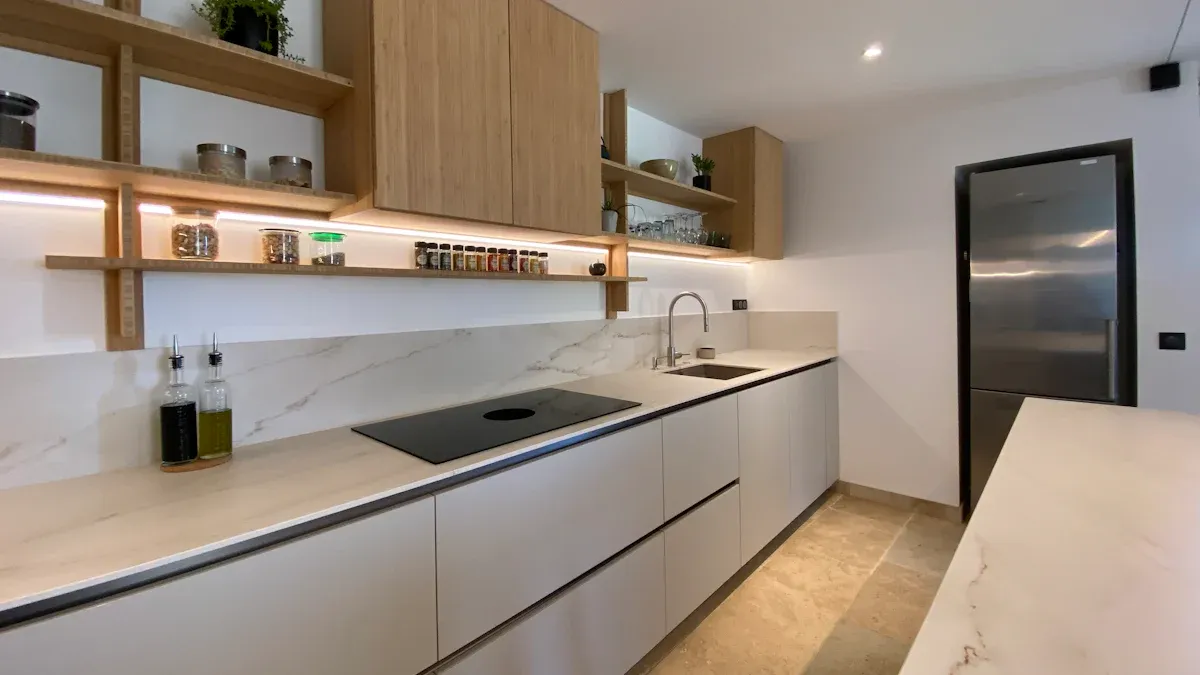
An efficient kitchen is all about making your cooking experience smoother and more enjoyable. It helps you save time and energy while preparing meals. When you optimize your space, tools, and organization, you can focus more on creating delicious dishes. Studies show that having an efficient kitchen allows you to dedicate more time to meal preparation, leading to healthier eating habits. So, let’s transform your cooking space into an Efficient Home Kitchen that inspires creativity and fun!
Key Takeaways
Measure your kitchen accurately to visualize layout options and optimize space.
Choose the right kitchen layout based on your cooking habits to enhance efficiency.
Equip your kitchen with essential tools like non-stick pans and saucepans for smoother meal prep.
Organize your kitchen into functional zones to streamline cooking processes and reduce time spent in the kitchen.
Establish a regular cleaning routine to maintain a healthy cooking environment and promote efficiency.
Space Assessment
Measuring Your Kitchen
Before diving into your kitchen renovation, you need to measure your space accurately. Start by grabbing a tape measure and jotting down the dimensions of your kitchen. Here’s a quick checklist to help you:
Measure the length and width of your kitchen.
Note the height of your ceilings.
Record the dimensions of windows and doors.
Don’t forget to measure any built-in appliances.
The average kitchen size in American homes ranges from 150 to 175 square feet. If you live in a single-story home, your kitchen might be around 151 square feet. Multi-story homes usually have kitchens averaging 174 square feet. Larger homes often allocate about 191 square feet for kitchens, while suburban homes can exceed 200 square feet. Knowing these measurements helps you visualize your layout options.
Evaluating Layout Options
Once you have your measurements, it’s time to think about the best kitchen layouts for your space. Different layouts can significantly impact your cooking experience. Here are some popular options to consider:
U-shaped kitchen: This layout offers a balance of separation and openness, providing ample storage and customization options.
Island kitchen: A central freestanding island enhances workspace and social interaction, perfect for larger or open-plan spaces.
Galley kitchen: Ideal for smaller areas, this layout maximizes efficiency by following the kitchen work triangle, ensuring minimal movement and high productivity.
When choosing a layout, think about your cooking habits. Do you often entertain guests? An island kitchen might be perfect for you. If you prefer a streamlined approach, a galley kitchen could be the way to go. Remember, your kitchen should reflect your personal cooking experiences and needs.
Tip: Consider accessibility when planning your layout. Ensure that your design accommodates everyone, including those with mobility challenges. This might mean adjusting countertop heights or ensuring easy access to cabinets.
By measuring your kitchen and evaluating layout options, you set the foundation for an efficient cooking space that works for you.
Must-Have Tools
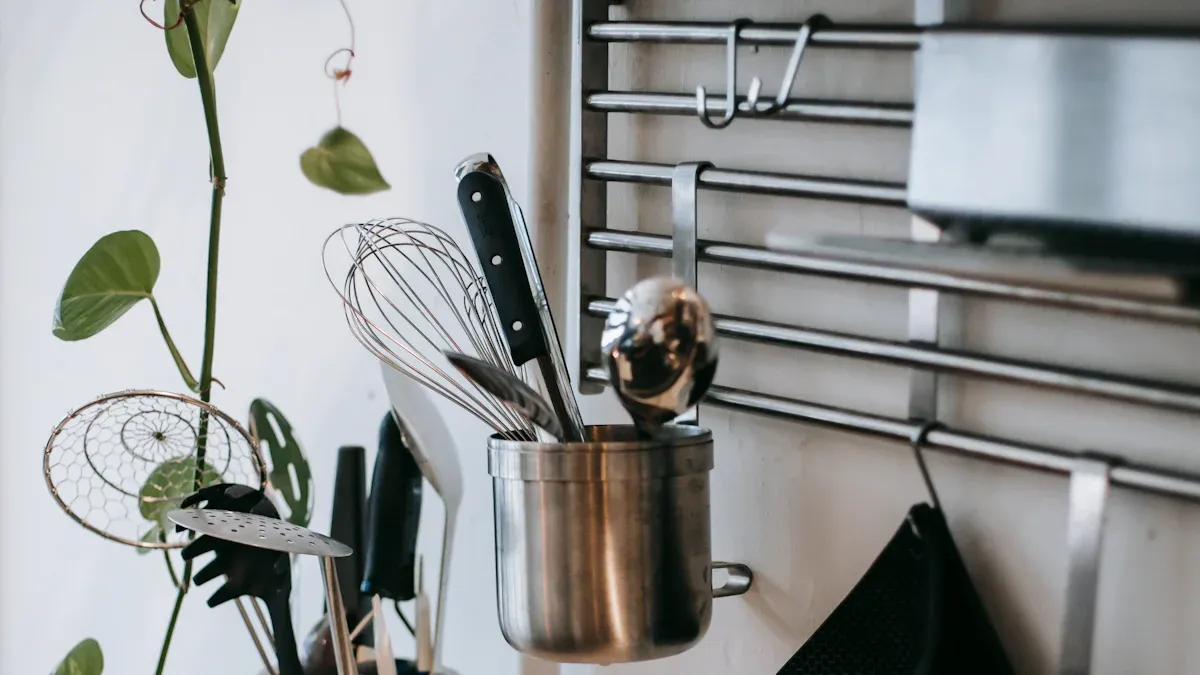
Essential Cooking Tools
To create an efficient kitchen, you need the right tools. Here’s a list of five essential cooking tools that culinary experts recommend:
Non-Stick Frying Pan: This versatile pan is perfect for cooking breakfast items like eggs and pancakes. It also works well for searing and sautéing.
Saucepan: Ideal for cooking with liquids, a saucepan is great for boiling pasta or simmering sauces.
Stock Pot: If you love making soups and stews, a stock pot is necessary. It ensures even heating and allows you to prepare larger batches.
Sheet Pans: These pans are useful for roasting and baking. Plus, they make clean-up a breeze!
Glass Baking Dish: Perfect for casseroles, this dish is microwave-safe, making it easy to pre-cook your meals.
Equipping your kitchen with these tools transforms meal preparation. You’ll find that they enable you to create nutritious and flavorful dishes while saving time and effort.
Key Appliances for Efficiency
Now, let’s talk about appliances that enhance your kitchen’s functionality. Choosing the right appliances can significantly improve your cooking experience. Here are some key appliances to consider:
Tip: Electric ranges tend to boil water faster and often bake more evenly, which enhances overall cooking efficiency.
Induction cooktops are another fantastic option. They utilize an electromagnetic field to cook food efficiently and evenly. You’ll appreciate their quick boiling times, safety features, and ease of cleaning.
Here’s a quick comparison of energy-efficient appliances:
Appliance Type | Energy Efficiency (%) | Annual Energy Consumption (kWh) | Water Savings (gallons) |
|---|---|---|---|
Induction Cooktops | 84 | N/A | N/A |
Traditional Electric | 74 | N/A | N/A |
Gas Cooktops | 40 | N/A | N/A |
ENERGY STAR Refrigerator | N/A | 300-500 | N/A |
ENERGY STAR Dishwasher | N/A | N/A | 3,870 |
Investing in these appliances not only boosts your kitchen’s efficiency but also contributes to energy savings. With smart cooking technologies, you can enhance control and reduce energy costs.
By selecting the right tools and appliances, you create a kitchen that works for you, making cooking a more enjoyable experience.
Functional Kitchen Design
Understanding Kitchen Zones
Creating a functional kitchen design starts with understanding kitchen zones. Each zone serves a specific purpose, making your cooking process smoother and more efficient. Here’s a breakdown of the essential kitchen zones:
Zone | Function |
|---|---|
Cooking Zone | Located near the service area for swift food delivery. |
Prep Zone | Positioned close to storage for easy access to ingredients. |
Storage Zone | Contains pantry and refrigerator for organized ingredient access. |
Cleaning Zone | Equipped with dishwasher and trash can for efficient cleanup. |
Landing Zone | Provides counter space for placing items, minimizing movement. |
By organizing your kitchen into these zones, you can reduce cooking time and increase productivity. The ‘golden triangle’—the ideal positioning of the refrigerator, sink, and stove—enhances workflow by reducing walking distances. This layout allows you to move efficiently between the most frequently used areas, minimizing unnecessary movements.
Tip: When designing your kitchen, think about how you cook. If you often prepare large meals, position your prep zone near the sink and stove. This setup streamlines your cooking process and makes meal prep a breeze!
Streamlining Cooking Processes
Streamlining your cooking processes can save you a significant amount of time. In fact, strategic kitchen design and workflow optimization can save up to 62% of your weekly cooking time! This not only reduces stress but also enhances your overall cooking experience.
To achieve this, consider the following strategies:
Utilize the Work Triangle: The work triangle concept enhances workflow by creating an efficient movement pattern between cooking, cleaning, and food storage areas. Developed in the 1940s, this design principle helps you minimize physical effort while preparing meals. Researchers at the University of Illinois found that organizing the kitchen in a triangular layout significantly reduces time and effort in meal preparation and cleanup.
Customize Your Layout: Assess your cooking habits, family needs, and lifestyle choices to set clear design goals. Different kitchen layouts, like L-Shape, U-Shape, or Island layouts, cater to various cooking styles and room dimensions. For instance, if you love entertaining, an island kitchen design can provide extra space for guests to gather while you cook.
Incorporate Ergonomic Design: Proper lighting and shock-absorbing flooring can improve visibility and reduce physical strain. This makes your kitchen a safer and more enjoyable space to work in. Additionally, consider features like pull-out pantry racks and adjustable shelving to enhance accessibility.
By focusing on these elements, you can create a functional kitchen design that not only meets your needs but also makes cooking a more enjoyable experience.
Organization Strategies
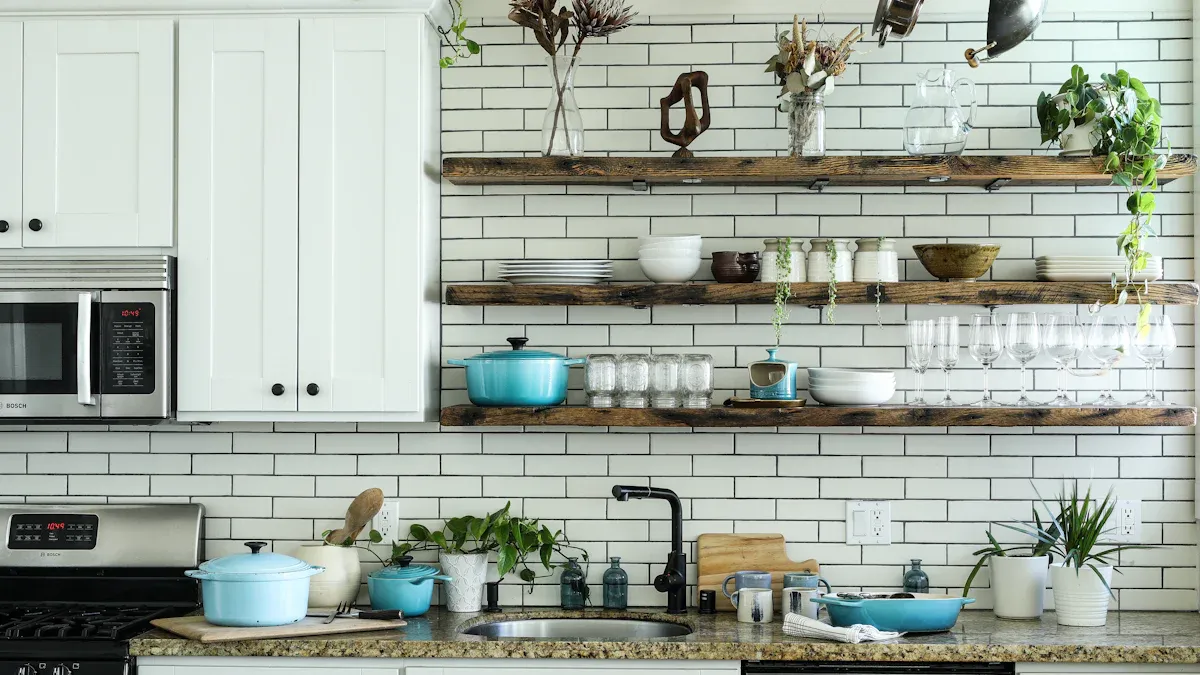
Cabinet and Drawer Organization
Organizing your cabinets and drawers can make a world of difference in your kitchen. Here are some effective methods for maximizing storage:
Method | Description |
|---|---|
Stacking Bins | Use open-front stacking bins to easily access items without needing to unstack them. |
Clear Stacking Drawers | Utilize vertical space in deep cabinets with clear stacking drawers for small items. |
Drawer Organizers | Implement drawer dividers to keep smaller items organized and ensure everything has a dedicated spot. |
Filing Technique | File items upright instead of stacking them flat to see all items at once and avoid re-stacking. |
Riser Shelves | Add riser shelves in cabinets to create additional layers for more organized storage. |
Avoid common mistakes like overfilling drawers or neglecting vertical space. These issues can lead to clutter and make it hard to find what you need. Regularly decluttering your cabinets helps maintain an organized space.
Pantry Management Tips
A well-organized pantry can significantly reduce food waste and improve accessibility. Here are some tips to help you manage your pantry effectively:
Keep food visible and accessible to minimize duplicate purchases.
Plan meals to utilize food before it spoils.
Track expiry dates to ensure timely consumption.
Use the First-In-First-Out method to minimize waste.
The Food and Agriculture Organization (FAO) reports that about one-third of food produced for human consumption is lost or wasted globally. Much of this waste occurs due to poor inventory management. By organizing your pantry, you can help combat this issue and make meal prep quicker and easier.
Tip: Store fresh produce correctly and use airtight containers to maintain food quality. This simple step can extend the shelf life of your ingredients and reduce spoilage.
By implementing these organization strategies, you’ll create a kitchen that not only looks great but also functions efficiently, making your cooking experience more enjoyable.
Maintenance Tips
Regular Cleaning Routines
Keeping your kitchen clean is essential for efficiency and safety. Establishing a regular cleaning routine can help you maintain a healthy cooking environment. Here’s a simple guide to follow:
Frequency | Restaurants | Cafeterias |
|---|---|---|
Daily | Focus on high-touch areas, sanitizing equipment, wiping down surfaces, and cleaning floors. | Sanitize high-touch surfaces, clean floors, and empty trash bins. |
Weekly | Deep clean kitchen appliances, scrub cabinets, and sanitize sinks. | Sanitize food prep areas and deep clean serving lines and equipment. |
Monthly | Inspect ventilation systems, clean behind appliances, and deep-clean fryers. | Clean large appliances and check for buildup behind cooking equipment. |
By sticking to this schedule, you can prevent dirt and grime from building up. A clean kitchen not only looks good but also promotes healthier eating habits and reduces food waste.
Updating Tools and Appliances
Regularly updating your kitchen tools and appliances is just as important as cleaning. Over time, appliances can become less efficient, leading to higher energy bills and potential safety hazards. Here’s a quick look at how often you should consider replacing common kitchen items:
Appliance Type | Recommended Lifespan |
|---|---|
Gas Stoves | Every 15 years |
Blenders and Toasters | 5–6 years |
Major Appliances | 7–8 years |
Refrigerators | 10–12 years |
Stoves and Ovens | 10–15 years |
Dishwashers | 10–13 years |
Microwaves | Around 10 years |
Coffee Makers | After 5 years |
As appliances age, they may show signs like excessive energy consumption, overheating, or food spoiling sooner than expected. Keeping an eye on these issues can help you decide when it’s time for an upgrade.
By maintaining a clean kitchen and updating your tools regularly, you create a space that’s not only efficient but also enjoyable to cook in.
Creating an efficient kitchen can transform your cooking experience. By measuring your space, selecting the right tools, and organizing effectively, you can make meal prep enjoyable and stress-free. Here are some actionable steps to consider:
Plan your schedule and allocate time for unexpected delays.
Organize tasks based on available tools to enhance efficiency.
Keep your kitchen tidy to lower stress and improve focus.
An efficient kitchen not only encourages more home-cooked meals but also promotes a healthier lifestyle. So, take these steps today and enjoy the benefits of a well-organized cooking space! 🍽️
FAQ
What should I consider when planning my kitchen remodel?
When planning your kitchen remodel, think about your cooking habits, available space, and desired layout. Create a solid plan that includes a realistic budget to ensure you stay on track.
How can I maximize storage in a small kitchen?
Use multi-functional kitchen islands and vertical storage solutions. Consider stacking bins and drawer organizers to keep everything accessible without cluttering your space.
What materials are best for kitchen countertops?
Choose durable materials like granite, quartz, or laminate. Each offers unique benefits, so consider your budget and maintenance preferences when selecting the right one for your kitchen.
How can I create a budget for my kitchen renovation?
Start by listing all potential costs, including materials, labor, and appliances. Set a realistic budget that allows for unexpected expenses, ensuring you don’t overspend during your remodel.
Why is an efficient kitchen important?
An efficient kitchen saves you time and energy while cooking. It enhances your cooking experience, encourages healthier eating habits, and adds value to your home.