
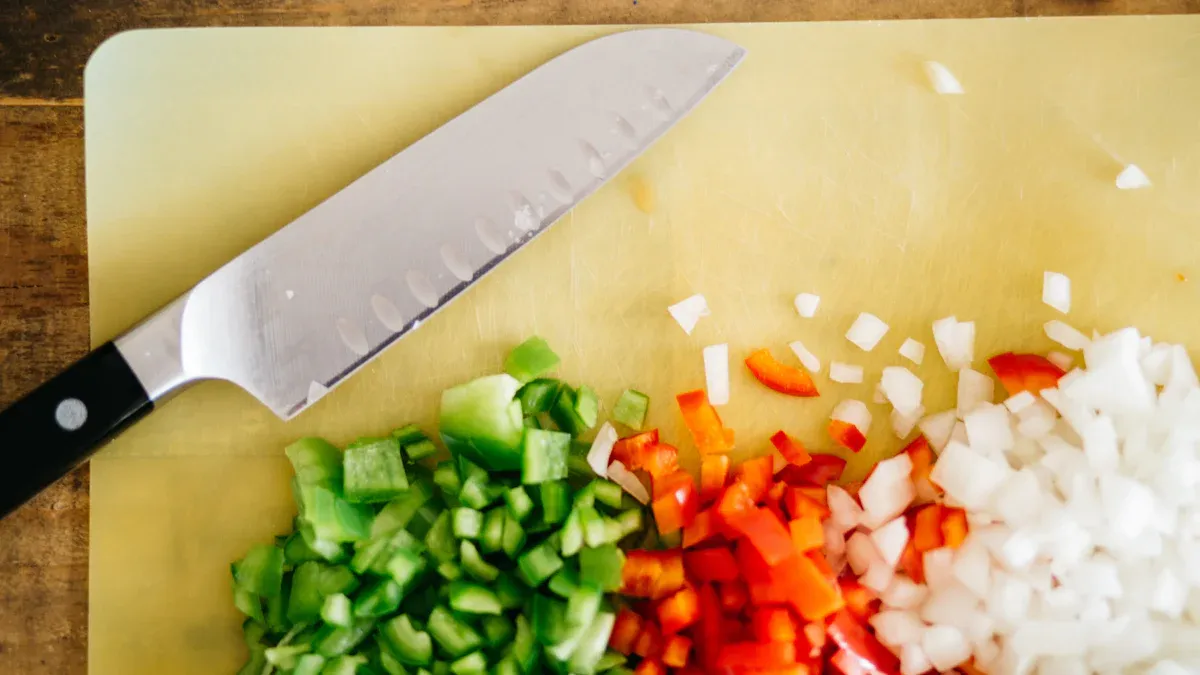
Chopping vegetables is essential for quick meal preparation. It boosts your cooking efficiency and makes the process enjoyable. However, you need to balance speed with safety precautions. Mastering techniques and using the right tools will help you chop vegetables effectively and keep your kitchen safe.
Key Takeaways
Use sharp knives for better control and to reduce the risk of slipping.
Practice the Claw Grip Technique to keep your fingers safe while chopping.
Maintain a stable cutting surface to prevent accidents and enhance efficiency.
Techniques to Cut Vegetables
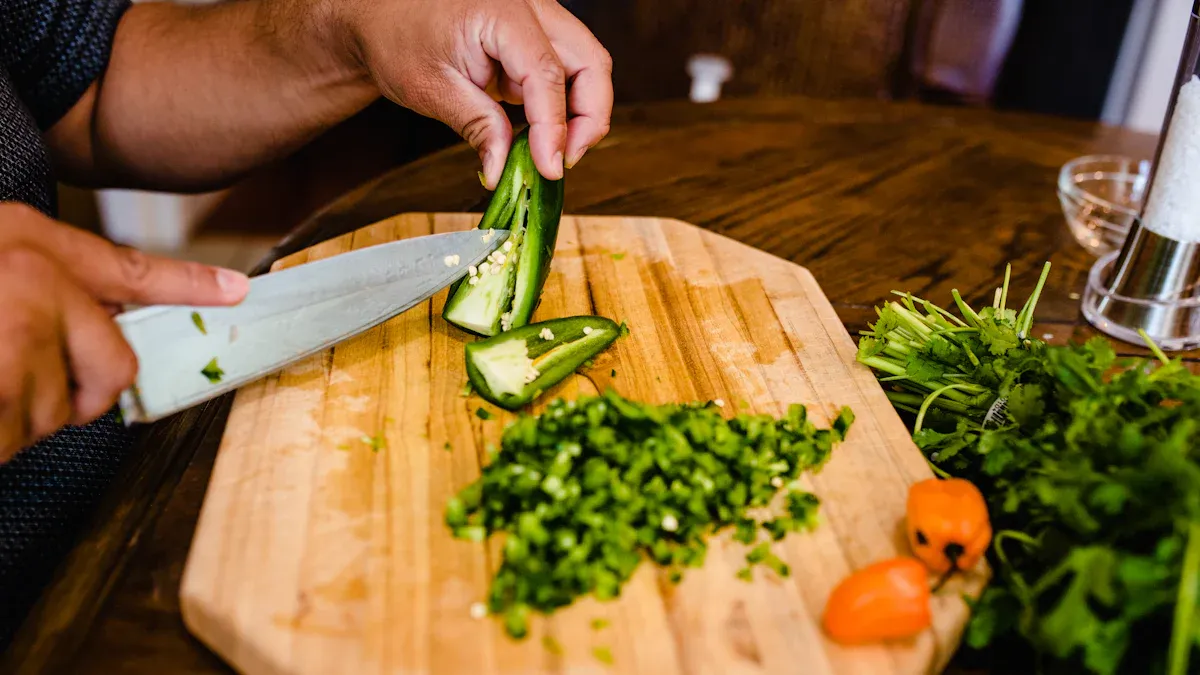
When it comes to cutting vegetables, mastering the right techniques can make all the difference. Not only do these methods enhance your knife skills, but they also ensure safety and efficiency in the kitchen. Let’s dive into some essential techniques you can use.
Rock-Chop and Slicing
The rock-chop technique is a favorite among chefs for its speed and efficiency. Here’s how it works:
Grip your knife firmly: Hold the handle with one hand while using your other hand to guide the food.
Use a rocking motion: Keep the tip of the knife on the cutting board and rock the blade back and forth. This motion allows you to cut through vegetables quickly.
Slicing is another fundamental technique. It involves cutting vegetables into thin, even pieces. Here’s why it’s important:
Sharp knives are essential: A sharp knife requires less force, which minimizes the risk of slipping.
Claw Grip Technique: This technique keeps your fingers safe. Tuck your fingertips inward while holding the vegetable, allowing the knife to glide smoothly along the food.
Dicing and Julienne Techniques
Dicing and julienne are two popular cutting methods that add variety to your dishes.
Dicing involves cutting vegetables into small, uniform cubes. Here’s how to do it:
Cut food into even slices.
Stack 2 or 3 slices on the cutting board, then cut them lengthwise into thick sticks.
Holding the sticks together with your claw hand, cut the sticks crosswise into dice.
For example, when dicing an onion, follow these steps:
Cut off the root end, leaving the root intact, and remove the stem end.
Cut the onion in half from root to stem and remove the outer layer of skin.
Lay the onion cut side down and make horizontal cuts at 1/4-inch intervals.
Turn the knife perpendicular and cut through the onion to create diced pieces.
Julienne is a technique that creates long, thin strips. It’s often used for vegetables like carrots and bell peppers. Here’s what you need to know:
Julienning is also known as French cutting.
It’s perfect for stir-fries or garnishes, ensuring even cooking.
To julienne a carrot, simply cut it into thin slices, then stack those slices and cut them into thin strips. This method not only looks great but also cooks evenly.
Tools for Safe Vegetable Chopping
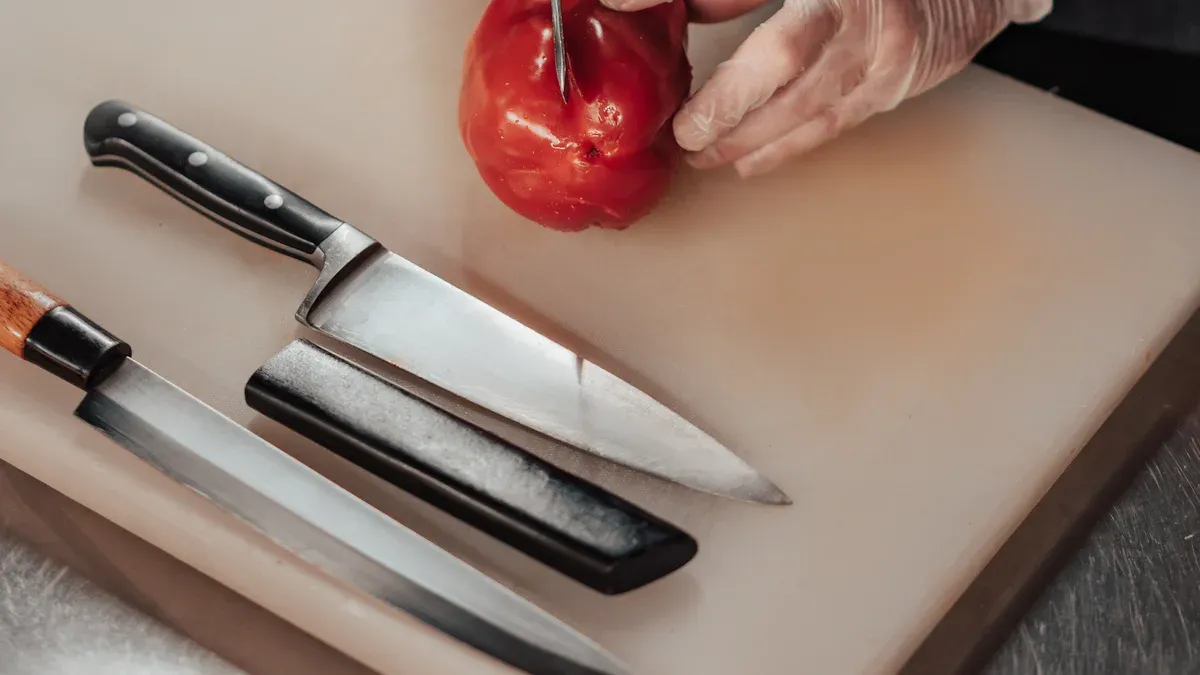
When it comes to chopping vegetables, having the right tools can make all the difference. Not only do they enhance your efficiency, but they also keep you safe while you work. Let’s explore how to choose the right knife and what additional tools can help you chop vegetables safely.
Choosing the Right Knife
Selecting the right knife is crucial for effective vegetable chopping. Here are some popular types of knives that professional chefs recommend:
Knife Type | Description | Price |
|---|---|---|
Best Overall | MAC Professional 8 Inch Hollow Edge Chef’s Knife | $175 |
Best Nakiri | GLOBAL Vegetable Knife, designed specifically for cutting vegetables | $150 |
Best Paring Knife | Made In Paring Knife, ideal for smaller tasks | $79 |
Best Value | MITSUMOTO SAKARI 8 inch Japanese Gyuto Chef Knife, great for budget buyers | $60 |
Best Professional Grade | Misono UX10 7-Inch Santoku Knife, high-quality option for professionals | $216 |
The nakiri knife is particularly noteworthy. It features a rectangular, thinner blade that allows for precise cuts. This knife excels at cutting down rather than rocking, making it perfect for vegetables. However, it’s not suitable for butchering or cutting meat.
When choosing a knife, consider the blade material. Steel blades offer exceptional sharpness, which is vital for clean cuts. While they require maintenance to prevent rust, they are favored by professionals. Stainless steel options are easier to maintain and rust-resistant, making them suitable for everyday use, especially for beginners.
Additional Chopping Tools
In addition to knives, several other tools can enhance your chopping experience. Here are some essential tools to consider:
Cutting Boards: These are crucial for safety and efficiency. You can find them in wood, bamboo, plastic, and composite materials, each with unique benefits.
Mandoline Slicers: These provide precision and speed for uniform cuts, ideal for recipes requiring consistent thickness.
Manual Vegetable Choppers: These tools enhance speed and convenience, allowing for quick dicing of various vegetables.
Rotary Graters: These save time with firm vegetables and offer interchangeable blades for versatility and ease of use.
Finger Guards: These protect your fingers, especially useful for beginners.
Cut-Resistant Gloves: These offer an additional layer of safety, allowing for more confident chopping.
Using the right tools not only makes chopping easier but also minimizes the risk of accidents. For instance, a good cutting board provides a stable surface, while finger guards help protect your hands.
By investing in quality knives and additional chopping tools, you can create a safer and more efficient kitchen environment. Remember, the right equipment can make your cooking experience enjoyable and stress-free!
Efficient Chopping Tips
Using Food Choppers
Food choppers can be a game-changer in your kitchen. They help you chop vegetables quickly and consistently. Here are some advantages of using food choppers:
Speed: Food choppers allow you to prepare ingredients in seconds. This saves you time, especially when you’re in a hurry.
Safety: With enclosed blades, food choppers reduce the risk of cuts. You can chop without worrying about slipping.
Consistency: They provide uniform cuts, ensuring even cooking. This means no more overcooked or undercooked pieces!
Type of Chopper | Advantages | Disadvantages |
|---|---|---|
Manual | – No electricity required, works anywhere | N/A |
Electric | N/A | – Requires outlet access and counter space |
Speed and Safety Techniques
To chop vegetables efficiently and safely, consider these techniques:
Use sharp knives: A sharp knife makes cutting easier and safer. Dull knives can slip and cause accidents.
Employ the Claw Grip Technique: This protects your fingers while you chop. Tuck your fingertips in and hold the vegetable securely.
Maintain a stable cutting board: A stable cutting board prevents slipping. If your board slides, it can lead to injuries.
Practice basic cutting techniques: Regular practice helps you improve your speed and safety. The more you chop, the better you get!
Remember, maintaining uniform cuts is key for even cooking. When you chop vegetables into consistent sizes, they cook at the same rate. This ensures that every bite is delicious and well-prepared. So, take your time to master these techniques, and soon you’ll chop vegetables like a pro!
Chopping vegetables safely and efficiently is crucial for any home cook. Here are some key takeaways to remember:
Use sharp knives for better control and safety.
Practice the Claw Grip Technique to protect your fingers.
Maintain a stable cutting surface to prevent slips.
By adopting these practices, you can enhance your kitchen efficiency and reduce the risk of accidents. Remember, consistent practice leads to improvement. So, get chopping and enjoy your cooking adventures!
Safety Rule | Impact on Efficiency |
|---|---|
Avoid wrong cutting techniques | Reduces injury risk, minimizing downtime |
Maintain proper hand positions | Enhances safety, leading to fewer accidents |
Use clean cutting surfaces | Prevents contamination, ensuring ingredient quality |
Embrace these tips, and you’ll chop like a pro in no time!