Understanding heat distribution is crucial for successful cooking. It directly impacts how evenly your food cooks, which enhances flavor and texture. Proper heat distribution ensures that your dishes not only taste better but also cook safely. Culinary studies show that mastering heat application leads to high-quality food products. Many people mistakenly believe that certain cookware, like cast iron, distributes heat evenly. In reality, it can create hot spots. To achieve the best results, you must learn to manage this aspect of cooking effectively.
Key Takeaways
Mastering heat distribution improves the texture and flavor of your dishes.
Understanding cooking methods like conduction and convection helps achieve even cooking.
The Maillard reaction enhances browning and flavor; cook at higher temperatures for best results.
Choose the right cookware to ensure optimal heat distribution for your cooking style.
Preheating and avoiding overcrowding are key steps to achieving even heat in your meals.
Heat in Cooking
Heat plays a vital role in cooking. It transforms raw ingredients into delicious meals. Understanding how heat works helps you achieve the best results in your dishes.
Conduction and Convection
Two main methods of heat transfer are conduction and convection.
Heat Transfer Method | Description | Impact on Food Transformation |
|---|---|---|
Convection | Involves the circulation of air, distributing heat evenly. | Ensures consistent cooking throughout the food. |
Conduction | Direct contact between heat source and food, cooking from outside in. | Allows for even cooking and retention of flavors. |
Conduction cooks food by transferring heat through direct contact. This method works well for items like steak, ensuring a well-cooked exterior while keeping the interior moist. On the other hand, convection relies on the movement of air or liquid to distribute heat evenly. For example, when boiling water, the heat from the pot warms the water, creating a current that circulates and cooks the food uniformly.
Radiation and Temperature Control
Radiation also plays a significant role in cooking. It involves heat transfer through electromagnetic waves. This method allows heat to penetrate food without direct contact. For instance, infrared radiation heats food quickly at the surface, while microwave radiation penetrates deeper, agitating water molecules to create heat.
Controlling temperature is crucial for achieving the desired texture and flavor in your dishes. Here are some key points to consider:
Frying temperature and time significantly affect the taste and nutritional quality of foods.
The timing of adding spices and herbs can greatly influence their flavor release.
The Maillard Reaction occurs between amino acids and sugars, creating new flavor compounds.
By mastering these heat transfer methods and understanding temperature control, you can elevate your cooking skills and create meals that impress.
Effects of Heat Distribution
Texture and Moisture Retention
When you cook, even heat distribution plays a crucial role in achieving the right texture and moisture retention in your dishes. Poor heat distribution can lead to uneven cooking, resulting in some parts of your food being overcooked while others remain undercooked. This inconsistency can ruin the overall quality of your meal. Here are some common problems caused by poor heat distribution:
Uneven burner performance
Cold spots in cooking surfaces
Inconsistent temperature control
Poor ventilation leading to heat accumulation
Rapid heat degradation in older appliances
Reduced cooking precision due to equipment limitations
To ensure that your food cooks evenly, you must focus on maintaining consistent heat. Even heat distribution prevents hot and cold spots, allowing all ingredients to cook uniformly. This uniformity is essential for moisture retention and achieving a consistent texture in your dishes. For example, steam cooking provides even heat distribution, eliminating temperature variations. The high humidity environment during steam cooking helps retain moisture, leading to a uniform texture.
Browning and Flavor Development
Browning is another critical aspect of cooking that relies heavily on heat distribution. The Maillard reaction, which occurs when proteins and sugars react under heat, creates complex flavors and appealing colors in your food. The temperature at which you cook significantly affects this reaction.
Temperature Range | Effect on Flavor Compounds | Effect on Browning |
|---|---|---|
Lower (below 140 °C) | Slow Maillard reaction, lower volatile flavor compounds | Minimal browning, low melanoidins |
Higher (above 140 °C) | Increased reaction rate, higher production of pyrazine and thiazole compounds | Enhanced browning, more melanoidins produced |
When you cook at higher temperatures, you accelerate the Maillard reaction, resulting in richer flavors and a beautiful golden-brown color. However, if your heat distribution is uneven, you risk burning some areas while leaving others pale and underdeveloped. This inconsistency can lead to disappointing meals, such as overcooked fish fillets or burnt rice.
Finding the right balance in bake time and temperature is crucial. If you do not achieve even cooking, your food can become dry and tasteless or undercooked, posing health risks. Factors like heating element issues or poor rack positioning can cause one side of the food to be hotter, leading to uneven cooking.
Cookware and Heat Distribution
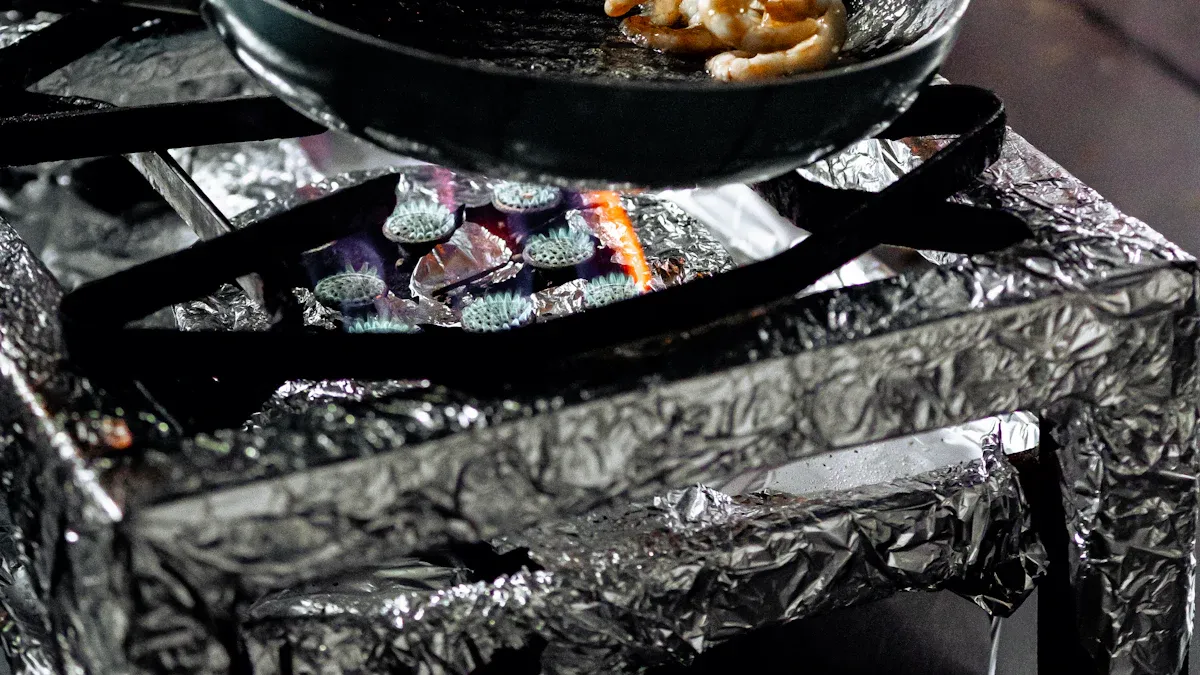
When it comes to cooking, the type of cookware you use significantly impacts heat distribution. Different cookware materials have unique properties that affect how evenly your food cooks. Understanding these differences helps you make informed choices in the kitchen.
Metal vs. Non-Stick
Metal cookware, such as stainless steel and cast iron, offers excellent heat distribution. Here’s a quick comparison of their properties:
Cast Iron:
Takes time to heat up but retains heat well.
Ideal for slow cooking and searing.
Stainless Steel:
Provides moderate heat distribution.
Great for sautéing and browning due to its durability.
Aluminum:
Heats quickly and distributes heat evenly.
Best for tasks requiring rapid temperature changes but does not retain heat well.
On the other hand, non-stick cookware has its advantages and disadvantages. While it allows for easy food release and cleaning, it has limitations:
Lower heat tolerance: Non-stick pans generally cannot withstand temperatures above 400°F, which restricts their use for high-heat cooking methods.
Less durability: The nonstick coating can wear off over time, leading to food sticking and difficulty in cleaning.
Choosing between metal and non-stick cookware depends on your cooking style and the dishes you prepare. For example, if you want to sear meat, opt for stainless steel or cast iron. If you’re cooking delicate foods like eggs, non-stick pans work best.
Choosing the Right Cookware
When selecting cookware, consider the following factors to ensure optimal heat distribution:
Consider Your Cooking Style:
Use enameled cast iron for slow-cooked dishes.
Choose stainless steel with a layered base for quick stir-frying.
Select non-stick pans for delicate foods that require gentle cooking.
Look for Multi-Layered Bases:
Cookware with aluminum or copper cores enhances heat distribution.
Cast iron provides steady heat, making it suitable for various cooking methods.
Test the Cookware Before Buying:
Check for even warming by observing how oil spreads when heated.
This simple test can reveal how well the cookware distributes heat.
The thickness of your cookware also plays a role in heat distribution. Thicker pans hold more heat, making them suitable for searing or sautéing. Thinner pans adjust quickly to temperature changes, which is useful for tasks like reducing a sauce from a boil to a simmer.
Practical Cooking Techniques
Baking vs. Grilling
Baking and grilling are two popular cooking techniques that utilize different heat distribution methods.
Baking is perfect for dishes like cakes and casseroles. It ensures even cooking, which helps develop deep flavors and a uniform texture. Here are some tips for successful baking:
Always preheat your oven for optimal results.
Use a convection oven to circulate hot air evenly, avoiding hot spots.
Pair convection cooking with broiling for a crispy exterior on meats.
Choose shallow pans or raised racks to enhance air circulation.
Monitor cooking times closely, as convection ovens cook faster than traditional ovens.
Grilling, on the other hand, uses direct heat from below. This method creates a delicious char and smoky flavor. To improve your grilling results:
Preheat the grill to ensure even heat.
Use a two-zone setup for cooking different foods at varying temperatures.
Keep the lid closed to maintain consistent heat.
Sautéing vs. Steaming
Sautéing and steaming are two techniques that also differ in heat distribution.
Sautéing involves cooking food quickly in a small amount of oil over high heat. To achieve even heat distribution while sautéing:
Choose heavy-bottomed stainless steel or well-seasoned cast iron skillets.
Use a 10-12 inch pan to avoid overcrowding and ensure manageable cooking.
Preheat the pan before adding oil to enhance heat transfer and prevent sticking.
Add ingredients in a single layer to avoid steaming and promote proper sautéing.
Steaming cooks food using hot steam, which provides gentle and even heat. This method retains moisture and nutrients. To steam effectively:
Use a steamer basket or a dedicated steamer pot.
Ensure the water level is sufficient to create steam without touching the food.
Cover the pot to trap steam and maintain temperature.
By understanding these cooking techniques and their heat distribution characteristics, you can enhance your culinary skills and achieve better results in your kitchen.
Understanding heat distribution is essential for achieving great cooking results. You can enhance your culinary skills by mastering various heat techniques. Here are some key takeaways:
Proper heat management leads to better texture and flavor.
Experimenting with different methods, like sous vide, can improve your dishes.
The Maillard reaction is crucial for browning and flavor development.
“The Maillard reaction is crucial for developing the brown crust on meats and baked goods, which enhances flavor.”
By applying these principles, you can elevate your cooking and enjoy delicious meals every time. Don’t hesitate to try new techniques and discover what works best for you!
FAQ
What is heat distribution in cooking?
Heat distribution refers to how evenly heat spreads throughout your food during cooking. Proper heat distribution ensures that your food cooks uniformly, enhancing flavor and texture.
Why is even heat important?
Even heat is crucial because it prevents some parts of your food from overcooking while others remain undercooked. This balance helps maintain the quality of your food.
How can I improve heat distribution?
You can improve heat distribution by using the right cookware, preheating your cooking surface, and avoiding overcrowding your pans. These steps help ensure even cooking.
What cookware is best for even heat?
Heavy-bottomed metal cookware, such as stainless steel or cast iron, provides the best heat distribution. These materials retain heat well and cook food evenly.
How does temperature affect cooking results?
Temperature significantly impacts cooking results. Cooking at the right temperature helps achieve desired textures and flavors in your food, ensuring a delicious final dish.