
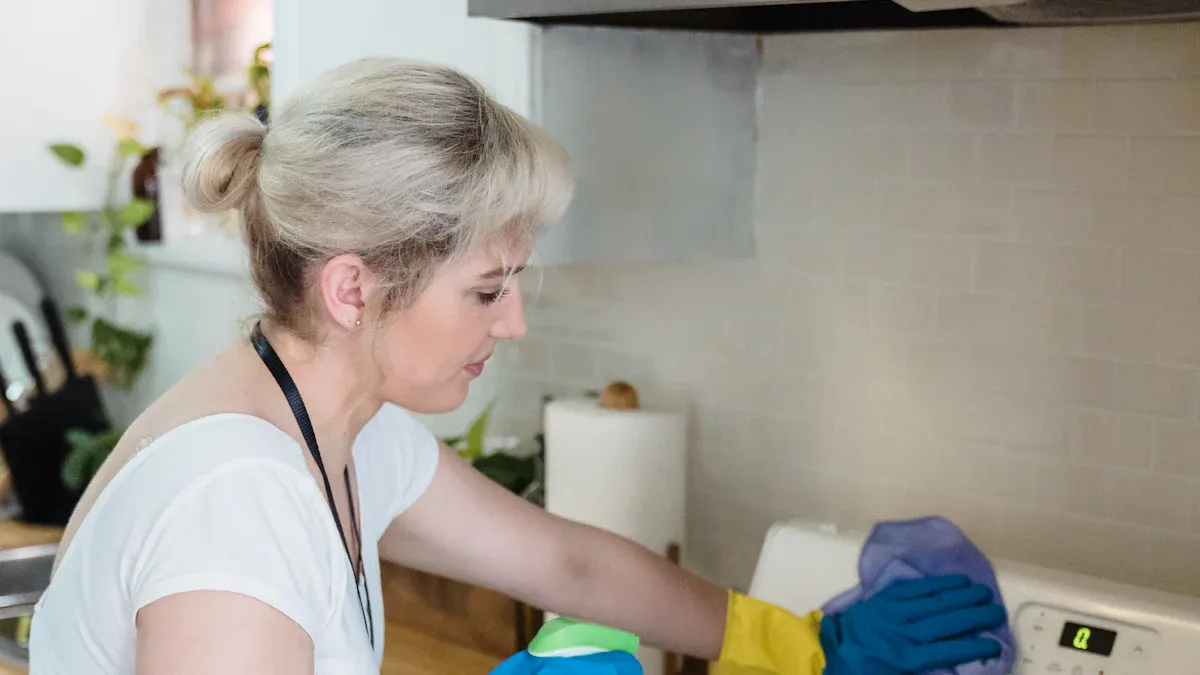
Keeping your kitchen clean is crucial for a healthy home, especially when you have a busy family. A few simple daily cleaning tasks can transform your space. Imagine saving time each week by spreading out your kitchen cleaning routine. You can maintain a tidy kitchen without feeling overwhelmed. Just 15 minutes a day can make a world of difference!
Key Takeaways
Spend just 15 minutes a day on kitchen cleaning to keep your space tidy and reduce stress.
Declutter regularly by using the one-in-one-out rule to maintain an organized kitchen.
Involve your family in daily cleaning tasks to create a fun and responsible environment.
Declutter the Kitchen
Quick Decluttering Tips
Decluttering your kitchen can feel overwhelming, but it doesn’t have to be! Start with these quick tips to make the process easier:
Set a Timer: Give yourself just 10 minutes to tackle one area. You’ll be surprised at how much you can accomplish in a short time.
Use the One-In-One-Out Rule: For every new item you bring in, let go of an old one. This keeps clutter from piling up.
Create a Donation Box: Place a box in your kitchen for items you no longer use. When it’s full, donate it!
Common sources of kitchen clutter include unused kitchen gadgets, outdated electronics, unworn items, expired products, and unnecessary paperwork. By addressing these items regularly, you can maintain a cleaner space.
Organizing Essentials
Organizing your kitchen essentials is key to a functional cooking environment. Start by grouping similar items together. For example, keep all your baking supplies in one area and cooking utensils in another. This not only saves time but also enhances your cooking experience.
Regular decluttering of kitchen counters significantly enhances both cleanliness and organization. A clean kitchen provides the necessary space for meal preparation, making it easier to find and use tools and ingredients. This contributes to a more organized and efficient cooking routine.
By following these tips, you can create a more inviting kitchen that works for your busy family. A well-organized kitchen makes daily tasks smoother and less stressful!
Daily Surface Cleaning
Keeping your kitchen surfaces clean is essential for maintaining a healthy environment. Daily surface cleaning helps prevent the buildup of germs, food particles, and stains. When you wipe down your counters each day, you create a more inviting space for cooking and gathering. Plus, it only takes a few minutes!
Wipe Down Countertops
Make it a habit to wipe counters daily. This simple task can significantly reduce the risk of cross-contamination and keep your kitchen looking fresh. Here’s how to do it effectively:
Choose the Right Time: Wipe down your counters after meal prep or cooking. This way, you tackle messes right away.
Use a Microfiber Cloth: These cloths trap dirt and bacteria better than regular rags. They’re also reusable, making them eco-friendly.
Don’t Forget the Edges: Food particles often hide along the edges of counters. Make sure to give those areas some extra attention.
Best Cleaning Products
Selecting the right cleaning products is crucial for effective surface cleaning. Here’s a comparison of some popular options:
Product Name | Effectiveness | Safety | Environmental Impact |
|---|---|---|---|
Clorox Free & Clear Multi-Surface Spray Cleaner | High | Low | Moderate |
Method All-Purpose Cleaner Pink Grapefruit | High | High | High |
Lysol All-Purpose Cleaner | Moderate | Low | Low |
Clean Cult All-Purpose Cleaner Lemon Verbena | Low | Moderate | Moderate |
When choosing a cleaner, consider both effectiveness and safety. Many conventional products release hazardous volatile organic compounds (VOCs), which can harm indoor air quality. In fact, studies show that indoor air can be up to 10 times more polluted than outdoor air due to these chemicals. Opting for green cleaning products can help reduce your family’s exposure to harmful substances.
Here are some tips for selecting the best cleaning products:
Look for fragrance-free options to minimize irritants.
Choose products with high effectiveness ratings for tough messes.
Consider the environmental impact of the products you use.
By incorporating these daily cleaning habits and choosing the right products, you can maintain a clean and safe kitchen for your family.
Clean the Sink Daily
Cleaning your sink daily is a small habit that can have a big impact on your kitchen’s cleanliness. A clean sink not only looks better, but it also helps keep your family healthy. Here are some effective techniques to make sink cleaning a breeze.
Effective Sink Cleaning Techniques
Rinse After Use: After washing dishes, give your sink a quick rinse. This prevents food particles from drying and sticking.
Use Baking Soda: Sprinkle baking soda in the sink and scrub with a sponge. It’s a natural abrasive that helps remove stains without scratching.
Disinfect Regularly: Use a disinfectant spray or wipes to clean the sink. Focus on the faucet and handles, as these areas can harbor germs.
Don’t Forget the Drain: Pour a mixture of vinegar and baking soda down the drain once a week. This helps eliminate odors and keeps the drain clear.
Regular cleaning of the kitchen sink is essential to prevent the spread of harmful bacteria that can lead to foodborne illnesses. Studies show that 34% of kitchen sinks were contaminated after preparing a meal with raw ingredients. This highlights the risk of cross-contamination. Bacteria in the sink can transfer to food items, especially those consumed raw, increasing the risk of illness.
Preventing Build-Up
To keep your sink looking great and functioning well, you need to prevent build-up. Here are some tips to help you maintain a clean sink:
Avoid Leaving Dirty Dishes: Don’t let dishes pile up in the sink. Wash them promptly or place them in the dishwasher.
Use a Sink Strainer: A strainer catches food scraps and prevents them from clogging the drain. Empty it regularly to keep things flowing smoothly.
Wipe Down Daily: Make it a habit to wipe down the sink every day. This simple action can prevent grime from accumulating.
By incorporating these daily cleaning habits, you can maintain a sparkling sink that contributes to a healthier kitchen environment. A clean sink not only enhances your kitchen’s appearance but also makes cooking and cleaning easier for your busy family.
Sweep and Mop Floors

Keeping your kitchen floors clean is essential for a healthy home. A quick daily routine can make a big difference. Here’s how you can tackle this task efficiently.
Quick Floor Cleaning Routine
Start with Sweeping: Grab a broom and sweep the entire kitchen floor. Focus on corners and under cabinets where crumbs tend to hide.
Spot Clean: If you notice any sticky spots or spills, use a damp cloth to wipe them up right away. This prevents stains from setting in.
Mop the Floor: After sweeping, grab your mop and a bucket of warm water mixed with a suitable floor cleaner. Mop in sections, starting from the farthest corner and working your way toward the exit. This way, you won’t walk on the freshly cleaned floor!
Choosing the Right Tools
Using the right tools can make your daily cleaning routine much easier. Here are some essentials you should consider:
Broom and Dustpan: A sturdy broom with a comfortable handle makes sweeping a breeze.
Microfiber Mop: These mops are great for trapping dirt and dust. They’re also washable, so you can reuse them.
Floor Cleaner: Choose a cleaner that’s safe for your floor type. Look for eco-friendly options to keep your kitchen safe for your family.
By following this quick routine and using the right tools, you can maintain clean kitchen floors effortlessly. A clean floor not only looks good but also contributes to a healthier environment for your busy family.
Clean the Stove and Backsplash
Keeping your stove and backsplash clean is essential for a tidy kitchen. Daily maintenance can prevent tough stains and make your cooking space more inviting. Here are some tips to help you stay on top of this task.
Daily Maintenance Tips
Wipe After Cooking: After each meal, take a moment to wipe down the stove and backsplash. Use a damp cloth to remove spills and splatters. This simple step prevents grime from building up.
Use a Gentle Cleaner: Choose a mild cleaner that’s safe for your stove’s surface. Spray it on and let it sit for a minute before wiping. This helps break down grease and makes cleaning easier.
Check the Burners: Make sure to clean the burners regularly. Remove them if possible, and soak them in warm, soapy water. Scrub gently to remove any stuck-on food.
Stain Removal Strategies
Sometimes, stains can be stubborn. Here are some effective strategies to tackle them:
Baking Soda Paste: Mix baking soda with a little water to create a paste. Apply it to tough stains and let it sit for 10-15 minutes. Then, scrub with a sponge and rinse.
Vinegar Solution: Combine equal parts vinegar and water in a spray bottle. Spray the solution on greasy areas and wipe with a cloth. The acidity of vinegar helps cut through grease.
Magic Eraser: For tough spots, a magic eraser can work wonders. Just dampen it and gently scrub the stained area. It’s great for removing marks without scratching surfaces.
By following these daily cleaning habits, you can keep your stove and backsplash looking great. A clean kitchen not only enhances your cooking experience but also creates a healthier environment for your family.
Handle Daily Dishes
Washing dishes can feel like a never-ending chore, but with some efficient techniques, you can make it a breeze! On average, families spend about 1.1 hours per week washing dishes, which breaks down to about 9.4 minutes daily. Let’s make those minutes count!
Efficient Dishwashing Techniques
Use an Energy-Efficient Dishwasher: Modern dishwashers save water and energy compared to older models or hand washing.
Skip the Pre-Rinse: Most newer dishwashers handle dirty dishes without needing a pre-rinse.
Air Dry Dishes: Instead of using the heat-dry cycle, let your dishes air dry. This saves energy and keeps your kitchen cooler.
Fix Leaks and Maintain Your Dishwasher: Regular checks for leaks and maintenance keep your dishwasher running efficiently.
If you prefer hand washing, consider using a basin to minimize water use. Rinse efficiently with a second basin of clean water, and avoid hot water to save energy.
Dish Drying Solutions
When it comes to drying dishes, air drying is the best method for hygiene. In fact, Oregon law mandates that washed dishes must air dry. This method reduces the risk of spreading bacteria, especially if you use a clean dish rack. If you have a dishwasher with a “sanitize” option, that’s even better! The high-temperature rinse kills germs effectively.
Using a dishtowel can spread germs if it’s not washed frequently, so make sure to use a clean towel daily.
By adopting these dishwashing techniques and drying solutions, you can streamline your daily kitchen cleaning routine. This not only saves time but also keeps your kitchen a healthier space for your family.
Take Out the Trash
Managing your kitchen trash effectively is crucial for maintaining a clean and healthy environment. Here are some practical tips to help you keep your trash under control.
Trash Management Tips
Seal Your Trash Cans: Always use tightly sealed trash cans to minimize odors. This simple step can make a big difference in keeping your kitchen fresh.
Empty Daily: Make it a habit to empty your trash cans at least once a day. This prevents overflow and keeps pests away.
Wash Regularly: Don’t forget to wash your trash cans regularly. This eliminates lingering food debris that can attract unwanted visitors.
Schedule Pick-Ups: Arrange for frequent garbage and compost pick-ups. This helps avoid conditions that allow pests to breed.
Educate Your Family: Teach everyone in your household about proper waste disposal. Rinsing recyclables and sealing garbage bags tightly can go a long way.
Improper trash management can lead to pest problems. Garbage attracts insects and rodents, creating a perfect environment for them to thrive. Even small food remnants can provide a consistent food source for pests.
Recycling Best Practices
Recycling is an essential part of managing your kitchen waste. Here are some best practices to follow:
Rinse Containers: Always rinse out containers before recycling. This prevents contamination and keeps your recycling clean.
Know What to Recycle: Familiarize yourself with your local recycling guidelines. Different areas have different rules about what can and cannot be recycled.
Separate Waste: Use separate bins for trash and recyclables. This makes it easier to manage waste and ensures that recyclables don’t end up in the landfill.
By following these trash management tips and recycling best practices, you can maintain a cleaner kitchen and contribute to a healthier planet.
Sanitize High-Touch Areas
Keeping your kitchen clean means paying special attention to high-touch areas. These spots can harbor germs and bacteria, especially in a busy household. By sanitizing these areas daily, you help create a healthier environment for your family. Here are the key areas you should focus on:
Key Areas to Focus On
Faucet Handles: You touch these multiple times a day. Make sure to give them a good clean.
Refrigerator Doors: Everyone opens the fridge, so don’t forget to sanitize the handles.
Light Switches: These often get overlooked but can carry a lot of germs.
Cabinet Handles: You grab these every time you reach for something, so keep them clean.
TV Remotes: If your family enjoys movie nights, these remotes need regular sanitizing too.
By focusing on these areas, you can significantly reduce the spread of germs in your kitchen.
Recommended Sanitizing Products
To effectively sanitize these high-touch areas, you’ll need the right tools. Here’s a list of recommended products to keep your kitchen clean:
Microfiber cloths or disposable wipes
EPA-approved sanitizers
Spray bottles for easy application
Protective gloves to keep your hands safe
Scrub brushes for textured surfaces
Using these products will help you maintain a clean kitchen. Remember, a little effort goes a long way in keeping your family healthy!
By incorporating these sanitizing habits into your daily cleaning routine, you can ensure that your kitchen remains a safe and welcoming space for everyone.
Freshen the Kitchen Air
Keeping your kitchen smelling fresh can be a challenge, especially after cooking strong-smelling meals. Fortunately, you can easily freshen the air with some natural solutions. Here are a few effective methods to eliminate those pesky kitchen odors.
Natural Air Freshening Solutions
Essential Oils: These oils are fantastic for purifying the air. You can use options like lavender, eucalyptus, or lemon. Just add a few drops to a diffuser or mix them with water in a spray bottle for a quick freshening.
Vinegar: This kitchen staple does wonders for disinfecting the air. Place a bowl of vinegar on the counter or use it in a spray to neutralize cooking smells.
Baking Soda: Known for its odor-absorbing properties, baking soda can be used plain or mixed with water to create a homemade spray. Just keep an open box in your fridge or sprinkle some in the trash can to combat odors.
Simmering Potpourri: Combine spices like cinnamon and citrus peels in a pot of water and let it simmer on the stove. This not only freshens the air but also creates a cozy atmosphere in your kitchen.
Maintaining a Pleasant Aroma
To keep your kitchen smelling delightful, consider these tips:
Regular Cleaning: Make daily cleaning a habit. Wipe down surfaces and clean up spills promptly to prevent lingering odors.
Ventilation: Open windows or turn on exhaust fans while cooking. Good airflow helps dissipate strong smells quickly.
Fresh Ingredients: Use fresh herbs and spices in your cooking. They not only enhance flavor but also add a pleasant aroma to your kitchen.
Houseplants: Certain plants, like basil and mint, can help purify the air while adding a lovely scent. Plus, they look great on your kitchen counter!
By incorporating these natural air freshening solutions and maintaining a pleasant aroma, you can create a welcoming kitchen environment for your family. A fresh-smelling kitchen makes cooking and gathering more enjoyable!
Establishing a daily kitchen cleaning routine offers many benefits for busy families. It saves you time and reduces stress by keeping your kitchen tidy and hygienic. A clean kitchen helps prevent bacteria and unpleasant odors, making it a safe space for cooking and gathering.
By adopting these habits, you create a clutter-free environment that enhances your family’s efficiency. Regular cleaning makes managing your kitchen easier, allowing you to focus on what truly matters—spending quality time with your loved ones.
So, why not start today? Your family deserves a clean and organized kitchen!