You can now filter out PFAS and heavy metals at home without settling for flat, mineral-stripped water. In case you’re choosing a system for 2026, you’ll likely weigh reverse osmosis with remineralization against under-sink carbon filters and high-capacity dispensers. Each option trades speed, maintenance, and taste in different ways. The real question is which one fits your water report, your space, and your budget—because the best pick isn’t the same for everyone.
| iSpring RCC7AK 6-Stage Alkaline Reverse Osmosis System |  | Best Reverse Osmosis | Filtration method: Reverse osmosis (6-stage) | PFAS reduction: Yes (96–99%) | Chlorine reduction: Yes (95–99%) | VIEW LATEST PRICE | Read Our Analysis |
| Waterdrop 10UB Under Sink Water Filter System |  | Best High-Capacity Filter | Filtration method: Multi-stage carbon/media (under-sink) | PFAS reduction: Yes (PFAS/PFOA/PFOS reduced) | Chlorine reduction: Yes (NSF/ANSI 42) | VIEW LATEST PRICE | Read Our Analysis |
| Brita UltraMax 27-Cup Water Dispenser with Filter | 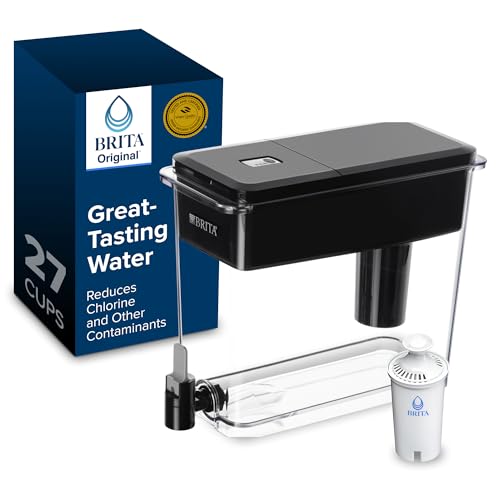 | Best Pitcher Alternative | Filtration method: Pitcher/dispenser filter cartridge | PFAS reduction: Not specified | Chlorine reduction: Yes (taste/odor of chlorine) | VIEW LATEST PRICE | Read Our Analysis |
| Waterdrop 10UA Under Sink Water Filter System |  | Best for Renters | Filtration method: Multi-stage carbon/media (under-sink) | PFAS reduction: Yes (PFAS/PFOA/PFOS reduced) | Chlorine reduction: Yes (taste/odor reduction) | VIEW LATEST PRICE | Read Our Analysis |
| Frizzlife Under Sink Water Filter System (SK99-NEW) |  | Best Fast-Flow System | Filtration method: 8-layer 0.5µm cartridge (under-sink) | PFAS reduction: Yes (PFOA/PFOS reduced) | Chlorine reduction: Yes (chlorine/chloramine reduced) | VIEW LATEST PRICE | Read Our Analysis |
More Details on Our Top Picks
iSpring RCC7AK 6-Stage Alkaline Reverse Osmosis System
Should you want a reverse osmosis system that you can install yourself without fighting the underside of your sink, the iSpring RCC7AK is a smart pick—its patented top-mounted fastener lets you secure the faucet entirely from above the countertop. You’ll also get quick-fitting connections, a clear manual, and step-by-step videos. It’s NSF/ANSI 58 certified and cuts TDS 93–98%, PFAS 96–99%, chlorine 95–99%, plus heavy metals like lead and chromium, and more. A mineral stage remineralizes for balanced pH. You can see buildup in the clear housing, buy timed filter sets, and call Atlanta lifetime support.
- Filtration method:Reverse osmosis (6-stage)
- PFAS reduction:Yes (96–99%)
- Chlorine reduction:Yes (95–99%)
- Lead reduction:Yes (over 98.9%)
- Install type:Under-sink RO + dedicated faucet
- Filter lifespan:Multi-interval sets (6 mo / 1 yr / 2 yr / 3 yr)
- Additional Feature:Top-mounted fastener design
- Additional Feature:Transparent filter housing
- Additional Feature:Alkaline remineralization stage
Waterdrop 10UB Under Sink Water Filter System
In case you want fast, great-tasting filtered water straight from a dedicated faucet without losing beneficial minerals, the Waterdrop 10UB fits the bill. Its multistage coconut-shell carbon block and advanced media cut PFAS, PFOA/PFOS, chlorine, lead, heavy metals, sediment, and chemical impurities while keeping calcium, magnesium, potassium, and sodium. You get IAPMO certifications for NSF/ANSI 42, 53, and 372, plus a lead-free brushed stainless faucet. Install it on cold municipal water in minutes with push-to-connect fittings, then swap filters in 3 seconds. Each filter handles 11,000 gallons at up to 1.33 GPM.
- Filtration method:Multi-stage carbon/media (under-sink)
- PFAS reduction:Yes (PFAS/PFOA/PFOS reduced)
- Chlorine reduction:Yes (NSF/ANSI 42)
- Lead reduction:Yes (NSF/ANSI 53)
- Install type:Under-sink inline + dedicated faucet
- Filter lifespan:11,000 gallons per filter
- Additional Feature:Brushed stainless faucet
- Additional Feature:11,000-gallon capacity
- Additional Feature:3-second filter swap
Brita UltraMax 27-Cup Water Dispenser with Filter
Brita’s UltraMax 27-Cup Water Dispenser works best in case you want a fridge-friendly, high-capacity filter that keeps clean-tasting water on tap without constant refills. You get a BPA-free reservoir, an easy-locking lid, and a precision-pour spigot that makes filling bottles quick and drip-light.
Its included Standard filter cuts chlorine taste and odor and helps reduce copper, mercury, and other impurities. You can upgrade to an Elite filter for longer life. Standard filters last 40 gallons (about two months); Elite lasts 120 gallons (about six). A sticker indicator reminds you, and you might replace 1,800 plastic bottles yearly.
- Filtration method:Pitcher/dispenser filter cartridge
- PFAS reduction:Not specified
- Chlorine reduction:Yes (taste/odor of chlorine)
- Lead reduction:Not specified (mentions copper/mercury)
- Install type:Countertop/fridge dispenser
- Filter lifespan:40 gal (Standard) / 120 gal (Elite)
- Additional Feature:27-cup dispenser capacity
- Additional Feature:Fridge-friendly design
- Additional Feature:Precision-pour spigot
Waterdrop 10UA Under Sink Water Filter System
Space-starved kitchens and renters who can’t (or don’t want to) commit to a full RO setup will appreciate the Waterdrop 10UA under-sink filter: its twist-and-lock, push-to-connect design installs in about three minutes on standard 3/8 feed valves and fits faucets with 1/2 or 3/8 female NPT threads. It targets municipal cold tap water (skip wells and hot lines) and cuts PFAS, PFOA/PFOS, lead, and chlorine taste/odor while keeping minerals like calcium and magnesium. You’ll get strong flow (0.75–1.33 gpm), less clogging, 12-month life, and 3-second swaps.
- Filtration method:Multi-stage carbon/media (under-sink)
- PFAS reduction:Yes (PFAS/PFOA/PFOS reduced)
- Chlorine reduction:Yes (taste/odor reduction)
- Lead reduction:Yes (lead reduced)
- Install type:Under-sink inline (faucet connection)
- Filter lifespan:Up to 12 months
- Additional Feature:Compatible UF/MZ filters
- Additional Feature:Vacation storage guidance
- Additional Feature:Compact lease-friendly design
Frizzlife Under Sink Water Filter System (SK99-NEW)
Should you want an under-sink filter that keeps your water’s natural minerals while targeting common contaminants, the Frizzlife SK99-NEW stands out with IAMPO certification to NSF/ANSI 42, 53, and 372 and a 0.5‑micron, 8-layer filtration design. You’ll cut lead, chlorine, chloramine, PFOA/PFOS, particles, and odors without lowering TDS. You can install it yourself in under 15 minutes, then swap cartridges with a simple twist-in action. The upgraded housing, bottom caps, water board, and pressure regulator help prevent leaks. Expect fast flow—about a cup in 3 seconds—and less plastic waste.
- Filtration method:8-layer 0.5µm cartridge (under-sink)
- PFAS reduction:Yes (PFOA/PFOS reduced)
- Chlorine reduction:Yes (chlorine/chloramine reduced)
- Lead reduction:Yes (NSF/ANSI 53)
- Install type:Under-sink inline (optional fridge hook-up)
- Filter lifespan:Not specified (capacity “verified” but no number given)
- Additional Feature:0.5-micron filtration
- Additional Feature:Added pressure regulator
- Additional Feature:Optional ice-maker kit
Factors to Consider When Choosing Water Filtration Systems
To choose the right water filtration system, you’ll want to match it to your contaminant removal targets and verify performance through trusted certifications and standards. You should also check your installation space requirements and make sure the flow rate fits your household’s daily demand. Finally, you’ll need to weigh filter lifespan and replacement costs so you don’t overpay over time.
Contaminant Removal Targets
Because your tap water can carry a mix of chemicals and particulates, you’ll want a filtration system with clear contaminant removal targets—chlorine, heavy metals like lead and copper, PFAS (PFOA/PFOS), asbestos, fluoride, and other harmful substances. Look for models that also address a broad range—sometimes 1,000+ contaminants—so you’re not guessing what slips through. Prioritize multi-stage designs or layered media that push high reduction rates (often 95%+ for chlorine and certain metals) while still keeping beneficial dissolved minerals like calcium, magnesium, potassium, and sodium. Pay attention to filtration precision, too: sub-micron performance (around 0.5 micron) helps capture fine particles and micro-contaminants that can affect taste, clarity, and safety. Match targets to local water issues and household needs.
Certification And Standards
Clear contaminant targets only matter provided a filter can prove it hits them, so check third-party certification and standards before you buy. Look for NSF/ANSI certifications, because they verify both contaminant reduction and material safety. Should you want better-tasting water, NSF/ANSI 42 shows the system reduces chlorine, taste, and odor. In case you’re focused on health risks, prioritize NSF/ANSI 53, which indicates reductions in contaminants like lead and PFAS. Don’t ignore performance labels either: certification for structural integrity and flow rate means the unit won’t crack, leak, or underperform at normal household pressures. Finally, confirm materials standards such as NSF/ANSI 372, which helps guarantee lead-free and BPA-free components throughout the system.
Installation Space Requirements
A water filter only works for you provided it actually fits where you need it. In case your cabinet’s cramped or you’re renting, pick systems with compact footprints or true under-sink designs that don’t steal storage. Look for top-mounted fasteners or push-to-connect fittings so you can install from above and avoid contorting under the basin.
You’ll also save hassle with customizable housings and DIY-friendly layouts that let you size the unit to your available voids and mount it quickly. In the event that you can’t spare counter or cabinet real estate, choose space-efficient dispensers built to sit in a fridge. Finally, confirm faucet compatibility and the plumbing connections you already have, so it drops into your sink setup without major modifications.
Flow Rate Needs
Once you’ve confirmed a system will fit under your sink or on your counter, make sure it can also keep up with your daily demand. Flow rate, measured in gallons per minute (gpm), tells you how fast filtered water reaches your glass or pot, shaping everyday convenience for drinking and cooking. In case you’ve got multiple people pulling water at once, or you regularly fill pitchers and stockpots, a higher gpm keeps supply steady and cuts frustrating waits. Compare real-world numbers: many systems run around 0.5 gpm, while faster models can exceed 1.3 gpm. Look for upgraded faucet/outlet designs or built-in pressure regulators that sustain speed without sacrificing filtration. Finally, check your home’s water pressure—ratings are often tested at 60 psi, and lower pressure slows output.
Filter Lifespan Costs
Even provided a filtration system fits your space and delivers solid flow, filter lifespan can make or break its long-term value because replacements drive most ongoing costs. Many cartridges need changing every 6 to 12 months, and those recurring purchases add up fast. In case you opt for a unit with 2 to 3-year filters, you’ll likely spend less on maintenance over time, even though the upfront price is higher. You should also consider how easy it is to track filter condition; transparent housings or clear indicators help you avoid swapping too soon or running a clogged filter too long. Since lifespan shifts with your water quality and daily usage, match the filter’s rated capacity to your actual consumption and contaminant load to prevent unnecessary expense.
Mineral Retention Preferences
Replacement costs matter, but what ends up in your glass matters just as much—especially the minerals. Filtration methods don’t treat dissolved minerals the same way: some keep beneficial calcium, magnesium, potassium, and sodium while stripping harmful contaminants, while others reduce total dissolved solids (TDS) and pull out both the bad and the good. In case you prefer mineral-forward water, watch for systems with remineralization stages that add back natural minerals to support a balanced, healthy pH. Keeping minerals can improve taste, support perceived health benefits, and help you avoid overly acidic, demineralized water. Choose a filter that matches your goals: maximum TDS reduction, mineral retention, or contaminant removal plus controlled remineralization for consistency.