
Like a sushi chef on a tight station, you need a blade that turns vegetables into clean, consistent cuts. You’ll see how the best usuba and nakiri options for 2026 balance hardness, edge geometry, and handle control without feeling bulky. From budget-friendly high-carbon picks to VG-10 Damascus and powder steel standouts, each choice solves a different prep problem—if you know what to look for next.
| Mercer Culinary Millennia 7-inch Usuba Knife High Carbon Steel (M22907) |  | Best Budget Pick | Blade length: 7 in | Blade steel: High carbon Japanese steel | Edge type: Plain edge | VIEW LATEST PRICE | Read Our Analysis |
| PAUDIN 7″ Nakiri Chef Knife with Ergonomic Handle |  | Best Value | Blade length: 7 in | Blade steel: 5Cr15Mov high carbon stainless | Edge type: Plain edge | VIEW LATEST PRICE | Read Our Analysis |
| PAUDIN Nakiri Knife 7” VG-10 Damascus Chef Knife |  | Best Gift Pick | Blade length: 7 in | Blade steel: VG-10 stainless (67-layer Damascus) | Edge type: Razor-sharp edge (plain) | VIEW LATEST PRICE | Read Our Analysis |
| 7-Inch Japanese Nakiri Knife with Rosewood Handle |  | Best High-Hardness | Blade length: 7 in | Blade steel: 9CR18MOV high carbon stainless (5-layer) | Edge type: Straight blade (plain) | VIEW LATEST PRICE | Read Our Analysis |
| SHAN ZU 7-Inch Nakiri Powder Steel Knife | 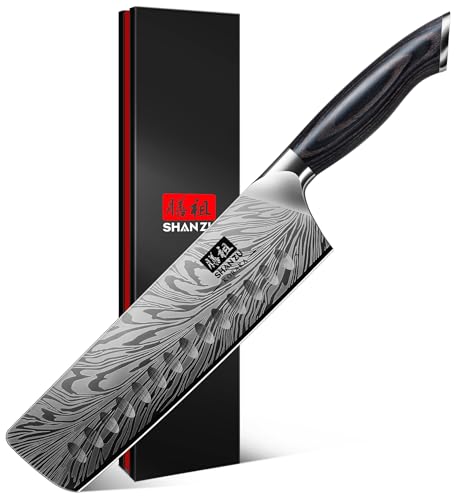 | Best Premium Pick | Blade length: 7 in | Blade steel: Japanese powder steel (high carbon) | Edge type: 12° edge (plain) | VIEW LATEST PRICE | Read Our Analysis |
| MOSFiATA 7” Nakiri Chef’s Knife with Finger Guard |  | Best Safety Set | Blade length: 7 in | Blade steel: EN1.4116 German high carbon stainless | Edge type: Plain edge | VIEW LATEST PRICE | Read Our Analysis |
More Details on Our Top Picks
Mercer Culinary Millennia 7-inch Usuba Knife High Carbon Steel (M22907)
Should you want a budget-friendly usuba-style workhorse that still feels confident on a busy prep board, the Mercer Culinary Millennia 7-inch Usuba (M22907) fits the bill with its lightweight, high-carbon Japanese steel blade and grippy Santoprene handle. You get a 7-inch plain-edge, silver stamped blade in a tough one-piece build that’s easy to maintain and holds sharpness well. The black Santoprene handle adds textured finger points, so your grip won’t slip during fast chopping, mincing, and slicing. Hand-wash, rinse, and dry it—skip dishwashers and soaking. Mercer’s warranty covers defects only.
- Blade length:7 in
- Blade steel:High carbon Japanese steel
- Edge type:Plain edge
- Construction:Stamped, one-piece
- Handle material:Santoprene
- Dishwasher safe:No
- Additional Feature:Textured finger points
- Additional Feature:Lightweight 2.08 ounces
- Additional Feature:One-piece design
PAUDIN 7″ Nakiri Chef Knife with Ergonomic Handle
In case you want one nakiri that can handle everyday prep without feeling delicate, the PAUDIN 7″ Nakiri Chef Knife fits the bill with a forged 5Cr15Mov high‑carbon stainless blade rated at 56+ HRC. You’ll get a razor-sharp plain edge that slices, dices, chops, and minces vegetables, yet still tackles meat and heavier kitchen tasks. The ergonomic pakkawood handle integrates smoothly with the blade, so your grip stays comfortable and balanced. A wave pattern reduces food friction and cleans easily, with a Damascus-like look. Skip the dishwasher; it’s 225 g and gift-ready.
- Blade length:7 in
- Blade steel:5Cr15Mov high carbon stainless
- Edge type:Plain edge
- Construction:Forged
- Handle material:Pakkawood
- Dishwasher safe:No
- Additional Feature:Wave friction-reducing pattern
- Additional Feature:56+ HRC hardness
- Additional Feature:24-hour customer support
PAUDIN Nakiri Knife 7” VG-10 Damascus Chef Knife
Home cooks and busy prep-focused chefs who want a nimble, razor-sharp vegetable blade will appreciate the PAUDIN 7” VG-10 Damascus Nakiri, built from Japanese VG-10 stainless steel (56+ HRC) and a 67-layer forged Damascus stack for confident edge retention. You’ll feel the low-resistance edge glide through produce, while the forged cloud pattern adds a sophisticated look. The full-tang G10 handle with three rivets keeps things sturdy, and its ergonomic shaping helps you stay balanced and reduce wrist strain. At about half a pound, you can julienne, dice, slice, and chop quickly. It ships in a refined gift box.
- Blade length:7 in
- Blade steel:VG-10 stainless (67-layer Damascus)
- Edge type:Razor-sharp edge (plain)
- Construction:Forged, full tang
- Handle material:G10
- Dishwasher safe:Not specified
- Additional Feature:67-layer Damascus steel
- Additional Feature:Cloud pattern finish
- Additional Feature:Gift box included
7-Inch Japanese Nakiri Knife with Rosewood Handle
Serious vegetable prep goes faster with this 7-inch Japanese Nakiri knife, especially if you want a straight, no-rocking blade that can slice, dice, mince, and chop with clean efficiency.
You get a 5-layer 9CR18MOV high carbon stainless blade, hand forged during a 60-day process involving quenching, vacuum nitriding, and anti-rust oxidation. At HRC 62, it stays sharp longer whilst resisting corrosion and rust, and it’s tough enough for heavy-duty prep. The octagonal, non-slip rosewood handle feels light yet sturdy, balances well, and reduces fatigue. It even doubles as a meat-cleaver alternative, supported through FAMCÜTE support.
- Blade length:7 in
- Blade steel:9CR18MOV high carbon stainless (5-layer)
- Edge type:Straight blade (plain)
- Construction:Hand forged
- Handle material:Rosewood
- Dishwasher safe:Not specified
- Additional Feature:HRC 62 hardness
- Additional Feature:Octagonal non-slip grip
- Additional Feature:60-day production process
SHAN ZU 7-Inch Nakiri Powder Steel Knife
In case you want a nakiri that cuts like a premium Japanese blade without demanding delicate handling, the SHAN ZU 7-Inch Nakiri Powder Steel Knife stands out thanks to its high-carbon Japanese powder steel hardened to 63 HRC and a keen 12° edge. At 2mm thick, it glides through produce, stays sharp, and resists dulling and rust. You’ll feel the full-tang balance and seamless pakkawood handle that reduces fatigue. The silver laser wave pattern looks refined (it’s not Damascus). Use it for chopping, slicing, mincing, and dicing—even meats. It’s dishwasher safe and easy to resharpen.
- Blade length:7 in
- Blade steel:Japanese powder steel (high carbon)
- Edge type:12° edge (plain)
- Construction:Full tang
- Handle material:Pakkawood
- Dishwasher safe:Yes
- Additional Feature:63 HRC hardness
- Additional Feature:12° cutting angle
- Additional Feature:2mm blade thickness
MOSFiATA 7” Nakiri Chef’s Knife with Finger Guard
MOSFiATA’s 7-inch Nakiri fits you best in case you want a dependable, do-it-all veggie blade that feels secure in hand, thanks to its ergonomic Micarta handle and included finger guard. You get German high-carbon stainless steel (EN1.4116) with a 2.5 mm spine and 56±2 HRC hardness, so it holds up to daily prep while resisting rust, corrosion, and discoloration. The hand-polished 14–16° edge lets you chop, slice, dice, and mince vegetables, fruits, meat, and bread. At 8.8 oz, it stays balanced, and it ships in a gift box with sheath. Dishwasher safe, not Damascus.
- Blade length:7 in
- Blade steel:EN1.4116 German high carbon stainless
- Edge type:Plain edge
- Construction:Triple-rivet handle construction
- Handle material:Micarta
- Dishwasher safe:Yes
- Additional Feature:Finger guard included
- Additional Feature:Knife sheath included
- Additional Feature:14–16° per-side edge
Factors to Consider When Choosing Usuba Nakiri Knives
At the time you’re choosing an usuba or nakiri, start with blade steel and hardness, since they shape edge retention and toughness. Then check edge geometry and sharpness, along with knife weight and balance, so your cuts feel controlled and efficient. Finally, make sure the handle fits your grip and that you’re comfortable with the care and maintenance it’ll require.
Blade Steel And Hardness
Although handle shape and grind affect feel, blade steel and hardness ultimately determine how your usuba or nakiri cuts, how long it stays sharp, and how much upkeep you’ll deal with. High carbon steel can take a very keen edge and keep it, but you’ll need to dry it fast and stay on top of rust and corrosion. Stainless options shrug off moisture and kitchen acids better, yet you might sharpen a bit more often. Check hardness ratings too: quality blades usually land around 56–63 HRC, which balances sharpness with toughness. Should you choose 60+ HRC, you’ll get longer-lasting performance, but you must avoid twisting and impacts since chipping risk rises. Powder steels or VG-10 often blend hardness with corrosion resistance.
Edge Geometry And Sharpness
Because edge geometry dictates how the blade meets the board, it can make an usuba or nakiri feel either effortless or finicky in everyday prep. Both styles use a straight edge built for push cuts, so you’ll slice, dice, and chop vegetables cleanly without relying on rocking. Check the grind: traditional usuba often runs single-bevel, letting you shave ultra-thin sheets and precise katsuramuki, but it demands accurate technique and sharpening to keep the bevel true. Nakiri knives usually come double-bevel, giving you symmetrical sharpness that’s easier to steer and maintain. Aim for edge angles around 12°–16° for smooth cuts and solid retention. High-carbon steel can take keener edges, but you’ll need consistent touch-ups and careful care.
Knife Weight And Balance
Since you’ll repeat the same push cuts for piles of produce, an usuba or nakiri’s weight and balance can make prep feel either smooth or exhausting. Lighter knives let you accelerate faster and steer the edge precisely, which helps whenever you’re doing quick, delicate slices. Heavier blades add momentum, so you can drive through dense carrots or cabbage with less force, but they can wear you down in case the mass fights your tempo.
Balance matters as much as total weight. Once the knife’s mass feels centered between blade and handle, you’ll track straighter lines and keep your wrist calmer during long sessions. That steadiness also improves safety so as to keep the blade stable and less likely to slip. Choose a profile that matches your strength and cutting rhythm.
Handle Comfort And Grip
During the time you’re knocking out long runs of push cuts, handle comfort and grip decide whether the knife feels like an extension of your hand or a constant distraction. Look for ergonomic shaping with textured or contoured surfaces so your fingers lock in without over-squeezing, which cuts down fatigue. Materials matter, too: Santoprene, pakkawood, Micarta, and G10 tend to balance softness and firmness, giving you a secure, non-slip hold even as your hands are damp. For steadier control, choose a full-tang handle with triple rivets; you’ll notice better balance and stability while you’re aiming for precise, straight cuts. Finally, match handle size and weight to your hand and cutting style so wrist strain stays low and maneuverability stays high.
Care And Maintenance Needs
Once you’re choosing an usuba or nakiri, consider the care routine it’ll demand alongside its cutting feel. You’ll get the best edge retention and corrosion resistance upon hand washing with warm water and mild soap. Skip the dishwasher and don’t leave it soaking; harsh detergents, heat, and prolonged submersion can dull the edge and warp or damage the handle.
After washing, dry it immediately with a soft towel to prevent rust and keep the blade looking clean. Keep performance consistent through honing regularly and sharpening as soon as cutting starts to drag. Finally, store it with intention—use a knife block, magnetic strip, or protective sheath—so the thin, flat edge won’t knock against other tools.