
Food safety agencies estimate about 48 million Americans get sick from foodborne illness each year, and fridge temps are often a concealed factor. In case you’re relying on a vague dial or a guess, you’re taking a bigger risk than you believe. You’ll want a magnetic thermometer that stays put through door slams, reads accurately in both fridge and freezer zones, and stands up to moisture. Here are five models pros keep coming back to—and why.
| 2 Pack Classic Refrigerator & Freezer Dial Thermometers |  | Best Budget Pair | Display type: Analog dial | Temperature range: -20°F to 80°F | Magnetic mounting: Not specified | VIEW LATEST PRICE | Read Our Analysis |
| TempPro Waterproof Refrigerator Thermometer 2-Pack with Backlit LCD |  | Best Feature-Rich Digital | Display type: Digital LCD (backlit) | Temperature range: -4°F to 122°F | Magnetic mounting: Yes (magnetic back) | VIEW LATEST PRICE | Read Our Analysis |
| Waterproof Digital Fridge Freezer Thermometer (2-Pack) | 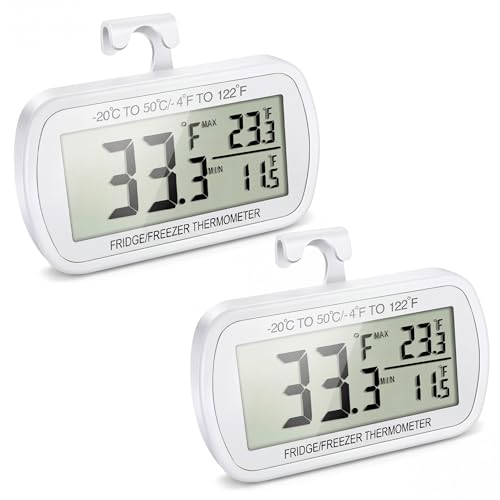 | Best Easy-Read Display | Display type: Digital LCD | Temperature range: -4°F to 122°F | Magnetic mounting: Yes (magnetic back) | VIEW LATEST PRICE | Read Our Analysis |
| Taylor Precision Milk Beverage Refrigerator Thermometer (5982N) |  | Best NSF-Certified Pick | Display type: Analog dial | Temperature range: -40°F to 120°F | Magnetic mounting: Yes (magnetic backing) | VIEW LATEST PRICE | Read Our Analysis |
| Cooper Cooper-Atkins 535-0-8 Cooler Thermometer with Magnet -20°F/120°C |  | Best Commercial Grade | Display type: Analog dial | Temperature range: -20°F to 120°C | Magnetic mounting: Yes (magnet included) | VIEW LATEST PRICE | Read Our Analysis |
More Details on Our Top Picks
2 Pack Classic Refrigerator & Freezer Dial Thermometers
Should you want a no-fuss way to keep food storage temps safe, this 2-pack of classic refrigerator & freezer dial thermometers is built for you: large, easy-to-read dials with red/blue indicators show at a glance whether you’re in the right zone. You’ll monitor from -30 to 30°C (-20 to 80°F) in fridges, freezers, coolers, or insulated boxes. Hang them with the hook-style panel or set them on a shelf. They run mechanically, so you won’t buy batteries. Stainless steel construction, a glass lens, and an easy-clean design hold up in cold storage. You also get 24/7 support.
- Display type:Analog dial
- Temperature range:-20°F to 80°F
- Magnetic mounting:Not specified
- Placement options:Hang or stand
- Power source:Mechanical (no batteries)
- Waterproof rating:Not specified
- Additional Feature:Stainless steel construction
- Additional Feature:Large dial readability
- Additional Feature:Glass protective lens
TempPro Waterproof Refrigerator Thermometer 2-Pack with Backlit LCD
Two bright, backlit LCD screens make the TempPro Waterproof Refrigerator Thermometer 2‑Pack an easy pick should you want quick, at-a-glance readings in a dark fridge, garage freezer, or basement. You’ll get -4℉ to 122℉ coverage with ±1.8℉ accuracy, so it works for freezers, coolers, car fridges, and wine cellars. Use the max/min memory to spot swings over the last 24 hours. The IPX6 waterproof body handles damp rooms. Place it your way: stand, magnet, or hook. Battery swaps are simple with a coin-twist cover; batteries included.
- Display type:Digital LCD (backlit)
- Temperature range:-4°F to 122°F
- Magnetic mounting:Yes (magnetic back)
- Placement options:Stand / magnet / hang
- Power source:Battery (lithium, included)
- Waterproof rating:IPX6
- Additional Feature:24-hour max/min history
- Additional Feature:Backlit LCD screen
- Additional Feature:Tool-free battery cover
Waterproof Digital Fridge Freezer Thermometer (2-Pack)
Anyone who needs reliable readings in a damp fridge or icy freezer will appreciate this waterproof digital 2-pack, which shows max, min, and current temperature on a clear 2.56-inch LCD at the same time. You’ll track from -4°F to 122°F with ±2°F accuracy and 0.2°F resolution, and you can switch between °F and °C. A CR2032 battery comes included, and three buttons keep it simple: power, unit select, and reset to clear max/min on reboot. Place it on a stand, hang it, or stick it magnetically; IPX3 helps it handle moisture.
- Display type:Digital LCD
- Temperature range:-4°F to 122°F
- Magnetic mounting:Yes (magnetic back)
- Placement options:Stand / magnet / hang
- Power source:Battery (CR2032, included)
- Waterproof rating:IPX3
- Additional Feature:Shows max/min/current
- Additional Feature:0.2°F resolution
- Additional Feature:Three-button operation
Taylor Precision Milk Beverage Refrigerator Thermometer (5982N)
Built for milk coolers and beverage fridges, the Taylor Precision 5982N gives you fast, reliable cold-temp checks in a compact 1-3/4″ analog dial that won’t crowd your shelves. You’ll track -40°F to 120°F (-40°C to 50°C), with an ultrafast ~500 ms response as doors swing open. Black numerals, red/black graphics, and a bright red pointer stay readable from several feet. Mount it your way using the magnetic backing or included adhesive tape. The stainless steel casing holds up, it’s waterproof and reusable, and it’s NSF certified for commercial kitchens.
- Display type:Analog dial
- Temperature range:-40°F to 120°F
- Magnetic mounting:Yes (magnetic backing)
- Placement options:Magnet or adhesive
- Power source:Mechanical (no batteries)
- Waterproof rating:Waterproof (no IP rating)
- Additional Feature:NSF certified
- Additional Feature:Visible from feet
- Additional Feature:Adhesive tape included
Cooper Cooper-Atkins 535-0-8 Cooler Thermometer with Magnet -20°F/120°C
Home cooks and food-service staff who need a fast, no-fuss cold-storage check will appreciate the Cooper-Atkins 535-0-8 cooler thermometer—a classic analog, bi-metal dial that sticks where you need it thanks to its included decorative magnet. You get a wide range from -20°F up to 120°C, so you can monitor fridges, coolers, and warmer holding areas with one tool. Its 500 ms response helps you confirm recovery quickly after door openings. The metal body stays tough, and at 5 inches long it’s easy to read. Mount it with the magnet or the three adhesive tabs, then wipe clean.
- Display type:Analog dial
- Temperature range:-20°F to 120°C
- Magnetic mounting:Yes (magnet included)
- Placement options:Magnet or adhesive tabs
- Power source:Mechanical (no batteries)
- Waterproof rating:Not specified
- Additional Feature:Bi-metal thermometer
- Additional Feature:Includes adhesive tabs
- Additional Feature:500 ms response time
Factors to Consider When Choosing Magnetic Refrigerator Thermometers
Once you choose a magnetic refrigerator thermometer, you need a magnet that grips firmly and a temperature range that matches your fridge or freezer. You’ll also want solid accuracy and resolution, plus a display you can read fast—ideally with a backlight for low light. In case you track food safety, pick one with max/min memory so you can spot temperature spikes without guessing.
Magnet Strength And Grip
How firmly the thermometer grips your fridge matters more than it seems: you need a magnet strong enough to stay put throughout door slams, shelf bumps, and everyday vibrations, so it doesn’t slip or fall and skew your readings. Look for a backing that holds steady on smooth doors, interior walls, or metal shelving without drifting over time. A secure grip keeps placement consistent, which helps you trust the number you see day after day. Choose a magnet with a corrosion-resistant coating, since moisture and condensation can weaken unprotected metal and reduce holding power. Magnetic backing also lets you reposition quickly across different steel surfaces for best visibility. Still, don’t overdo it: pick adhesion that’s firm yet removable, so you won’t scratch finishes or struggle to move it during cleaning.
Temperature Range Fit
Although most fridge thermometers look similar, you’ll get more reliable readings through choosing one whose temperature range actually fits your appliance. For everyday refrigerators and freezers, look for a scale that spans typical food-safe zones—roughly -20°F to 80°F (-30°C to 30°C)—so you can see both chilling and near-room shifts without pegging the needle or maxing out the display. In case you swap the same thermometer between a deep freezer, cooler, or garage fridge, a wider range (like -40°F to 120°F) gives you breathing room in harsher conditions. Make sure the markings match that range: a clear dial or crisp digital readout lets you spot changes fast and keep storage conditions stable before food spoils.
Accuracy And Resolution
Because a few degrees can push food out of the safe zone, you should prioritize accuracy and resolution in a magnetic refrigerator thermometer. Look for models rated around ±1.8°F to ±2°F so you may trust the number you’re basing storage decisions on. Just as crucial, choose finer resolution whenever you need tighter control: 0.2°F increments show small shifts that a 1°F or 1°C scale can hide. Make sure that accuracy holds across the full span from freezing to typical fridge temps, not only at one point. In case you rely on max/min recording to spot swings, you’ll need a sensor that stays dependable. Analog options often respond fast (about 500 ms), but they usually offer coarser resolution.
Readability And Backlight
Once you’re checking fridge temps in a hurry, readability matters as much as accuracy. Choose a thermometer with a large dial or big digits, a clear scale, and high-contrast markings so you can confirm safe ranges at a glance. Analog models with bold numerals and color-coded zones let you judge temperature quickly, even from a few feet away.
If you check temperatures in dim kitchens or walk-ins, pick a backlit LCD. The glow lets you read the display without turning on extra lights or opening the door longer than necessary. Also look for a moisture-resistant or waterproof lens, since condensation can fog cheap covers and hide the needle or numbers. Clear visibility keeps your checks fast and reliable.
Max/Min Tracking
In case you want proof your fridge stays safe between spot checks, choose a magnetic thermometer with max/min tracking. It records the highest and lowest temperatures over a set window (often 24 hours), so you see fluctuations you’d otherwise miss.
Use those extremes to confirm your fridge and freezer never drift into unsafe ranges, even overnight or during busy service. Should the max shows a spike, you’ll know the door stayed open too long or cooling lagged; should the min drops too low, you can catch freeze damage risks in refrigerated items. This continuous record also supports food-safety compliance because you’re not relying on single readings. Look for an easy reset button so you can clear past extremes and start each monitoring cycle clean.
Waterproofing And Durability
Max/min tracking helps you spot temperature swings, but the thermometer still has to survive the cold, wet reality of daily use. Look for waterproof ratings like IPX3 or IPX6 so it keeps working whenever condensation forms or you wipe shelves. A tough build matters, too: stainless steel casings resist rust, and a glass protective lens won’t haze or crack as easily in freezing temps. In case you choose a digital model, make sure it has a sealed battery compartment; that blocks moisture, prevents corrosion, and keeps readings consistent. Prefer mechanical, battery-free thermometers? You’ll still want corrosion-resistant materials, because humidity can creep in over time. Strong waterproofing and durable construction protect accuracy and prevent damage from spills.
Placement And Mounting Options
Because cold spots and warm pockets can vary across a fridge, your thermometer’s mounting options matter as much as its accuracy. A strong magnet lets you attach it to any metal wall, ceiling, or door liner inside the fridge or freezer without extra hardware, so you can test different zones fast. In case you prefer shelf-level readings, pick a model with a hook that hangs from racks or wire shelves, keeps the dial visible, and saves space. For non-metal interiors, adhesive backing or tape expands your options, letting you mount on plastic panels where magnets won’t hold. Compact designs that can stand, hang, or stick give you the most flexibility. Easy-on, easy-off mounting makes repositioning simple as your storage changes.
Power Source And Battery
Mounting a thermometer where you need it matters, but it won’t help much in case the unit loses power or becomes hard to read. Choose between mechanical and digital models based on how you’ll use it and how much upkeep you’ll tolerate. Mechanical analog thermometers run battery-free, so you get continuous monitoring with no power worries or replacement schedules. Digital thermometers usually need batteries, often lithium metal or CR2032 lithium coin cells, and they can add real benefits like backlit LCDs and temperature recording. The tradeoff is reliability over time: cold, moisture, and long storage can shorten battery life, and a dead cell means no data. Prioritize easy battery access, and look for designs that let you swap batteries without tools.
