
You could not know that many French-style chef knives use Sandvik 12C27 steel for a rare mix of toughness and easy sharpening. You’ll appreciate how balance, handle shape, and edge geometry change your prep speed and comfort. I’ll compare top picks—from Laguiole en Aubrac sets to Damascus styles—and point out what really matters for everyday use, so you can pick the right tool for your kitchen…
| Laguiole en Aubrac 2-Piece Gourmet Knife Set | 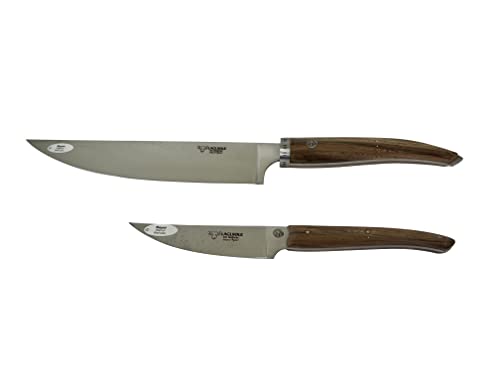 | Artisan Luxury | Blade Material: 12c27 Sandvik high‑carbon stainless steel | Origin / Craftsmanship: Hand‑crafted in Laguiole, Aubrac (France) by one artisan | Intended User / Use: Professional chefs & dedicated home cooks | VIEW LATEST PRICE | Read Our Analysis |
| Set of 3-8” Chef Knives Cook French Stainless Steel (Blue) |  | Commercial Workhorses | Blade Material: French stainless steel (hollow ground) | Origin / Craftsmanship: Commercially manufactured by COZZINI CUTLERY IMPORTS (French style) | Intended User / Use: Professional/commercial kitchens and cooks | VIEW LATEST PRICE | Read Our Analysis |
| Laguiole en Aubrac 6″ Forged Chef’s Knife Olivewood |  | Everyday Precision | Blade Material: 12c27 Sandvik high‑carbon stainless steel | Origin / Craftsmanship: Hand‑crafted in Laguiole, Aubrac (France) by master craftsmen | Intended User / Use: Professional chefs & home cooks (everyday tasks) | VIEW LATEST PRICE | Read Our Analysis |
| Damascus French-Style Chef Knife with Rosewood Handle |  | Showpiece Performance | Blade Material: Hand‑forged Damascus steel core (high‑chromium/HRC58–60) | Origin / Craftsmanship: Handcrafted by artisans (traditional forging techniques) | Intended User / Use: Professional chefs, outdoor/grill users, collectors | VIEW LATEST PRICE | Read Our Analysis |
| Laguiole 13-Piece Stainless Steel Kitchen Knife Set |  | Complete Entertaining | Blade Material: Sharp stainless steel (unspecified alloy) | Origin / Craftsmanship: Traditional Laguiole design (French style manufacturing/heritage implied) | Intended User / Use: Home cooks for food prep and table service (everyday & entertaining) | VIEW LATEST PRICE | Read Our Analysis |
More Details on Our Top Picks
Laguiole en Aubrac 2-Piece Gourmet Knife Set
Should you prize handcrafted quality and unique materials, the Laguiole en Aubrac 2-Piece Gourmet Knife Set is for you: you get an 8-inch chef and 4-inch paring knife forged out of ultra-strong 12C27 Sandvik high-carbon stainless steel that resists tarnish, rust, and corrosion for long-lasting performance. Each blade’s made start-to-finish through a single artisan in Laguiole, Aubrac, France, and passes rigorous quality control. Walnut handles are individually selected, so no two knives match, emphasizing unique character. Designed for professional chefs and serious home cooks, this compact set blends durable materials, painstaking craftsmanship, and functional excellence.
- Blade Material:12c27 Sandvik high‑carbon stainless steel
- Origin / Craftsmanship:Hand‑crafted in Laguiole, Aubrac (France) by one artisan
- Intended User / Use:Professional chefs & dedicated home cooks
- Handle Material / Design:Walnut wood handle
- Durability / Corrosion Resistance:High carbon stainless resists tarnish/rust; corrosion‑resistant design
- Set / Piece Count:2‑piece set (8″ chef + 4″ paring)
- Additional Feature:Walnut wood handles
- Additional Feature:Hand-made by single artisan
- Additional Feature:Includes chef + paring
Set of 3-8” Chef Knives Cook French Stainless Steel (Blue)
Should you work in a busy kitchen and need a reliable, slightly smaller chef’s knife, this set of three 8-inch Cook French blades with blue polypropylene handles is a smart pick — the ergonomic grips and hollow-ground French stainless steel keep precision and edge retention high while the color-coding helps prevent cross-contamination. You’ll appreciate the comfortable handles for finer tasks like garlic and shallot prep, and the hollow grind aids controlled slicing of tomatoes and peppers. COZZINI CUTLERY IMPORTS ships these professionally sharpened, heavy-duty knives ready for commercial use, so you get durable, high-performing tools optimized for safety and consistent performance.
- Blade Material:French stainless steel (hollow ground)
- Origin / Craftsmanship:Commercially manufactured by COZZINI CUTLERY IMPORTS (French style)
- Intended User / Use:Professional/commercial kitchens and cooks
- Handle Material / Design:Blue polypropylene ergonomic handle
- Durability / Corrosion Resistance:Durable commercial stainless steel; hollow grind for edge retention
- Set / Piece Count:Set of 3 knives (three 8″ chef knives)
- Additional Feature:Color-coded blue handles
- Additional Feature:Hollow-ground blades
- Additional Feature:Pre-sharpened before shipping
Laguiole en Aubrac 6″ Forged Chef’s Knife Olivewood
Should you want a compact, everyday chef’s knife that pairs traditional French forging with a warm, natural handle, the Laguiole en Aubrac 6″ forged chef’s knife is a smart pick— you get a 6″ blade of ultra-strong 12C27 Sandvik stainless steel that resists corrosion, tarnish, and rust while offering high-carbon performance. Fully forged in the Laguiole, Aubrac region, each knife is crafted and inspected under the supervision of a single expert artisan for consistent strength and reliability. Olivewood handles vary naturally, giving each piece unique character. It handles vegetables and meats reliably, suitable for both home cooks and professionals.
- Blade Material:12c27 Sandvik high‑carbon stainless steel
- Origin / Craftsmanship:Hand‑crafted in Laguiole, Aubrac (France) by master craftsmen
- Intended User / Use:Professional chefs & home cooks (everyday tasks)
- Handle Material / Design:Olivewood handle
- Durability / Corrosion Resistance:High carbon stainless resists corrosion/tarnish/rust
- Set / Piece Count:Single 6″ forged chef’s knife
- Additional Feature:Olivewood handle finish
- Additional Feature:Fully forged steel construction
- Additional Feature:6-inch blade length
Damascus French-Style Chef Knife with Rosewood Handle
Should you want a knife that pairs museum-quality beauty with pro-grade performance, the Damascus French-style chef knife with a rosewood handle delivers: You get an ultra-sharp, hand-forged Damascus core tempered to HRC58–60 for superb edge retention and easier sharpening thanks to high-chromium alloying. Artisans layer and forge premium steels for strength and rust resistance with proper care. The exotic yellowheart and camel bone composite handle balances the lightweight wedge blade, reducing hand fatigue and improving control. Versatile for professional kitchens, grilling, and outdoor use, it’s also a striking collector’s piece that blends function and aesthetic appeal.
- Blade Material:Hand‑forged Damascus steel core (high‑chromium/HRC58–60)
- Origin / Craftsmanship:Handcrafted by artisans (traditional forging techniques)
- Intended User / Use:Professional chefs, outdoor/grill users, collectors
- Handle Material / Design:Exotic yellow heart wood + camel bone composite handle
- Durability / Corrosion Resistance:Damascus layers with high‑chromium content; designed to resist rust with care
- Set / Piece Count:Single chef knife (collector/individual piece)
- Additional Feature:Hand-forged Damascus core
- Additional Feature:Exotic yellowheart + bone
- Additional Feature:HRC58-60 hardness
Laguiole 13-Piece Stainless Steel Kitchen Knife Set
Should you want a complete, stylish set that takes you from prep to plate, the Laguiole 13-piece stainless steel collection is ideal for hosts who value presentation and everyday performance. You get five essential knives—chef’s, bread, carving, utility, paring—plus four steak knives and four matching forks, so you’re covered from prep to dining. Each blade’s sharp stainless steel slices effortlessly, while the three-rivet curved handles and Napoleon bee support reflect classic French craftsmanship. The black ergonomic handles feel balanced in hand. A magnetic wooden block keeps tools organized and attractive, and dishwasher-safe construction makes cleanup simple for busy kitchens.
- Blade Material:Sharp stainless steel (unspecified alloy)
- Origin / Craftsmanship:Traditional Laguiole design (French style manufacturing/heritage implied)
- Intended User / Use:Home cooks for food prep and table service (everyday & entertaining)
- Handle Material / Design:Black three‑rivet curved handles
- Durability / Corrosion Resistance:Stainless steel blades intended for effortless slicing and regular use
- Set / Piece Count:13‑piece set (5 knives + 4 steak knives + 4 forks + magnetic block)
- Additional Feature:Includes matching forks
- Additional Feature:Magnetic wooden knife block
- Additional Feature:Dishwasher-safe utensils
Factors to Consider When Choosing French Chef Knives
At the time of picking a French chef knife, you’ll want to weigh blade material and edge retention so it stays sharp through heavy use. Check handle comfort and ergonomics plus the blade size to match your prep style. Also consider balance and weight so the knife feels natural and reduces fatigue.
Blade Material Choice
Although the right blade steel could seem like a small detail, it determines how long your French chef knife stays sharp, how much care it needs, and how well it resists corrosion. Choose high carbon stainless steel in case you want a balanced option: it offers durability, good corrosion resistance, and reasonable maintenance. Damascus steel is attractive when you prioritize hardness and easier sharpening thanks to layered high-chromium alloys, though it can be pricier. Pure stainless with higher carbon content also resists tarnish and holds an edge longer than basic stainless. Keep in mind forged steel construction adds strength and reliability, improving longevity and performance. Match the steel to how often you cook and how much upkeep you’ll realistically do.
Edge Retention Ability
Because a knife that keeps its edge longer saves you time and frustration, edge retention should be near the top of your selection criteria. Edge retention is a blade’s ability to stay sharp with repeated use, cutting down on how often you sharpen. Look for high carbon stainless steels and higher Rockwell hardness (HRC) ratings—both indicate better wear resistance and longer-lasting edges. Construction matters too: forged blades and layered or Damascus patterns often pair hard cutting edges with tougher, flexible cores, improving durability. Keep in mind maintenance: regular honing straightens the edge between sharpenings, and careful sharpening restores the bevel without removing excessive metal. Choose a knife whose material, hardness, and build match your use and willingness to maintain it.
Handle Comfort Ergonomics
Should you be purchasing a French chef knife you’ll want a handle that feels like an extension of your hand, since good ergonomics cut down on fatigue and improve control during long prep sessions. You’ll look for contours that match your grip, letting the handle sit naturally in your palm and fingers to promote a secure, comfortable hold. Pay attention to material: wood, composite, or polypropylene each offer different textures and slip resistance; pick what feels steady whenever wet. Check balance so weight distributes evenly between blade and handle, reducing wrist stress and improving maneuverability. Finally, choose a handle size and shape suited to your hand dimensions to avoid strain and boost cutting efficient throughout lengthy tasks.
Blade Size Suitability
Once you’ve settled on a handle that feels like an extension of your hand, the next decision is blade size—one of the biggest determinants of how a French chef knife performs. Choose length based on tasks: shorter blades (around 6″) give superior control for peeling, trimming, and intricate work, while longer blades (8″ or more) let you slice and push-cut larger vegetables and meats efficiently. An 8″ blade is the go-to for versatility, striking a balance between reach and maneuverability. Match blade length to your hand size and cutting style to maintain comfort and reduce fatigue during longer sessions. Also consider kitchen space and storage—longer blades need more careful handling and adequate storage to avoid damage.
Balance And Weight
At the moment you pick up a French chef knife, its balance and weight tell you more about how it’ll perform than the steel stamp ever will; a knife that feels evenly weighted between blade and handle lets you cut with less effort and better control. You should look for even weight distribution so your wrist and fingers don’t strain during long prep sessions. Most home cooks prefer knives between 6 and 10 ounces for maneuverability, but your ideal weight depends on grip and strength. Keep in mind that forward-heavy blades enhance chopping power, while balance near the handle improves agility and precision. An ergonomic handle contributes to steadiness and safety, making the knife feel secure in your hand for efficient, controlled cuts.
Maintenance And Care
Good balance and a comfortable weight make a French chef knife easier to use, but keeping that performance requires proper maintenance and care. Hone your knife regularly and sharpen it periodically so the ultra-sharp edge stays precise; honing realigns the edge between sharpenings. Always hand wash immediately with mild detergent and dry thoroughly to prevent rust or corrosion—never use the dishwasher, which can dull blades and damage handles. Store knives in a wooden block or on a magnetic strip to protect edges and avoid drawer clutter that can nick blades or cause accidents. In the event that your knife has a wooden or other natural handle, oil it occasionally to preserve the finish and prevent cracking or drying out, extending the knife’s lifespan.
Budget Versus Quality
Because your choice affects daily performance and long-term value, weigh budget against quality before buying a French chef knife. Higher-quality knives use premium materials like high-carbon stainless steel and skilled craftsmanship, so they cost more but offer better edge retention, precision, durability, and corrosion resistance. Budget-friendly options often use simpler materials and manufacturing, giving decent performance up front but potentially shorter lifespan and more frequent sharpening. Hand-crafted blades or exotic handles push prices further due to labor and rare materials. Balance cost with how often and how skillfully you’ll use the knife: casual home cooks can get away with mid-range models, while frequent users benefit from investing in a well-made knife that pays off over time.
Frequently Asked Questions
How Do I Sharpen a Serrated French-Style Knife Correctly?
You sharpen a serrated French-style knife through running a tapered ceramic or diamond rod into each scallop from heel to tip, matching the bevel, working gently, then stroking the flat side once to remove burrs and test on paper.
Are French Chef Knives Dishwasher-Safe or Hand-Wash Only?
Never, ever dump them in the dishwasher — you’ll wreck the blade and handle. You should hand-wash French chef knives, dry them immediately, and oil the handle or edge occasionally to preserve performance and prevent rusting.
What Are the Best Storage Methods to Protect Knife Edges?
Use a magnetic strip, a wooden block, or individual blade guards to protect edges; don’t toss knives into drawers, keep them dry, and store tips up. You’ll prevent dulling, chipping, and accidental cuts.
Can I Legally Carry a French Chef Knife for Work in Public?
It depends on local laws and workplace policy; you’ll need to check regulations where you are, keep the blade secured and justified for work use, and be prepared for potential restrictions or permits before carrying a chef knife publicly.
How Do I Tell if a Knife Handle Is Sustainably Sourced?
Check for certification labels (FSC, PEFC), ask the maker for chain-of-custody docs, prefer reclaimed or laminated woods, verify transparent sourcing and harvesting practices, and research third-party audits so you’re confident the handle’s sustainably sourced.