
You could wonder whether the best commercial oven is simply the one with the most power, but that theory doesn’t hold up in every kitchen. You need to weigh capacity, heat consistency, footprint, and fuel type against your menu and workflow. Some ovens handle high-volume baking with ease, while others give you tighter control in compact spaces. The differences look small at initially, yet they can change how your kitchen performs.
| VEVOR Double Deck Gas Convection Oven 14 cu.ft |  | High-Volume Pick | Capacity: 14 cu.ft / 396L | Power: Natural gas, 2 x 40,000 BTU | Temperature Range: 100°F-560°F | VIEW LATEST PRICE | Read Our Analysis |
| VEVOR Commercial Convection Oven (208-240V 5000W) |  | Best for Bakeries | Capacity: 4.24 cu.ft / 120L | Power: Electric, 208-240V, 3800-5000W | Temperature Range: 86°F-572°F | VIEW LATEST PRICE | Read Our Analysis |
| VEVOR Commercial Convection Oven 66L 4-Tier Countertop |  | Budget-Friendly Pick | Capacity: 66L / 60Qt | Power: Electric, 120V, 1800W | Temperature Range: 150°F-500°F | VIEW LATEST PRICE | Read Our Analysis |
| Kratos Half-Size Electric Convection Countertop Oven |  | Best for Small Spaces | Capacity: 1.5 cu.ft | Power: Electric, 120V, 1600W | Temperature Range: 150°F-500°F | VIEW LATEST PRICE | Read Our Analysis |
| CROSSON Double Deck Commercial Electric Pizza Oven |  | Best for Pizza | Capacity: Fits pizzas up to 16″ | Power: Electric, 120V, 3200W | Temperature Range: 175°F-660°F | VIEW LATEST PRICE | Read Our Analysis |
| Avantco CO-14 Commercial Countertop Convection Oven | 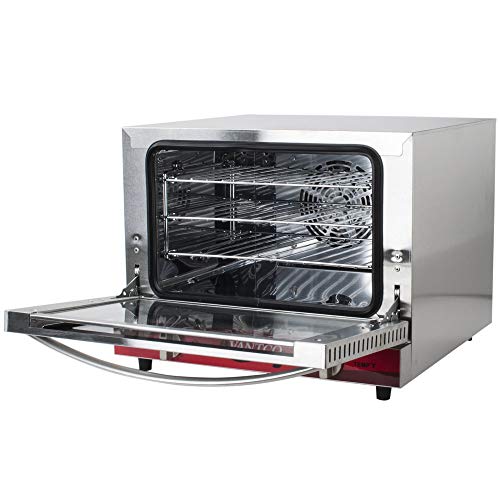 | Best Compact Option | Capacity: 0.8 cu.ft | Power: Electric, 120V, 1440W | Temperature Range: 150°F-550°F | VIEW LATEST PRICE | Read Our Analysis |
More Details on Our Top Picks
VEVOR Double Deck Gas Convection Oven 14 cu.ft
Should you need a high-capacity oven for fast-paced service, the VEVOR Double Deck Gas Convection Oven 14 cu.ft stands out right away. You get 396 liters of total space across two decks, with 11 rack positions per deck for flexible batch baking. It handles over 400 egg tarts or 240 croissants at once.
Two 40,000 BTU burners and convection fans help you cook evenly and quickly. You can adjust temperatures from 100°F to 560°F and use the 60-minute timer for control. Its stainless steel build, tempered glass doors, casters, and countertop-friendly design make it practical for busy kitchens, bakeries, and food stands.
- Capacity:14 cu.ft / 396L
- Power:Natural gas, 2 x 40,000 BTU
- Temperature Range:100°F-560°F
- Timer:60-minute
- Construction:Stainless steel
- Door Style:Dropdown glass door
- Additional Feature:Double-deck baking
- Additional Feature:22 total rack positions
- Additional Feature:Locking swivel casters
VEVOR Commercial Convection Oven (208-240V 5000W)
In case you need a high-capacity countertop oven for a busy bakery, restaurant, or pizzeria, the VEVOR Commercial Convection Oven stands out with its 4.24 cu.ft. interior and four rack positions that fit full-size pans.
You can bake up to 88 egg tarts or 48 croissants per batch, usually in 15–20 minutes. Dual convection fans circulate 360° hot air, so you get even browning and reliable results. The stainless steel body cleans easily, while the double-layer tempered glass door helps retain heat and reduces burn risk. You control everything with simple knobs, including 86℉–572℉ temperatures and a 120-minute timer. Its countertop footprint saves space too.
- Capacity:4.24 cu.ft / 120L
- Power:Electric, 208-240V, 3800-5000W
- Temperature Range:86°F-572°F
- Timer:120-minute
- Construction:Stainless steel
- Door Style:Dropdown tempered glass door
- Additional Feature:Full-size pan compatible
- Additional Feature:15–20 minute baking
- Additional Feature:Dual convection fans
VEVOR Commercial Convection Oven 66L 4-Tier Countertop
Should you need a compact commercial oven that still handles serious batch cooking, the VEVOR Commercial Convection Oven 66L 4-Tier Countertop stands out as a smart fit. You get a 60Qt/66L interior, four cooking tiers, 1800W power, and a fan that circulates hot air evenly for consistent results.
You can set temperatures from 150 to 500°F and bake for up to 120 minutes with two simple knobs. Its stainless steel body cleans easily, while dual-wall tempered glass and a magnetic seal help retain heat. Four racks, a tray, gloves, and a bread clip add value, and the 120V plug keeps installation straightforward anywhere.
- Capacity:66L / 60Qt
- Power:Electric, 120V, 1800W
- Temperature Range:150°F-500°F
- Timer:120-minute
- Construction:Stainless steel
- Door Style:Dual-wall tempered glass door
- Additional Feature:Magnetic door seal
- Additional Feature:Includes heat-resistant gloves
- Additional Feature:120V plug compatible
Kratos Half-Size Electric Convection Countertop Oven
Kratos’s Half-Size Electric Convection Countertop Oven is a smart pick for cafés, coffee shops, food trucks, concession stands, and other small commercial kitchens that need reliable baking power without giving up precious counter space. You get 1.5 cubic feet of capacity in a compact footprint, plus four adjustable wire racks that hold four half-size sheet pans.
Its stainless steel build cleans easily and stands up to daily use. You can watch food through the dual-pane glass door without losing heat. Simple dial controls let you set 150°F to 500°F and a timer fast. ETL certification and a 1-year commercial warranty add confidence.
- Capacity:1.5 cu.ft
- Power:Electric, 120V, 1600W
- Temperature Range:150°F-500°F
- Timer:Timer included
- Construction:Heavy-duty stainless steel
- Door Style:Dual-pane glass dropdown door
- Additional Feature:Four half-size pan capacity
- Additional Feature:ETL commercial certified
- Additional Feature:Cool-touch exterior
CROSSON Double Deck Commercial Electric Pizza Oven
CROSSON’s Double Deck Commercial Electric Pizza Oven suits busy pizzerias, snack bars, and concession kitchens that need to bake multiple 16-inch pizzas at once without sacrificing control. You get independent upper and lower decks, so you can run separate temperatures from 175°F to 660°F and avoid cross-interference. Large heating elements cover the full cavity, reducing pizza rotation.
For thin crust, you can bake at 350°F for 6 to 8 minutes for even cooking and good leoparding. ETLus and ETL sanitation certifications support safety. The insulated stainless steel build stays durable and easier to clean. You also get oven lights, a 60-minute timer, and stone.
- Capacity:Fits pizzas up to 16″
- Power:Electric, 120V, 3200W
- Temperature Range:175°F-660°F
- Timer:60-minute
- Construction:Stainless steel exterior, aluminized steel interior
- Door Style:Side-swing stainless steel door
- Additional Feature:Fits 16-inch pizzas
- Additional Feature:Independent deck controls
- Additional Feature:Includes pizza stone
Avantco CO-14 Commercial Countertop Convection Oven
Avantco’s CO-14 is a smart pick should you run a small café, snack bar, food truck, or any tight kitchen that still needs reliable convection baking. You get a compact 0.8 cubic foot interior that holds three quarter-size sheet pans on adjustable chrome racks, giving you flexibility without sacrificing essential counter space.
Its 1440W forced-air convection system bakes quickly and evenly, while the 150°F to 550°F range lets you handle everything from warming to browning. You’ll like the stainless steel construction, cool-touch dual-pane glass door, simple knob controls, and 120V plug-in setup. The timer adds convenience, and continuous heating helps with longer baking jobs.
- Capacity:0.8 cu.ft
- Power:Electric, 120V, 1440W
- Temperature Range:150°F-550°F
- Timer:Built-in timer
- Construction:Heavy-duty stainless steel
- Door Style:Dual-pane cool-touch glass door
- Additional Feature:Fits three quarter pans
- Additional Feature:Audible timer alert
- Additional Feature:ETL Sanitation listed
Factors to Consider When Choosing Commercial Ovens
At the time you choose a commercial oven, start from matching the oven’s capacity to your menu and daily output. You’ll also want to compare power source options, temperature range, and cooking speed so the unit fits your kitchen’s workflow. Don’t overlook ventilation requirements, because they affect where you can install the oven and how efficiently you can run it.
Oven Capacity Needs
How much oven capacity do you actually need? Start with your typical batch volume. You should match capacity to how much food you bake at once, including the number of racks and tiers that increase output during busy periods.
Check the oven’s interior size in cubic feet or liters, and make sure it fits your usual items, whether that means full sheet pans, hotel pans, or specific pizza diameters. In case your menu varies, more rack positions and included racks give you better flexibility for different batch sizes and products. Higher-capacity models with multiple decks or tiers let you cook different items at the same time, which can streamline service. Also measure your kitchen carefully. Larger ovens usually take up more floor or counter space, and their weight can affect placement and installation plans.
Power Source Options
Because your oven’s power source affects heat performance, installation, and operating costs, you’ll want to compare gas and electric models carefully. Commercial ovens usually run on gas or electricity, and each option heats differently. Gas models often deliver higher BTU output, giving you fast, intense heat and quick recovery for heavy batch cooking.
Electric ovens run on specific voltages, such as 120V or 208-240V, and use heating elements and fans to create even, consistent results. They also give you more precise control during daily operation. Before choosing, check your kitchen’s infrastructure. A gas oven needs a natural gas connection, while an electric unit requires compatible outlets and sufficient electrical capacity. Also compare energy draw: electric models might use about 1,440 to 5,000 watts, while gas burners often reach tens of thousands of BTUs.
Temperature Range
While capacity and power matter, a commercial oven’s temperature range has a direct impact on what you can cook and how consistently it turns out. You’ll want a model that spans roughly 80°F to 600°F or higher, so you can handle everything from gentle proofing to intense baking and roasting.
Just as crucial, you need precise, adjustable controls that let you set the right heat and hold it accurately. That precision helps you avoid undercooked centers, scorched edges, and uneven results. In case your menu varies, dual or independent temperature zones can be a major advantage, letting you prepare different items at separate heat levels in one unit. Look for strong temperature stability and even heat distribution, often supported through convection fans or advanced elements, plus a timer to pair duration with proper temperature.
Cooking Speed
In case speed matters in your kitchen, focus on an oven’s power, airflow, and batch capacity. Higher BTU burners or 5000W elements help the oven hit target heat fast and recover quickly between loads, so you don’t lose time waiting. Convection models with dual or multiple fans also cook faster because they move heat evenly around food.
You should also look at how much the oven can handle at once. Multiple racks or decks let you batch-cook more items per cycle, which enhances throughput. A wide, adjustable temperature range above 500°F gives you flexibility for quick baking or slower roasting. Precise controls and built-in timers with audible alerts keep cycles consistent, helping you avoid overcooking, undercooking, and wasted minutes during busy service. Those gains add up quickly every day.
Ventilation Requirements
At the moment you choose a commercial oven, check its ventilation needs just as closely as its cooking performance. Proper airflow protects your staff through preventing excess heat buildup and helps the oven hold steady temperatures during service. In case you’re considering a convection model, built-in fans can circulate heat evenly and might reduce the need for external ventilation in some setups.
You should also compare fuel types carefully. Gas ovens usually need more ventilation attention than electric models because they must expel combustion byproducts safely. Features matter too: double-layer tempered glass doors limit heat loss and keep more heat contained, which can ease ventilation strain. Finally, match ventilation to heat output. Higher-BTU ovens generally demand stronger kitchen ventilation than lower-output units, so always confirm local code requirements prior to buying any oven.
Size And Footprint
Because kitchen space affects every shift, you should size a commercial oven based on both its capacity and its footprint. The oven’s dimensions directly shape your layout, traffic flow, and how efficiently staff can move during prep and service. In case you handle high-volume baking, a larger cavity can enhance output, but it will also claim more counter or floor space. For tighter kitchens, compact ovens make more sense.
You should also compare width, depth, and height, not just total capacity. Double-deck or multi-tier ovens often rise taller while saving width and depth versus a single-deck unit with similar production. In the event that you need a space-saving option, countertop ovens can work well, from under 20 inches wide to models nearing 40 inches. Always confirm clearance under hoods, shelving, or cabinetry.
Build Quality
Solid build quality matters just as much as capacity, since a commercial oven has to withstand constant heat, repeated opening and closing, and daily cleaning without losing performance. You should prioritize premium stainless steel construction because it resists rust, handles abuse, and wipes down easily at the end of a long shift.
Look for double-layer tempered glass doors, which retain heat better, improve safety, and let you check food without opening the oven. Strong heating elements and sturdy wire racks also matter, since they stand up to frequent use and reduce the chances of premature failure. Effective insulation around the housing and doors helps maintain steady internal temperatures while improving energy efficiency. Details like magnetic sealing strips and dense air vents further limit heat loss, helping your oven stay reliable and consistent during busy service every day.
Control And Timing
During service gets hectic, reliable control and timing help you keep every batch consistent. You need precise temperature control to match your menu, whether you’re proofing dough at around 86°F or blasting pizzas above 650°F. A wide adjustable range gives you flexibility across baking, roasting, and finishing tasks.
You should also look closely at timer functions. Many commercial ovens offer settings from 15 to 120 minutes, so you can manage short bakes and longer cooks without guesswork. Simple knob controls let you adjust heat and time fast, which matters whenever your kitchen is moving hard. Built-in audible alarms help you catch finished cycles immediately and reduce overcooking. In case you handle items that need ongoing heat, a continuous setting lets you override or reset the timer without automatic shutoff during peak hours.
Frequently Asked Questions
Can Commercial Ovens Be Leased Instead of Purchased Outright?
Yes, you can lease commercial ovens instead of buying them outright. You’ll lower upfront costs, preserve cash flow, and often get maintenance options. Compare lease terms, total expenses, and end-of-lease choices before you sign.
What Training Is Required for Staff to Operate Commercial Ovens Safely?
About 30% of kitchen injuries involve burns, so you should train staff on startup, shutdown, temperature controls, loading, cleaning, PPE, emergency procedures, and manufacturer guidelines. You’ll also want hands-on practice and regular safety refreshers.
How Often Should Commercial Ovens Undergo Professional Maintenance?
You should schedule professional maintenance for commercial ovens at least twice yearly, but high-volume kitchens need quarterly service. You’ll also want inspections any time performance drops, temperatures drift, gas smells appear, or electrical issues surface unexpectedly.
Do Commercial Ovens Typically Qualify for Energy Efficiency Rebates?
Yes—like finding money in the walls, you can often claim energy efficiency rebates for commercial ovens. You’ll need ENERGY STAR or utility-approved models, plus local program eligibility. Check utility, state, and manufacturer incentives before buying.
What Warranty Coverage Is Standard for Commercial Ovens in 2026?
You’ll usually get a one-year parts-and-labor warranty on commercial ovens in 2026, while heating elements, door components, or controls might carry two to five years. You should check exclusions, service response times, and registration requirements carefully.