
Should you run a commercial kitchen, choosing the right grease trap can save you from backups, fines, and constant maintenance. You need a unit that fits your flow rate, holds enough grease, and stands up to daily use. In 2026, the best options range from compact under-sink models to heavy-duty interceptors with stronger materials and easier cleaning. A few stand out for reasons that might change what you install next.
| Black Diamond Stoneworks Grease Trap Treatment Cleaner |  | Best Treatment Formula | Type: Enzyme grease trap treatment | Material: Enzyme/bacterial formula | Grease Capacity: FOG reduction treatment | VIEW LATEST PRICE | Read Our Analysis |
| Carbon Steel Grease Trap Interceptor (30LBS/11.32GPM) |  | Best High-Capacity Value | Type: Grease trap interceptor | Material: Q235 carbon steel | Grease Capacity: 50 lbs | VIEW LATEST PRICE | Read Our Analysis |
| John Boos GT-8 Grease Interceptor |  | Best Compact Commercial | Type: Grease interceptor | Material: 11-gauge carbon steel | Grease Capacity: 8 lbs | VIEW LATEST PRICE | Read Our Analysis |
| 8 LB Carbon Steel Grease Trap Interceptor for Restaurant Under Sink Kitchen |  | Best Under-Sink Pick | Type: Grease trap interceptor | Material: 11-gauge carbon steel | Grease Capacity: 8 lbs | VIEW LATEST PRICE | Read Our Analysis |
| BEAMNOVA Stainless Steel Grease Trap Interceptor 25lbs |  | Best Stainless Option | Type: Grease trap interceptor | Material: 201 stainless steel | Grease Capacity: 25 lbs | VIEW LATEST PRICE | Read Our Analysis |
| Commercial Under Sink Grease Interceptor Trap 20 lb | 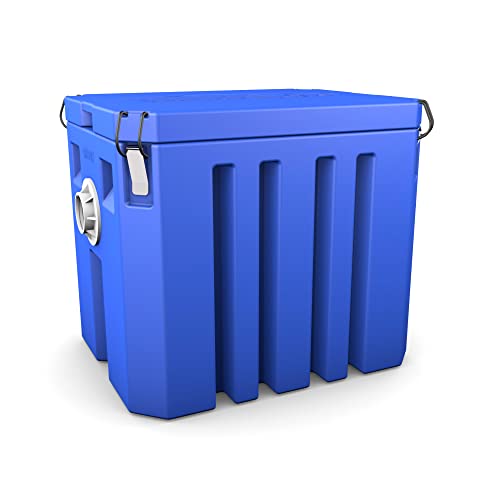 | Best Plastic Design | Type: Grease interceptor trap | Material: High-grade plastic | Grease Capacity: 20 lbs | VIEW LATEST PRICE | Read Our Analysis |
| John Boos GT-100 Carbon Steel Grease Interceptor |  | Best Heavy-Duty Choice | Type: Grease interceptor | Material: 11-gauge carbon steel | Grease Capacity: 100 lbs | VIEW LATEST PRICE | Read Our Analysis |
More Details on Our Top Picks
Black Diamond Stoneworks Grease Trap Treatment Cleaner
Should you run a busy restaurant, hotel, bakery, or hospital kitchen and need a low-hassle way to control grease trap buildup and odor, Black Diamond Stoneworks GET SERIOUS Grease Trap Treatment Cleaner stands out as a strong fit.
You get a commercial-strength, enzyme-based formula that uses bacterial cultures to decompose organic waste into carbon dioxide and water. It cuts fats, oils, and grease, clears pipes before and after the trap, and stops hydrogen sulfide odors. The unscented, non-pathogenic treatment keeps working over time, supports healthy microbial colonies, and helps drains stay free-flowing. You can dose it manually or automatically, and it won’t harm pipes, plants, animals, or marine life.
- Type:Enzyme grease trap treatment
- Material:Enzyme/bacterial formula
- Grease Capacity:FOG reduction treatment
- Flow Rate:Drain/grease trap treatment
- Dimensions:7 x 11.25 x 4.5 in
- Best For:Commercial drain maintenance
- Additional Feature:Enzyme-producing bacteria
- Additional Feature:Odor elimination
- Additional Feature:Pipe-safe formula
Carbon Steel Grease Trap Interceptor (30LBS/11.32GPM)
In case you need a compact interceptor for a busy restaurant, café, canteen, or even a high-output home kitchen, this carbon steel grease trap stands out for its durable 1.5mm Q235 construction and leak-proof design. You get corrosion and deformation resistance, a smooth interior for easier sanitation, and removable baffle plates that separate FOG efficiently.
It handles up to 20.32 GPM and holds 50 pounds of grease, so you won’t clean it as often. The rubber-sealed lid, dual buckles, threaded ports, and included sealing ring help prevent leaks. Since it arrives preassembled with fittings and hardware, you can install it quickly and confidently.
- Type:Grease trap interceptor
- Material:Q235 carbon steel
- Grease Capacity:50 lbs
- Flow Rate:20.32 GPM
- Dimensions:27.5 x 19.3 x 19.7 in
- Best For:Home/commercial kitchens
- Additional Feature:Removable baffle plates
- Additional Feature:Leak-proof sealed lid
- Additional Feature:Tool-free installation
John Boos GT-8 Grease Interceptor
The John Boos GT-8 Grease Interceptor is a smart pick for small commercial kitchens and light-duty industrial setups that need reliable F.O.G. separation without taking up much space. You get an 8-pound grease capacity in a compact 14.2″ x 11.2″ x 10.5″ body that weighs 22 pounds.
It uses TIG welded 11-gauge carbon steel with a corrosion-resistant coating, so you can count on durable commercial-grade performance. The non-skid locking cover stays secure, while the removable baffle makes cleaning easier. Both ends accept no-hub adapters for steel or plastic piping, and the included T-Vent Pipe supports flow control. It’s PDI certified and still widely available.
- Type:Grease interceptor
- Material:11-gauge carbon steel
- Grease Capacity:8 lbs
- Flow Rate:Not specified
- Dimensions:14.2 x 11.2 x 10.5 in
- Best For:Commercial kitchen plumbing
- Additional Feature:Non-skid locking cover
- Additional Feature:Removable baffle
- Additional Feature:Includes T-Vent Pipe
8 LB Carbon Steel Grease Trap Interceptor for Restaurant Under Sink Kitchen
AmGood’s 8 LB Carbon Steel Grease Trap Interceptor fits small to mid-size restaurant kitchens that need a compact under-sink unit with commercial-grade durability. You get an 8-pound grease capacity in a 10.3 x 16 x 11.2-inch footprint, with listed flow rates of 4 GPM and 10 GPM for commercial kitchen use.
Its 11-gauge carbon steel body uses a corrosion-resistant finish for longer service life. You can remove the baffles for faster cleaning, and the non-skid deck plate adds practicality. This PDI-certified model includes a T-vent to help meet ventilation needs. It weighs 39 pounds, uses no-hub connections, carries model number BK-GT-8-FM1, and includes manufacturer warranty information.
- Type:Grease trap interceptor
- Material:11-gauge carbon steel
- Grease Capacity:8 lbs
- Flow Rate:4-10 GPM
- Dimensions:10.3 x 16 x 11.2 in
- Best For:Restaurant under-sink use
- Additional Feature:PDI certified
- Additional Feature:Non-skid deck plate
- Additional Feature:No hub connections
BEAMNOVA Stainless Steel Grease Trap Interceptor 25lbs
Small kitchens that need a compact, ready-to-install interceptor will find the BEAMNOVA Stainless Steel Grease Trap Interceptor 25lbs especially practical. You get a 25-pound-capacity unit built from 1.2mm 201 stainless steel that resists rust, corrosion, and warping. It measures 23.82 x 12 x 11.22 inches, weighs 17.97 pounds, and handles flows up to 13 GPM.
You’ll also benefit from smoother welds, rounded corners, better threaded connections, rubber seals, side locks, and a top handle. Since it arrives assembled, you just connect sink or dishwasher lines to the inlet and route the outlet to the drain. Check local code compliance before you buy.
- Type:Grease trap interceptor
- Material:201 stainless steel
- Grease Capacity:25 lbs
- Flow Rate:13 GPM
- Dimensions:23.82 x 12 x 11.22 in
- Best For:Commercial sink drainage
- Additional Feature:Fully assembled
- Additional Feature:Dual-side locking devices
- Additional Feature:Faucet switch drain
Commercial Under Sink Grease Interceptor Trap 20 lb
Busy restaurant and cafe kitchens that need a compact under-sink solution will appreciate the Beseder GT47, a 20 lb commercial grease interceptor built for durability and easy placement. Its high-grade plastic body uses thick 1/4 inch walls, so you get strong resistance to rust, corrosion, and leaks that often plague thinner metal units. The freestanding design fits neatly under sinks.
You can rely on its 10 GPM flow rate to separate oil and water from kitchen wastewater, including grease, fat, mineral, animal, vegetable, mixed, and emulsified oils. A 2-thread inlet simplifies sink or dishwasher hookup, while secure latches, seals, and handles support daily use.
- Type:Grease interceptor trap
- Material:High-grade plastic
- Grease Capacity:20 lbs
- Flow Rate:10 GPM
- Dimensions:19.3 x 17.3 x 16.1 in
- Best For:Restaurant/cafe under sinks
- Additional Feature:High-grade plastic construction
- Additional Feature:Secure rubber seals
- Additional Feature:Freestanding placement
John Boos GT-100 Carbon Steel Grease Interceptor
Should you need a high-capacity, floor-mounted interceptor for a demanding commercial kitchen, the John Boos GT-100 stands out with its 100-pound grease capacity and Plumbing and Drainage Institute certification. You get a rugged carbon steel body built from TIG welded 11-gauge material, plus a corrosion-resistant coating for longer service life.
At 30.5 inches long, 21.5 inches tall, and 22.25 inches wide, this 175-pound unit is made for serious F.O.G. separation. You’ll also appreciate the non-skid locking cover, removable baffle, and included T-Vent Pipe. Both ends accept no-hub adapters, so you can connect steel or plastic piping with fewer installation headaches on site.
- Type:Grease interceptor
- Material:11-gauge carbon steel
- Grease Capacity:100 lbs
- Flow Rate:Not specified
- Dimensions:30.5 x 21.5 x 22.25 in
- Best For:Commercial kitchen drainage
- Additional Feature:PDI certified
- Additional Feature:Non-skid locking cover
- Additional Feature:Includes T-Vent Pipe
Factors to Consider When Choosing Commercial Grease Traps
At the time you choose a commercial grease trap, you need to match grease capacity and flow rate to your kitchen’s daily output. You should also check the material and general durability, since a stronger unit can handle heavy use and last longer. Finally, make sure the trap fits your installation space and has a reliable seal to help prevent leaks and messy maintenance issues.
Grease Capacity Needs
How much grease can your trap actually hold before performance starts to slip? That’s the core question behind grease capacity needs. Capacity refers to the maximum amount of fats, oils, and grease your trap can contain before it needs cleaning or maintenance. In case you choose the right capacity, you’ll reduce the risk of overflow and costly drain blockages.
To size capacity correctly, look at how much wastewater and FOG your facility produces, especially during peak operating times. A larger-capacity trap can hold more buildup, so you won’t need cleanings as often, which can lower maintenance costs over time. But in the event your trap is too small, grease will accumulate fast, creating odors, plumbing problems, and possible violations. Matching capacity to your kitchen’s output helps keep your system reliable and compliant year-round.
Flow Rate Requirements
Although capacity matters, flow rate determines how quickly your grease trap can handle wastewater during busy periods without backing up. Measured in gallons per minute, or GPM, flow rate tells you how much wastewater the unit can process efficiently before overflows or drainage problems start. In the event that you choose a trap that matches or slightly exceeds your kitchen’s peak output, you’ll protect performance and reduce strain on your plumbing system.
To estimate the right GPM, count your fixtures, including sinks and dishwashers, and consider how much wastewater they produce during rush periods. Commercial units commonly range from about 4 GPM for smaller operations to 20 GPM or more for high-volume kitchens. Should your trap be undersized, grease separation suffers, clogs develop faster, and you’ll face more frequent cleaning and maintenance costs altogether.
Material And Durability
Because commercial kitchens expose equipment to heat, moisture, chemicals, and constant use, the material of your grease trap plays a major role in how long it lasts and how well it performs. You’ll typically choose among carbon steel, stainless steel, and high-grade plastic, and each one offers different strengths.
If you want solid durability at a lower cost, carbon steel models often use thick-gauge metal plus corrosion-resistant coatings to fight rust and warping. Stainless steel gives you stronger anti-rust and anti-corrosion protection, resists deformation, and usually delivers the longest service life. High-grade plastic provides a lightweight option that still resists rust, corrosion, and leaks. You should also check material thickness closely. A 1.5mm carbon steel body or 1/4-inch plastic wall can better handle wear, impact, and chemical exposure over time.
Installation Space Fit
Where your grease trap will sit matters just as much as its capacity. Before you buy, measure the installation area carefully, including length, width, and height. You want a unit that fits cleanly under the sink or in its designated spot without blocking nearby fixtures, storage, or workflow.
You should also leave enough clearance around the trap for routine servicing. Make sure you can open lids and remove internal baffles or covers without fighting walls, pipes, or equipment. Check the unit’s footprint and shape, especially in case your kitchen has a tight layout. Don’t overlook loaded weight, either; the supporting surface must handle it safely. Finally, confirm the inlet and outlet line up with your existing plumbing. A good fit saves space, simplifies installation, and prevents costly layout changes later.
Seal And Leak Prevention
A well-sealed grease trap does more than stop messy drips—it also helps you control odors, protect nearby equipment, and avoid wastewater leaks that can disrupt kitchen operations. At the time of comparing models, look for leak-proof construction with rubber-sealed lids, internal rubber rings, and faucet sealing rings that keep every connection tight.
You should also check for locking buckles or similar cover-locking devices. These features keep the lid securely closed during operation, which improves safety and reduces the chance of grease or wastewater escaping. Strong seals also help block foul gases, including hydrogen sulfide, so your kitchen smells cleaner.
During installation, make sure threads are tightened correctly and use seal tape or gasket materials where needed. Those details help you get consistent, leak-free performance from day one and long-term reliability.
Cleaning And Maintenance
Once you’re choosing a commercial grease trap, cleaning and maintenance should be high on your list because regular service prevents FOG buildup that can trigger clogs, bad odors, and expensive plumbing issues. You’ll want a unit with removable baffles and lids, since they give you easier access for inspections and routine cleaning.
You should also consider how often your kitchen will need service. Cleaning intervals depend on trap capacity and daily grease load, but you’ll generally need to remove accumulated grease and solids before they cause overflow or plumbing damage. Some operators use enzyme-based treatments to help decompose organic material and reduce manual cleanout frequency. During maintenance, you should inspect rubber gaskets and locking components too. Keeping those parts in good condition helps your grease trap stay sealed, leak-free, efficient, and reliable.
Compliance And Certifications
At the initial stage you compare commercial grease traps, check compliance and certifications promptly because they affect both legal operation and long-term performance. You should look for PDI certification initially, since it signals the unit meets recognized industry standards and aligns with many local plumbing codes. CSA and UL marks also matter because they show the trap passed safety and performance testing for commercial kitchen wastewater.
You also need to confirm the model satisfies local environmental and health regulations, or you could face fines and operating issues. Check for required design features, including T-vent pipes for ventilation and removable baffles that simplify inspections and maintenance. At the time you choose a certified trap, you gain better assurance of durability, leak resistance, and reliable FOG separation at specified flow rates under daily kitchen demand and stress.
Frequently Asked Questions
How Often Should Commercial Grease Traps Be Professionally Pumped Out?
You should have commercial grease traps professionally pumped every one to three months, depending on size, usage, and local codes. Don’t wait until they’re 25% full, because frequent service prevents backups, odors, fines, and downtime.
Are Grease Traps Required by Local Plumbing or Health Codes?
Yes, you usually must install grease traps because local plumbing and health codes often require them for food-service businesses. You should check your city, county, and sewer authority rules, since requirements, sizing, maintenance, and inspections vary.
Can One Grease Trap Serve Multiple Sinks or Appliances?
Yes, you can use one grease trap for multiple sinks or appliances provided you size it correctly, your plumbing layout supports shared flow, and local codes allow it. You’ll need proper venting, maintenance, and installation.
What Disposal Methods Are Approved for Collected Grease Waste?
You can use licensed grease haulers, approved rendering services, or permitted recycling facilities for collected grease waste. Image sealed drums leaving your kitchen—even supposing that seems costly, you’ll avoid fines, backups, odors, and environmental violations.
How Can Cold-Weather Conditions Affect Grease Trap Performance?
Cold weather thickens fats, slows separation, and can freeze inlet or outlet lines, so your grease trap works less efficiently. You’ll need more frequent inspections, insulation, and timely pumping to prevent backups, odors, and costly overflows.