
Assuming you want ultra-clean, paper-thin sashimi slices, you’ll appreciate how the right carbon-steel yanagiba or kasumi delivers one-stroke precision and a razor edge that holds through long sessions. You’ll learn which 10–12″ blades, grinds, and handle shapes balance sharpness with toughness, plus how maintenance keeps them cutting—and why a single misstep can ruin a fish—but initially, let’s narrow the top contenders for 2026.
| HOSHANHO 10″ Yanagiba Japanese Sashimi Knife | 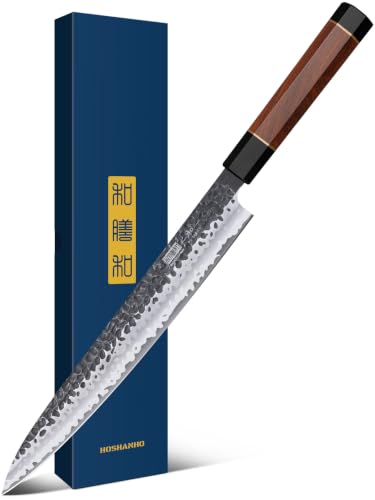 | Professional Precision | Blade Length: 10 inches | Blade Material Type: High-carbon steel core (10Cr15CoMoV) with 8-layer composite | Intended Use: Slicing sashimi/sushi, filleting fish, delicate slicing | VIEW LATEST PRICE | Read Our Analysis |
| SHAN ZU 10″ High-Carbon Japanese Sushi/Sashimi Knife |  | Reliable All-Rounder | Blade Length: 10 inches | Blade Material Type: High-carbon stainless steel (5Cr15Mov) | Intended Use: Sashimi/sushi preparation, filleting, deboning | VIEW LATEST PRICE | Read Our Analysis |
| HIROSHI 4-Piece Sushi & Sashimi Knife Set |  | Complete Starter Set | Blade Length: Set includes multiple lengths (sashimi-style blades; individual lengths not specified) | Blade Material Type: High-carbon stainless steel core | Intended Use: Precision slicing, filleting, prep for sushi/sashimi | VIEW LATEST PRICE | Read Our Analysis |
| Yoshihiro Shiroko Kasumi Yanagi 11.8″ Sushi Knife |  | Artisan Masterpiece | Blade Length: 11.8 inches | Blade Material Type: White Steel #2 (high carbon) | Intended Use: Thin slicing of fish for sushi/sashimi (Yanagi) | VIEW LATEST PRICE | Read Our Analysis |
| Cangshan KITA 12″ Sashimi Knife (High-Carbon Damascus) |  | Showpiece Slicer | Blade Length: 12 inches | Blade Material Type: High-carbon X-7 Damascus steel | Intended Use: Sashimi slicing and general slicing/chopping (Japanese-style sashimi/chef’s knife) | VIEW LATEST PRICE | Read Our Analysis |
More Details on Our Top Picks
HOSHANHO 10″ Yanagiba Japanese Sashimi Knife
Should you want razor‑sharp, paper‑thin slices for sashimi or sushi, the HOSHANHO 10″ Yanagiba delivers. You’ll handle a hand‑forged 10Cr15CoMoV high‑carbon core with eight composite layers, a 10‑inch gray blade honed to 12–15° per side and Rockwell 60±2 HRC for lasting sharpness. The traditional octagonal rosewood and G10 handle with copper accents gives a firm, ergonomic grip that reduces fatigue and improves accuracy during long prep. At 15 inches in total and 232 grams, it’s balanced for delicate filleting, tofu and soft cheeses. Don’t put it in the dishwasher; follow manufacturer care and warranty guidance.
- Blade Length:10 inches
- Blade Material Type:High-carbon steel core (10Cr15CoMoV) with 8-layer composite
- Intended Use:Slicing sashimi/sushi, filleting fish, delicate slicing
- Forge/Construction Method:Hand forged, layered composite construction
- Handle Style/Shape:Japanese traditional octagonal handle (rosewood + G10/copper wires)
- Care Requirement (Hand-wash / Not Dishwasher):Not dishwasher safe; hand wash recommended
- Additional Feature:10Cr15CoMoV core
- Additional Feature:Rockwell 60±2 HRC
- Additional Feature:Rosewood + G10 handle
SHAN ZU 10″ High-Carbon Japanese Sushi/Sashimi Knife
Should you’re a home chef or sushi enthusiast who values razor-sharp precision, the SHAN ZU 10″ High-Carbon Japanese Sushi/Sashimi Knife is a strong choice—boasting an ultra-thin 12° double-beveled edge and 57 HRC 5Cr15Mov steel that holds sharpness while resisting rust. You’ll appreciate effortless sashimi slices, clean fillets and reliable deboning; it even tackles large steaks with minimal tearing. The octagonal red sandalwood handle and full-tang build give balanced strength and a comfortable grip for extended prep. Lightweight yet sturdy, it’s easy to resharpen and maintain. Packaged in an attractive gift box, it’s ready for storage or gifting.
- Blade Length:10 inches
- Blade Material Type:High-carbon stainless steel (5Cr15Mov)
- Intended Use:Sashimi/sushi preparation, filleting, deboning
- Forge/Construction Method:Forged/high-quality stainless construction (described as Japanese stainless steel)
- Handle Style/Shape:Octagonal red sandalwood handle (full-tang)
- Care Requirement (Hand-wash / Not Dishwasher):Implied hand care / easy to maintain (highly anti-rust) — not dishwasher
- Additional Feature:5Cr15Mov steel
- Additional Feature:57 HRC hardness
- Additional Feature:Gift/storage box
HIROSHI 4-Piece Sushi & Sashimi Knife Set
Provided you want razor‑sharp precision for sashimi and sushi, the HIROSHI 4‑Piece set delivers with hand‑forged, high‑carbon stainless steel blades sharpened through a 40‑step process—giving professional chefs and serious home cooks long‑lasting edge retention and corrosion resistance for clean, effortless slices. You get four Japanese‑style blades covering slicing, filleting and detailed prep, all optimized for ultra‑thin cuts. Beech wood handles are ultra‑light and ergonomically shaped to reduce fatigue, while the set’s engineered balance offers excellent control for right‑ or left‑handed users. It’s a practical, gift‑ready upgrade for anyone serious about precision cutting in the kitchen.
- Blade Length:Set includes multiple lengths (sashimi-style blades; individual lengths not specified)
- Blade Material Type:High-carbon stainless steel core
- Intended Use:Precision slicing, filleting, prep for sushi/sashimi
- Forge/Construction Method:Hand-forged blades (40-step process)
- Handle Style/Shape:Ergonomic beech wood handles (shaped)
- Care Requirement (Hand-wash / Not Dishwasher):Hand care implied (hand-forged, recommended hand wash)
- Additional Feature:4-piece precision set
- Additional Feature:40-step sharpening
- Additional Feature:Beech wood handles
Yoshihiro Shiroko Kasumi Yanagi 11.8″ Sushi Knife
Should you crave razor-sharp, paper-thin slices for sushi or sashimi, the Yoshihiro Shiroko Kasumi Yanagi 11.8″ is made for chefs who value edge performance and tradition. You get White Steel #2 high carbon forged with iron, creating Kasumi mist patterns and a Rockwell 62–63 edge. The single-bevel Yanagi with Shinogi, Urasuki and Uraoshi grinds lets you pull long, uninterrupted strokes that preserve texture and flavor. Its D-shaped wa-handle feels welded to your hand; a saya protects the blade. Sharpen on water stones, hand wash and dry immediately, oil to prevent oxidation, and avoid bones or frozen foods.
- Blade Length:11.8 inches
- Blade Material Type:White Steel #2 (high carbon)
- Intended Use:Thin slicing of fish for sushi/sashimi (Yanagi)
- Forge/Construction Method:Handcrafted/forged by artisans (traditional forging)
- Handle Style/Shape:Traditional Wa-style D-shaped handle (wood)
- Care Requirement (Hand-wash / Not Dishwasher):Hand wash only; water stones for sharpening; keep dry/oil to prevent oxidation
- Additional Feature:White Steel #2
- Additional Feature:Included wooden saya
- Additional Feature:Urasuki + Shinogi grinds
Cangshan KITA 12″ Sashimi Knife (High-Carbon Damascus)
Should you value razor-sharp slicing for sashimi and precision cuts across fruits, vegetables, and meats, the Cangshan KITA 12″ Sashimi Knife is a strong choice thanks to its high-carbon X-7 Damascus blade hardened to about 60 HRC and a hollow grind that promotes effortless food release. You’ll appreciate the 12″ forged, full-tang construction and balanced octagonal G-10 handle with a single mosaic rivet for control and durability. The hammered silver finish reduces sticking, and the deep blue magnetic saya protects the edge. It’s not dishwasher-safe; follow Cangshan’s care and warranty guidance to maintain performance.
- Blade Length:12 inches
- Blade Material Type:High-carbon X-7 Damascus steel
- Intended Use:Sashimi slicing and general slicing/chopping (Japanese-style sashimi/chef’s knife)
- Forge/Construction Method:Forged, full-tang construction
- Handle Style/Shape:Octagonal G-10 fiberglass handle (blue/black faux-wood-grain)
- Care Requirement (Hand-wash / Not Dishwasher):Not dishwasher safe; hand wash recommended
- Additional Feature:X-7 Damascus steel
- Additional Feature:Hammered texture finish
- Additional Feature:Magnetic wooden saya
Factors to Consider When Choosing Carbon Steel Sashimi Knives
Upon selecting a carbon steel sashimi knife, you’ll want to weigh steel type and hardness, edge geometry and angle, and whether the blade is forged or laminated. Also consider handle material and grip, plus blade length and balance to match your cutting style. These factors determine sharpness retention, ease of maintenance, and total control.
Steel Type & Hardness
Pick a carbon steel sashimi knife through balancing hardness and alloying: harder steels (about 62–66 HRC) hold an ultra‑fine edge for razor‑clean slices but are more brittle and demand scrupulous care, while slightly softer steels (around 57–60 HRC) give you greater toughness and easier re‑profiling at the cost of more frequent sharpening. Choose alloys with chromium, vanadium, or molybdenum provided you want improved wear resistance and toughness versus plain high‑carbon steel; they still need vigilant corrosion prevention. Harder steels let you form very fine micro‑bevels for extreme precision, but they chip more easily. Should you cook daily and prefer lower maintenance, a tougher, lower‑HRC alloy will tolerate knocks and simplify honing. In every case, commit to immediate drying, light oiling, and regular stropping.
Edge Geometry And Angle
Consider the blade’s geometry as your primary determinant of slicing performance: edge angle, micro‑bevel style, and the blade’s taper work together to control sharpness, durability, and drag. You’ll find carbon steel sashimi knives with very acute edges—typically 12°–15° per side on double‑bevels or a ~9°–15° primary on single‑bevels—giving razor initial sharpness for paper‑thin slices. Look for a flat or slightly convex primary grind with a finely polished micro‑bevel or uraoshi reinforcement to balance keenness and resilience. Harder steels (~60 HRC) let you run narrower angles and hold an edge longer but demand careful handling to avoid chips. Choose single‑bevel yanagiba profiles for one‑stroke sashimi and minimal surface damage, or double‑bevels for easier upkeep and ambidextrous use.
Blade Construction Method
Start via looking at how the blade is made, because construction dictates toughness, edge retention, corrosion behavior, and maintenance. Forged blades come from a single heated billet that’s hammered into shape; that aligns the grain and usually gives you superior toughness and edge life versus stamped blanks. Laminated or san‑mai blades sandwich a hard high‑carbon core between softer cladding, so you get a wear‑resistant cutting edge with better toughness and corrosion resistance at the spine. Pattern‑welded (Damascus) blades layer differing steels for flexibility, fracture resistance, and decorative patterns. Heat treatment—precise austenitizing, quenching, and tempering—sets final HRC (commonly 58–64) and the edge/brittleness tradeoff. Hand finishing and differential hardening refine geometry, cut risk of micro‑chipping, and enable ultra‑thin sashimi slices.
Handle Material And Grip
The handle you choose affects balance, comfort, and control as much as the blade does, so pay attention to material, shape, and construction. You’ll find carbon steel sashimi knives often paired with wooden wa-style or octagonal handles because wood feels warm, gives non-slip grip, and offers excellent tactile feedback for delicate slicing. Should you wash frequently or work in humid kitchens, pick stabilized wood or synthetic options like G-10 to resist swelling and moisture damage. Look for full-tang or securely pinned constructions to enhance strength and reduce wrist fatigue during long strokes. Choose an ergonomic D-handle, octagonal, or contoured grip to keep consistent slicing angles and minimize slippage with wet fish. Keep in mind handle weight shifts overall balance toward bolster or blade.
Blade Length And Balance
Match blade length to the fish and your slicing style, because a 10–12+ inch sashimi knife lets you pull one long, uninterrupted stroke for cleaner, paper-thin slices while an 8–10 inch blade gives you better control on smaller fish or detailed work. Choose blade length to match the width of whole fillets or loins; longer blades suit large cuts, shorter blades suit smaller fish. Balance matters: the point of balance near the handle or slightly forward reduces wrist fatigue and steadies each stroke. Heavier, longer blades add momentum for smooth slicing but demand strength and a well-designed handle to avoid a tip-heavy feel. Check overall knife length (blade plus handle)—typically 13–16 inches—to make certain comfortable full-stroke ergonomics at your workstation.
Maintenance And Sharpening
After you’ve chosen the right blade length and balance, you’ll need a maintenance routine that keeps carbon steel sashimi knives performing at their best. Wash blades using hand methods immediately after use and dry them thoroughly to prevent rust and staining—never operate a dishwasher, acidic cleaners, or abrasive pads. After drying, apply a thin coat of food-safe mineral or camellia oil, especially in the event you’ll store the knife more than a day, to slow oxidation. Sharpen regularly on water stones, progressing through grits (for example 1000→3000→6000), and maintain a 12–15° per side bevel to preserve thin-slicing performance. Finish on a leather strop with polishing compound to remove burrs and align the edge. Avoid cutting bones, frozen foods, or ceramic surfaces.
Intended Use And Versatility
As you pick a carbon steel sashimi knife, consider what you’ll actually do with it: longer yanagiba-style blades (10–12″+) let you pull single, flawless strokes through large fish, while shorter 6–8″ blades handle small fillets and everyday prep more nimbly. Choose single-bevel carbon-steel for ultimate thin-slice precision and minimal tearing; pick double-bevel should you need ambidextrous use and simpler upkeep. Balance hardness: 60–63 HRC holds an ultra-fine edge but chips more easily and demands careful sharpening, while mid-to-high 50s–60 HRC offers toughness and easier maintenance. Pay attention to profile and grind—a long, slender urasuki/flat grind gives cleaner sashimi cuts; hollow or convex grinds aid release and versatility. Finally, accept carbon steel’s maintenance needs—regular drying and oiling—or opt stainless for lower fuss.