Cooking isn’t just about following recipes; it’s about building confidence and creativity in the kitchen. When you master essential cooking skills, you not only prepare meals more efficiently but also enjoy the process. In fact, studies show that over half of home cooks feel more confident after honing their skills. This newfound confidence often leads to healthier meal choices and a greater variety of ingredients on your plate. So, don’t shy away from the learning journey—embrace it! Cooking can be fun, and every skill you gain makes you a better cook.
Essential Cooking Skills Overview
As a beginner cook, you’ll want to focus on a few essential cooking skills that will set you up for success in the kitchen. Mastering these skills will not only help you prepare delicious meals but also boost your confidence. Here are some fundamental skills every beginner should learn:
Tasting and Adjusting Flavors: Chef Aaron Barnett emphasizes the importance of tasting your food as you cook. This skill helps you understand how to balance flavors and make adjustments as needed.
Roasting: Emeril Lagasse highlights roasting as an art form. It involves seasoning your ingredients well and using the right techniques to achieve that perfect golden-brown finish.
Working with Dough: Matt Jennings encourages hands-on experience with dough. This skill is crucial for making bread, pastries, and even pizza from scratch.
Making Risotto: Michelle Bernstein points out that making risotto teaches patience and focus. It’s a great way to learn about timing and texture.
Mastering Basic Sauces: Tyler Akin mentions béchamel as a foundational sauce. Learning to make basic sauces can elevate your dishes significantly.
Practicing these essential cooking skills regularly is key to improving your abilities. Research shows that hands-on cooking lessons, especially in children’s programs, enhance knowledge and self-efficacy related to cooking skills. Regular practice leads to better outcomes for home cooks.
You might face challenges along the way, such as handling kitchen mishaps like over-salting or burning food. Adapting recipes for dietary restrictions can also be tricky. However, mastering basic cooking techniques will help you build confidence and overcome these hurdles.
Culinary instructors recommend a few strategies to help you avoid common beginner mistakes:
Understanding Seasoning: Learn when and how to season your dishes. This knowledge will help you create more flavorful meals.
Sauce-Making Techniques: Mastering sauces involves understanding ingredient ratios and heat control. This skill can enhance the flavors of your dishes.
Baking Skills: Even if you prefer savory dishes, learning baking and pastry skills can diversify your culinary abilities.
Embrace the journey of learning these essential cooking skills. With practice, you’ll find joy in cooking and create meals that impress your family and friends.
Basic Knife Skills
When you step into the kitchen, having good knife skills can make a world of difference. As a beginner cook, mastering these skills not only speeds up your meal prep but also boosts your confidence. You’ll find that efficient knife techniques allow you to chop, slice, and dice ingredients quickly, making cooking more enjoyable. Plus, knowing how to handle a knife safely is crucial to avoid accidents.
Chopping Techniques
Chopping is one of the most fundamental knife skills you’ll learn. Here are some practical tips to help you chop safely and effectively:
Proper knife grip: Hold the knife handle firmly with your dominant hand. Use your other hand to guide the food, keeping your fingers tucked inward.
Stabilize your food: Use the ‘claw grip’ technique with your non-dominant hand. This means shaping your hand into a claw, tucking your fingers behind your middle finger. Grip the food tightly to keep it steady.
Stay focused: Keep your eyes on the blade while chopping. Avoid distractions to prevent accidents.
Use a firm surface: A non-slip cutting board helps prevent slips and keeps your fingers safe.
Remember, knife injuries are common. In fact, knives are the leading cause of disabling injuries among hand tools. Thousands of people visit emergency rooms each year due to kitchen knife injuries. So, practicing safe chopping techniques is essential.
Slicing and Dicing
Once you’ve got chopping down, it’s time to tackle slicing and dicing. These skills are vital for preparing ingredients in uniform sizes, which helps with even cooking. Here are some common cuts you should master:
Mincing: This involves finely cutting ingredients like onions and garlic.
Chopping: A versatile technique for creating larger or medium-sized pieces.
Dicing: A specific form of chopping that results in small, uniform chunks.
Julienning: Produces long, thin strips, often used for vegetables.
Chiffonade: A method for cutting herbs into thin ribbons.
By learning these basic knife skills, you’ll not only improve your efficiency in the kitchen but also reduce waste and costs. Good knife skills allow you to break down ingredients quickly and evenly, making meal prep a breeze, especially during busy weeknights.
As you practice, you’ll find that you can dice an onion in under a minute, which streamlines your cooking process. So, grab your knife and start practicing these techniques. You’ll be amazed at how much easier cooking becomes!
Cooking Methods for Beginners
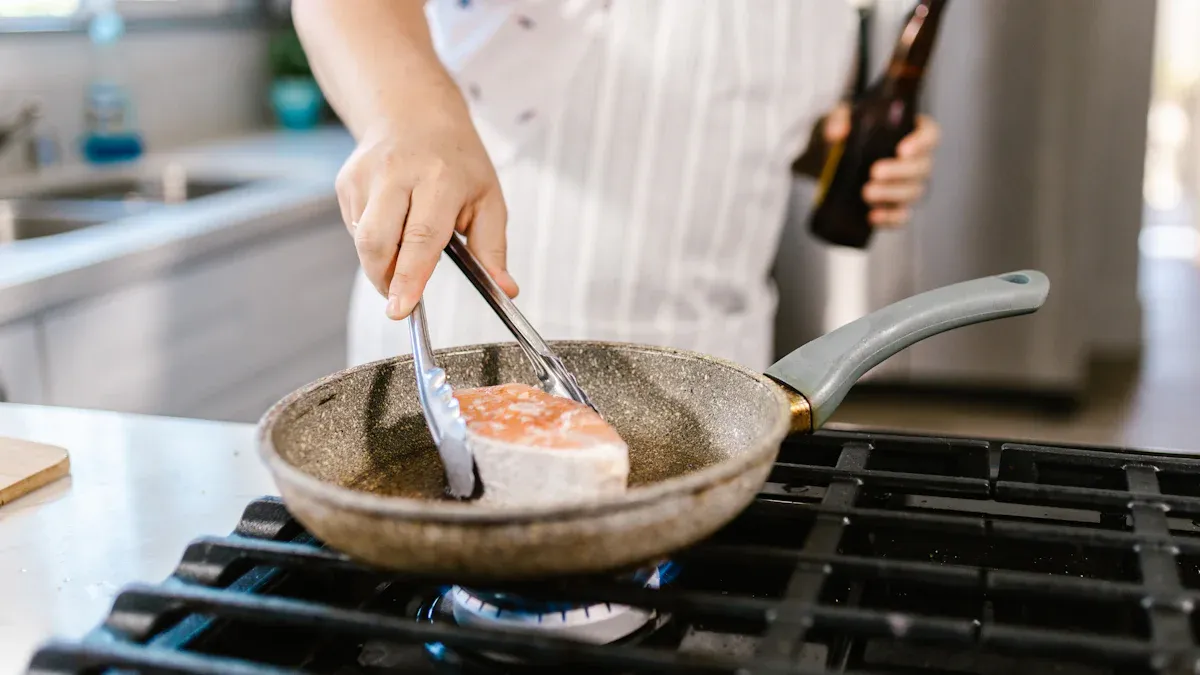
As a beginner cook, mastering essential techniques can elevate your culinary skills. Two fundamental methods you should learn are boiling and steaming, along with sautéing and stir-frying. Each method has its unique benefits and applications.
Boiling and Steaming
Boiling involves cooking food in water or broth at high temperatures. It’s a straightforward method that works well for pasta, vegetables, and eggs. For instance, you can easily boil an egg or cook pasta to perfection. However, be cautious; boiling can lead to nutrient loss in some foods. For example, while boiling vegetables may cause a loss of water-soluble vitamins, it can preserve omega-3 fatty acids in fish better than frying.
Steaming, on the other hand, is a healthier option. It retains more nutrients compared to boiling. For example, steaming broccoli preserves sulforaphane, a compound with anti-cancer properties. The CDC recommends steaming to maximize nutritional benefits, as it keeps flavors and moisture intact. You’ll find that steaming spinach and broccoli maintains folate levels significantly better than boiling.
Sautéing and Stir-Frying
Sautéing and stir-frying are fantastic techniques for quick and flavorful meals. Both methods involve cooking food in a small amount of oil over high heat. Here’s how you can get started:
Heat the Pan: Begin by heating your pan over medium-high heat. A stainless steel or cast-iron skillet works best.
Add Oil or Butter: Pour in just enough oil or butter to coat the bottom of the pan. Wait until it shimmers or foams.
Add Your Ingredients: Carefully toss in your chopped ingredients. Avoid overcrowding the pan to prevent steaming.
Keep the Food Moving: Stir continuously to ensure even cooking and prevent burning.
You can practice these methods with simple dishes like:
Chicken Lettuce Wraps with Thai Almond Sauce
Garlicky Sautéed Mushrooms
The Greenest Stir Fry
These dishes will help you gain confidence in sautéing and stir-frying. With practice, you’ll master these essential techniques and create delicious meals in no time!
Baking Basics
Baking is a delightful skill that every beginner cook should embrace. It’s not just about mixing ingredients; it’s a science that requires precision. Mastering baking basics can lead to delicious results and boost your confidence in the kitchen.
Measuring Ingredients
Accurate measurement of ingredients is crucial for successful baking. Here are some essential tools you’ll need:
Measuring Cups: Perfect for dry ingredients like flour and sugar.
Measuring Spoons: Great for smaller quantities of spices or baking powder.
Scale: The best option for precise measurements, especially for beginners.
Liquid Measuring Cup: Ideal for measuring liquids accurately.
Straight Edge Knife: Useful for leveling off dry ingredients.
Using the right tools ensures you achieve the desired texture and flavor in your baked goods. For example, packing flour down can lead to using too much, which may cause dense cakes. Remember, baking is all about those precise chemical reactions between ingredients. If you get the measurements wrong, you might end up with flat cookies or a cake that doesn’t rise.
Understanding Oven Temperatures
Understanding oven temperatures is another key skill for beginner cooks. Many beginners make the mistake of not preheating their ovens fully. This can alter cooking times and textures. Here are some common pitfalls to avoid:
Not preheating the oven can lead to baking failures.
Your oven temperature may not match the dial setting, causing uneven baking.
Each oven has unique heating characteristics that can affect your results. When you know your oven well, you can adjust temperatures accordingly. Accurate temperatures ensure that your baked goods cook evenly, preventing issues like doughy centers or overly dark exteriors.
By mastering these baking basics, you’ll set yourself up for success in the kitchen. So, grab your measuring tools and get ready to bake!
Flavor Building Techniques
Building flavors in your dishes can transform a simple meal into something extraordinary. As a beginner cook, you’ll want to focus on seasoning and creating sauces that enhance your food. Here’s how to get started!
Seasoning and Spices
Seasoning is the key to making your dishes pop. Here are some tips to help you layer flavors effectively:
Layer Flavors: Start with salt, fat, acid, and heat. These elements work together to create a balanced taste. You can also add optional layers like sweetness, crunch, and spice.
Taste as You Go: Regularly tasting your dish while cooking allows you to make adjustments. This practice ensures that each ingredient shines on its own. For example, seasoning as you cook enhances the flavor of each component, making them more satisfying.
Use Fresh Herbs: Adding fresh herbs at the end of cooking brightens your dish and elevates the overall taste. Consider using basil, parsley, or cilantro for a fresh kick.
Here’s a quick list of popular seasoning combinations to try:
Kosher Salt: Combine with garlic powder, cracked black pepper, and Hungarian paprika for a flavorful rub.
Ground Cumin Seed: Mix with garlic powder and cayenne pepper for a zesty taco seasoning.
Greek Oregano: Pair with garlic powder, black pepper, lemon juice, and olive oil for a delicious marinade.
Sauces and Marinades
Creating your own sauces and marinades is a fantastic way to add flavor without breaking the bank. Homemade options give you complete control over ingredients and quantities. Here’s how to make them:
Simple Salad Dressing: Use a formula of 3 parts fat (like olive oil) to 1 part acid (like lemon juice) with an emulsifier (like mustard). This combination creates a balanced dressing.
Marinades: Include an acidic ingredient, such as lemon juice or vinegar, to tenderize meat. Let your protein sit in the marinade for 15-20 minutes while you prep other ingredients.
Make Stock: Use leftover bones and vegetables to make stock. This adds depth to soups and sauces, enhancing their flavor.
By mastering these flavor-building techniques, you’ll create dishes that impress your family and friends. So, get in the kitchen, experiment, and enjoy the process!
Developing essential cooking skills is crucial for every home cook. These skills not only boost your confidence but also enhance your ability to create delicious meals. Here’s why you should keep practicing:
Confidence in cooking grows as you master basic techniques. Just like musicians and athletes, you’ll feel capable when you know your skills well.
Regular practice leads to greater experimentation with new recipes. Studies show that learning cooking skills early can improve your dietary habits later in life.
Findings | Description |
|---|---|
Cooking Skills | Reporting adequate cooking skills at age 18–23 years linked to better dietary behaviors later in life. |
Meal Preparation | Involvement in meal preparation was associated with greater vegetable consumption and lower fast food intake. |
Long-term Impact | Developing cooking skills early may lead to improved dietary habits in adulthood. |
Remember, cooking is a journey. Every step you take, whether it’s chopping vegetables or trying a new recipe, is progress. So, get in the kitchen, have fun, and enjoy the delicious results of your hard work!