
A manual espresso machine puts control and character into every shot.
These six top picks for 2026 cover travel-friendly models, compact options for small kitchens, and hands-on machines for dedicated home baristas.
I highlight differences in size, pressure control, and upkeep so you can match a machine to your routine.
Read on to find the espresso maker that fits how you actually brew.
| HIBREW H4D Manual Portable Espresso Maker (2-in-1) | 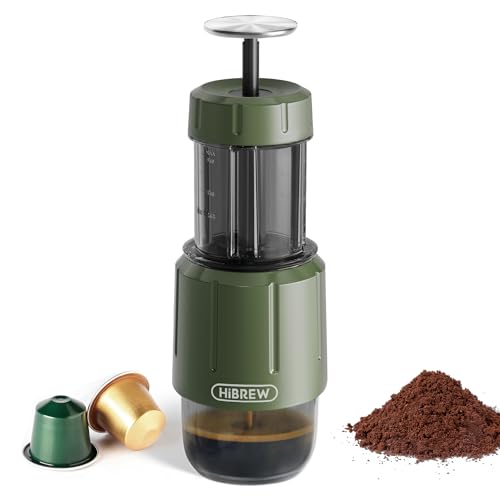 | Best for Travel | Operation Mode: Manual, hand-pump (no electricity) | Coffee Input Compatibility: Ground coffee and Nes Original pods | Pressure/Extraction Control: Hand-pump pressure (user-controlled) | VIEW LATEST PRICE | Read Our Analysis |
| M5 Portable Manual Espresso Maker with Bottomless Portafilter |  | Best for Skill-Building | Operation Mode: Manual, hand-pump (no electricity) | Coffee Input Compatibility: Ground coffee (uses filters/portafilter) | Pressure/Extraction Control: Stable ~9 bar pressure (calibrated) | VIEW LATEST PRICE | Read Our Analysis |
| WACACO Minipresso GR Portable Handheld Espresso Maker |  | Compact Powerhouse | Operation Mode: Manual (no electricity) | Coffee Input Compatibility: Ground coffee only | Pressure/Extraction Control: Manual pump pressure (user-controlled) | VIEW LATEST PRICE | Read Our Analysis |
| Smeg Manual Espresso Machine with Steam Wand (Pastel Blue) |  | Best Design Statement | Operation Mode: Semi-automatic (requires electricity) | Coffee Input Compatibility: Ground coffee and paper pods | Pressure/Extraction Control: 15 bar pump pressure (automatic) | VIEW LATEST PRICE | Read Our Analysis |
| Zulay Magia Manual Espresso Machine with Grinder and Steam Wand |  | Best All-in-One | Operation Mode: Semi-automatic (electric with manual controls) | Coffee Input Compatibility: Ground coffee (built-in grinder; grinds to portafilter) | Pressure/Extraction Control: 15 bar pump pressure (built-in) | VIEW LATEST PRICE | Read Our Analysis |
| Bincoo Manual Dual-Lever Espresso Maker Set | 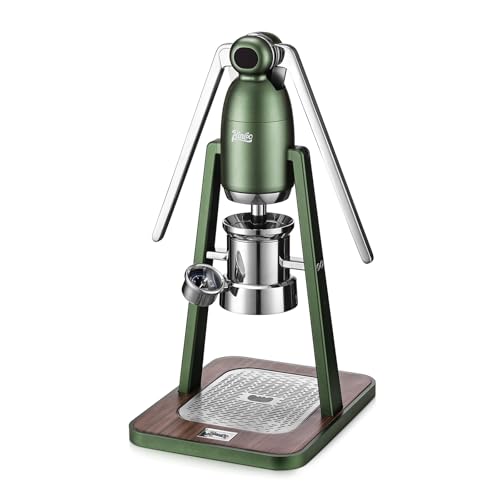 | Professional Grade | Operation Mode: Manual dual-lever (no electricity) | Coffee Input Compatibility: Ground coffee (58 mm portafilter) | Pressure/Extraction Control: Adjustable 3–12 bar (micro-adjustable dual-lever) | VIEW LATEST PRICE | Read Our Analysis |
More Details on Our Top Picks
HIBREW H4D Manual Portable Espresso Maker (2-in-1)
In case you want a truly off-grid espresso solution, the HIBREW H4D nails it: its pure manual pump requires no battery or electricity, pulls a shot in about 60 seconds, and works with both Nes Original pods and ground coffee so you can brew lattes or americanos wherever you are. You’ll operate a collapsible hand-pump, use the included pod adapter or filter basket, and attach the leak-proof travel cup. It’s ultra-compact for backpacks, fully waterproof, and disassembles for a quick 30-second rinse. Package includes the H4D, adapters, cup, a 12-month warranty, and US support with 48-hour Amazon response.
- Operation Mode:Manual, hand-pump (no electricity)
- Coffee Input Compatibility:Ground coffee and Nes Original pods
- Pressure/Extraction Control:Hand-pump pressure (user-controlled)
- Portability / Intended Use:Ultra-compact, travel/camping optimized
- Materials / Construction:Waterproof plastics/metal components (travel-grade)
- Cleaning & Maintenance:Fully waterproof, disassembles quickly; rinse under running water
- Additional Feature:Includes Nes pod adapter
- Additional Feature:Integrated leak-proof cup
- Additional Feature:Collapsible pressure lever
M5 Portable Manual Espresso Maker with Bottomless Portafilter
Should you travel light but demand cafe-quality espresso, the M5 Portable Manual Espresso Maker is built for you: it delivers stable 9 bar pressure and a bottomless portafilter so you can dial in extraction on the go, whether you’re camping, at the office, or staying in a hotel. You operate it manually—no power required—and its compact stainless steel body fits backpacks and desks. An 80 ml tank yields about 60 ml concentrate per cycle, producing rich crema calibrated to SCA parameters. Use the pressurized filter for reliable shots or the bottomless portafilter to refine technique. Parts detach for easy rinsing; two-year warranty included.
- Operation Mode:Manual, hand-pump (no electricity)
- Coffee Input Compatibility:Ground coffee (uses filters/portafilter)
- Pressure/Extraction Control:Stable ~9 bar pressure (calibrated)
- Portability / Intended Use:Compact, travel/camping/portable
- Materials / Construction:Food-safe stainless steel (high-grade)
- Cleaning & Maintenance:All components detach without tools for easy rinsing
- Additional Feature:Bottomless portafilter included
- Additional Feature:Calibrated to SCA standard
- Additional Feature:80 ml water tank
WACACO Minipresso GR Portable Handheld Espresso Maker
Choose the Minipresso GR provided you want a truly portable, no-power espresso solution that fits in a backpack and pulls up to 50 ml of authentic crema-topped espresso using only ground coffee and a pre-boiled water source. You’ll pump manually to generate pressure with this compact 12.7-ounce unit (2.76 x 2.36 x 6.89 inches). It won’t heat water, so bring boiled water and experiment with any roast. Rinse the cup and coffee adapter after each use, dry the water tank, and never use a dishwasher. Accessories sold separately extend capacity and protect the body; warranty info is available from Wacaco.
- Operation Mode:Manual (no electricity)
- Coffee Input Compatibility:Ground coffee only
- Pressure/Extraction Control:Manual pump pressure (user-controlled)
- Portability / Intended Use:Handheld, travel/camping/on-the-go
- Materials / Construction:Lightweight plastic/metal mix (portable handheld)
- Cleaning & Maintenance:Rinse compartments after each use; do not use dishwasher
- Additional Feature:Extremely compact dimensions
- Additional Feature:Requires pre-boiled water
- Additional Feature:Accessories sold separately
Smeg Manual Espresso Machine with Steam Wand (Pastel Blue)
Should you want a stylish, café-quality machine that still feels simple to use, the Smeg ECF02 in Pastel Blue delivers 15-bar pressure, a thermoblock heater for fast warm-up, and an adjustable steam wand so you can pull espresso shots and texture milk for cappuccinos with ease. You’ll get semi-automatic control, ground or pod compatibility, and single/double or long-drink options. The 1-quart removable tank, active hot water dispenser, and energy-saving auto shut-off add convenience. A stainless-steel porta filter, three filter baskets, tamper, backlit dual-function buttons, passive cup warmer, and nonslip feet round out a compact, retro 6″x13″x13″ Italian-made package.
- Operation Mode:Semi-automatic (requires electricity)
- Coffee Input Compatibility:Ground coffee and paper pods
- Pressure/Extraction Control:15 bar pump pressure (automatic)
- Portability / Intended Use:Countertop home kitchen (not travel-focused)
- Materials / Construction:Metal body with chrome/stainless-steel accents
- Cleaning & Maintenance:Removable tank/drip tray; standard cleaning of steam wand and filters
- Additional Feature:Built-in steam wand
- Additional Feature:Thermoblock fast heat-up
- Additional Feature:Retro glossy finish
Zulay Magia Manual Espresso Machine with Grinder and Steam Wand
Provided that you want café-quality shots at home without a separate grinder, the Zulay Magia delivers with its built-in conical burr grinder that grinds directly into the portafilter and a 15‑bar pump that pulls rich crema. You’ll appreciate the matte black-and-silver styling, 2 L removable tank, and pressure gauge for real-time extraction feedback. Controls include single/double-shot, grind, and hot-water buttons; the removable steam wand textures milk for lattes and cappuccinos. Included accessories—tamper, filters, frothing pitcher, double-walled cups, and cleaning tools—speed setup. It’s compact, beginner-friendly yet adjustable for experienced home baristas, with U.S. support and automatic shutoff.
- Operation Mode:Semi-automatic (electric with manual controls)
- Coffee Input Compatibility:Ground coffee (built-in grinder; grinds to portafilter)
- Pressure/Extraction Control:15 bar pump pressure (built-in)
- Portability / Intended Use:Home countertop (designed for home use)
- Materials / Construction:Metal/stainless components with matte finish
- Cleaning & Maintenance:Removable tank and steam wand; cleaning tools included
- Additional Feature:Built-in conical burr grinder
- Additional Feature:Pressure gauge included
- Additional Feature:Includes milk pitcher & cups
Bincoo Manual Dual-Lever Espresso Maker Set
In case you want café-quality control at home, the Bincoo Manual Dual-Lever Espresso Maker Set delivers with an industrial dual-lever system that lets you micro-adjust pressure from 3–12 Bar for precise pre-infusion and full extraction profiling. You’ll use the integrated gauge and adjustable pressure springs to dial in bespoke pressure curves and tweak pre-infusion time, while temperature sits between 92°–98°C for consistent shots. Built from 4 mm stainless steel with brass reinforcements and no plastic, it’s stable at 3.8 kg and vibration-free. A commercial 58 mm portafilter, sealed pistons, and thermal-stable chamber guarantee crema, reduced channeling, and decades of use.
- Operation Mode:Manual dual-lever (no electricity)
- Coffee Input Compatibility:Ground coffee (58 mm portafilter)
- Pressure/Extraction Control:Adjustable 3–12 bar (micro-adjustable dual-lever)
- Portability / Intended Use:Heavy-duty home/cafe-style (not travel-focused)
- Materials / Construction:4 mm stainless steel body with brass reinforcements (commercial-grade)
- Cleaning & Maintenance:Built for longevity with serviceable components (sealed pistons, shower screens)
- Additional Feature:Dual-lever micro-adjustable springs
- Additional Feature:58 mm commercial portafilter
- Additional Feature:No-plastic heavy-duty build
Factors to Consider When Choosing Manual Espresso Machines
Whenever picking a manual espresso machine, you’ll want to check pressure range and how precisely you can control it, since that shapes extraction. Consider brew capacity and portability for where and how often you’ll use the machine, plus whether it handles the coffee types and grind sizes you prefer. Finally, inspect build quality and materials and how easy the unit is to clean to guarantee durability and everyday usability.
Pressure Range & Control
Commanding pressure range and control is essential in case you desire consistent, flavorful espresso: aim for a 9–12 bar peak (9 bar is the common benchmark) and look for machines that let you precisely shape the ramp and hold (for example, a gentle ~3 bar pre-infusion rising to a 9–12 bar peak) so you can reduce bitterness, improve sweetness, and avoid channeling from pressure instability. You’ll want adjustable or multi-stage pressure capability to control flow and shot development. Check both maximum pressure and how finely you can adjust it—coarse step changes limit profiles, while micro-adjustments let you highlight acidity, sweetness, or body. Prioritize machines that deliver stable pressure throughout extraction; fluctuations of several bars lead to channeling, uneven extraction, and off-flavors.
Brew Capacity & Portability
Whether you’re packing for a weekend hike or brewing at your desk, consider how many shots you need between refills and how easily the unit stows: check single-shot yield (typically 30–60 ml), reservoir size, and whether the design supports back-to-back pours or forces a refill after each cycle. Match reservoir capacity (e.g., 80 ml vs larger) to your usual serving size to avoid constant refills during traveling. Weigh physical size, collapsed dimensions, and weight—compact, collapsible levers and travel-cup integration improve packability and fit in side pockets. Balance larger-capacity units that reduce refills against added bulk for hiking. Also prioritize quick-brew cycle times (roughly 30–90 seconds) and easy disassembly for fast rinsing to keep turnaround low while making several drinks.
Compatibility With Coffee Types
Look closely at what each manual espresso machine will take—ground coffee, pods, or both—because that choice determines how much control you’ll have over dose, grind and extraction versus how much convenience and consistency you’ll get. Should you plan to dial in single-origin or dark roasts, grounds and a non‑pressurized portafilter let you tailor grind fineness and dose for peak crema and balance. Pods speed service and standardize shots but limit experimentation. Check stated brew capacity per cycle (40–80 ml typical) so your machine can produce espresso, lungo, or the base for an Americano at the volumes you prefer. Confirm whether it needs pre‑heated water or has internal heating, and review pressure capability (~3–15 bar) to match roast types and extraction goals.
Build Quality & Materials
Because your machine’s materials and construction determine how consistently it heats, resists wear, and holds pressure, prioritize corrosion‑resistant metals (stainless steel or brass) and solid metal internals over plastic. You’ll want heavier units with multi‑mm metal walls because thickness and weight enhance thermal stability and longevity, helping you hit repeatable extraction temperatures. Inspect pistons, springs, and portafilters for solid‑metal construction and reinforcements to reduce vibration and maintain consistent pressure. Choose food‑grade, high‑temperature seals and shower screens that are replaceable so you can avoid leaks and restore performance without replacing the whole machine. Prefer integrated pressure gauges and adjustable mechanical elements—dual levers or calibrated springs—made from durable materials to give precise, long‑lasting control and simpler maintenance.
Ease Of Cleaning
Good materials and tight construction give you reliable shots, but they also affect how easy the machine is to keep clean. Look for fully detachable components—water chamber, portafilter, filters, pistons—so you can rinse each part under running water without tools, cutting trapped grounds and residue. Prefer food-safe, corrosion-resistant materials like stainless steel or BPA-free plastics; they tolerate frequent washing and resist staining and odors. Favor simple internal geometries with minimal seals or crevices, since fewer nooks mean faster rinsing and less risk of stale buildup or mold. Use dishwasher-safe parts only when the manufacturer explicitly says so; otherwise hand-rinse and air-dry removable pieces. Aim for machines you can disassemble and reassemble in under a minute to keep maintenance quick and prevent off-flavors.
Warranty And Support
Whenever you’re evaluating manual espresso machines, consider warranty length and support access as part of the purchase decision—short warranties or hard-to-reach service can turn a minor fault into a costly headache. Check warranty duration (typically 12–24 months) and whether it covers parts, labor, and wear items like seals and valves. Confirm whether service is handled domestically or requires overseas shipping, and estimate repair turnaround. Look for support channels—email, phone, live chat—and observe response times (for example, 48 hours). Verify what voids coverage, such as unauthorized repairs, commercial use, or non-approved water treatments. Finally, assess availability and cost of replacement parts and consumables, and whether the maker or third parties publish clear maintenance guides and parts diagrams.
