
You want even, glossy grains; you want reliable heat; you want a pot that lasts. Here’s a concise look at five cast‑iron rice cookers that do exactly that, from compact Japanese nabe to a versatile Musui–Kamado—with details on capacity, stovetop or oven use, and features that prevent boil‑overs and promote steam. Stay with this guide and you’ll find the cooker that fits your routine and kitchen.
| Iwachu 410-719 Japanese Cast Iron Gohan Nabe Rice Cooker Black |  | Traditional Craftsmanship | Material: Cast iron | Lid Type: Cast iron lid (heavy; condensation bumps) | Made in / Brand Origin: Made in Japan (Iwachu) | VIEW LATEST PRICE | Read Our Analysis |
| Vermicular Musui–Kamado Cast Iron Multicooker Rice Pot |  | Premium Multifunction | Material: Enameled cast iron (cast iron with enamel) | Lid Type: Cast iron lid (fits precision seal) | Made in / Brand Origin: Japanese manufacturer (Aichi Dobby / Vermicular) — US model 120V | VIEW LATEST PRICE | Read Our Analysis |
| Ikenaga Iron Works Delicious Rice Iron Pot Black 2 Pieces |  | Compact Classic | Material: Cast iron | Lid Type: Wood lid (cedar) with iron ring | Made in / Brand Origin: Made in Japan (Ikenaga Iron Works) | VIEW LATEST PRICE | Read Our Analysis |
| Iwachu 410-720 Japanese Cast Iron Gohan Nabe Rice Cooker Black | 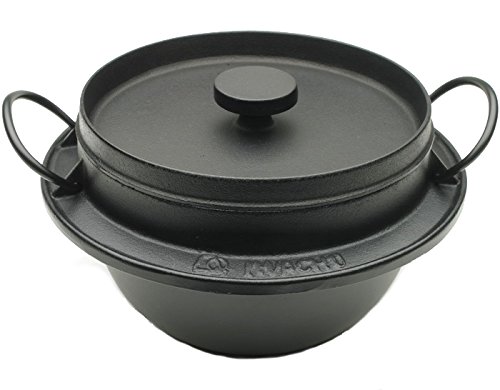 | Perfect for Two | Material: Cast iron | Lid Type: Cast iron lid | Made in / Brand Origin: Made in Japan (Iwachu) | VIEW LATEST PRICE | Read Our Analysis |
| Le Creuset Enameled Cast Iron Rice Pot (2.25 qt.) |  | Stylish & Versatile | Material: Enameled cast iron | Lid Type: Cast-iron lid with stoneware/inner insert | Made in / Brand Origin: Le Creuset (French brand; manufactured by Le Creuset) | VIEW LATEST PRICE | Read Our Analysis |
More Details on Our Top Picks
Iwachu 410-719 Japanese Cast Iron Gohan Nabe Rice Cooker Black
Should you value restaurant-quality rice and traditional Japanese craftsmanship, the Iwachu 410-719 is for you: its thick cast-iron body and heavy, bump-patterned lid lock in heat and redistribute condensation to produce consistently fluffy, glossy rice—ideal for anyone who cooks takikomi gohan or wants dependable results for family meals. You’ll appreciate its 5 go capacity (about 3.75 cups uncooked) that feeds five to six people, the built-in rim channel that catches boil-overs, and the durable handcrafted finish from Iwachu’s century-old tradition. It runs on 100V/500W, weighs 8.3 pounds, requires careful cast-iron care, and includes an instruction manual.
- Material:Cast iron
- Lid Type:Cast iron lid (heavy; condensation bumps)
- Made in / Brand Origin:Made in Japan (Iwachu)
- Capacity / Servings:5 go (~3.75 cups uncooked) — serves ~5–6
- Cooktop / Oven Compatibility:Electric (500W, 100V) — designed as electric rice cooker
- Care / Cleaning:Requires careful cleaning/maintenance to protect cast iron
- Additional Feature:Heavy tight-sealing lid
- Additional Feature:Condensation-redistributing bumps
- Additional Feature:Built-in spill-catching rim
Vermicular Musui–Kamado Cast Iron Multicooker Rice Pot
Should you want a versatile, restaurant‑quality rice cooker that also handles searing, braising, baking and even precision techniques like sous‑vide, the Vermicular Musui–Kamado delivers with its enameled 3.9‑quart cast‑iron pot and three‑dimensional induction heating for ultra‑even results. You get a charcoal, 25.9‑lb package: the Musui pot, Kamado induction stove (120V), cast‑iron lid stand, cookbook, and two measuring cups. The machined rim guarantees a tight seal for musui “waterless” cooking, steam‑roasting and dedicated rice mode. Oven‑safe to 570°F, compatible with gas, electric and induction, it requires hand washing and thorough drying; warranty details from the manufacturer.
- Material:Enameled cast iron (cast iron with enamel)
- Lid Type:Cast iron lid (fits precision seal)
- Made in / Brand Origin:Japanese manufacturer (Aichi Dobby / Vermicular) — US model 120V
- Capacity / Servings:3.9 quarts
- Cooktop / Oven Compatibility:Corded electric kamado (120V) and compatible with gas, electric, induction, oven
- Care / Cleaning:Hand wash; dry thoroughly (enameled cast iron care)
- Additional Feature:Three-dimensional induction heating
- Additional Feature:Enameled non-toxic interior
- Additional Feature:Multifunction precision modes
Ikenaga Iron Works Delicious Rice Iron Pot Black 2 Pieces
Should you value traditional craftsmanship and even heat for small-batch rice, the Ikenaga Iron Works Delicious Rice pot is a great pick—its 18 cm cast-iron body and cedar lid deliver consistent steaming and a subtle aroma, ideal for singles or couples who want perfectly textured rice without fuss. You’ll handle a sturdy 2.3 kg black pot (approx. 1.3 L capacity) that’s stovetop-safe but not for induction or oven use. The set includes the cast-iron pot and baked-cedar lid; no assembly or dishwasher cleaning. It’s made in Japan, model 932098, and comes with manufacturer warranty support for peace of mind.
- Material:Cast iron
- Lid Type:Wood lid (cedar) with iron ring
- Made in / Brand Origin:Made in Japan (Ikenaga Iron Works)
- Capacity / Servings:~1.3 L (1.4 qt)
- Cooktop / Oven Compatibility:Stovetop-compatible (not induction), not oven-safe
- Care / Cleaning:Not dishwasher; hand wash; dry (wood lid requires care)
- Additional Feature:Baked cedar wooden lid
- Additional Feature:Compact 1.3 L capacity
- Additional Feature:Not induction-compatible
Iwachu 410-720 Japanese Cast Iron Gohan Nabe Rice Cooker Black
Should you cook for one or two people and value authentic, restaurant-quality gohan, the Iwachu 410-720 is a perfect choice: this hand‑crafted Japanese cast iron nabe delivers exceptional heat retention so your rice comes out fluffy, glossy, and evenly cooked every time. You’ll appreciate its artisanal Japanese construction and durable black cast iron, which holds heat longer than many pots. With a 2 go capacity (about 1.5 cups uncooked), it’s ideal for two servings of traditional gohan. It’s simple to use on stovetops; just watch water ratios and steaming time, and you’ll get consistently delicious rice every cook.
- Material:Cast iron
- Lid Type:Cast iron lid
- Made in / Brand Origin:Made in Japan (Iwachu)
- Capacity / Servings:2 go (~1.5 cups uncooked) — serves ~2
- Cooktop / Oven Compatibility:Designed for stovetop rice cooking (cast iron)
- Care / Cleaning:Requires careful cleaning/maintenance for cast iron
- Additional Feature:Small 2-go capacity
- Additional Feature:Handcrafted artisan finish
- Additional Feature:Excellent heat retention
Le Creuset Enameled Cast Iron Rice Pot (2.25 qt.)
Should you want restaurant-style, evenly cooked rice with minimal fuss, the Le Creuset Enameled Cast Iron Rice Pot is a top pick—its tall curved sides, precision cast-iron lid with a stoneware insert, and superior heat retention promote consistent convection and moisture circulation so four cups of rice cook uniformly every time. You’ll appreciate the Cerise enameled finish and black satin interior that’s ready to use without seasoning and develops a patina to improve performance. It’s light for cast iron, oven safe to 500°F, dishwasher-safe, and compatible with all cooktops. Ergonomic handles and steam vents reduce boil-overs, and Le Creuset backs it with warranty support.
- Material:Enameled cast iron
- Lid Type:Cast-iron lid with stoneware/inner insert
- Made in / Brand Origin:Le Creuset (French brand; manufactured by Le Creuset)
- Capacity / Servings:2.25 qt (holds ~4 cups cooked rice)
- Cooktop / Oven Compatibility:Compatible with all cooktops and oven-safe (up to 500°F)
- Care / Cleaning:Easy-clean enamel; dishwasher-safe (enameled)
- Additional Feature:Stoneware inner lid
- Additional Feature:Dishwasher-safe enamel
- Additional Feature:Oven-safe up to 500°F
Factors to Consider When Choosing Cast Iron Rice Cookers
When you’re choosing a cast iron rice cooker, focus on how well it holds and spreads heat so your rice cooks evenly. Consider about capacity and serving size, whether the lid seals to control condensation, the material and finish, and whether it works with your stovetop or rice cooker settings. Those factors will help you pick a pot that fits your cooking style and household needs.
Heat Retention & Distribution
Because cast iron stores heat so well, you’ll get steady, even cooking that carries through the rice’s gelatinization phase and keeps temperature swings to a minimum. That high thermal mass and thick walls promote uniform heat distribution, cutting hot spots that scorch grains. Choose a cooker with a heavy, tight-fitting lid so condensation redistributes evenly, maintaining consistent moisture and glossy, evenly cooked rice. Thin or un-enameled cookware loses heat quickly, risking undercooked centers and uneven texture; greater mass and insulation prevent that. On stovetops or induction, pair cast iron with low, steady flame or controlled settings—steady external heat plus cast iron’s retention yields the best results. Avoid high, fluctuating heat, which defeats cast iron’s strengths and compromises final quality.
Capacity And Serving Size
Pick a pot size that matches how much cooked rice you normally eat: a 2–2.5 qt cooker makes about 3–4 cups cooked (good for 1–3 people), while a 3.5–4 qt model yields roughly 6–8 cups (better for 4–6). Also check capacities listed as uncooked cups or liters—1 cup uncooked produces about 2–2.5 cups cooked, so size your pot to the cooked-yield you want. In case you’re single or a couple, 1–2 go (about 1–1.5 cups uncooked) is economical; families should aim for pots that handle 3–5 cups uncooked easily. Plan slightly larger provided you’ll make mixed rice dishes with vegetables or proteins to avoid overflow. Finally, weigh storage and handling: larger cast-iron holds more heat but needs more space and effort to move.
Lid Seal And Condensation
In case you want consistently fluffy, glossy rice, pay close attention to the lid: a heavy, well‑fitting cover with a precision rim or gasket traps steam and channels condensate back into the pot instead of letting it escape or pool. You should prioritize lids that sit snugly and have sufficient mass to limit evaporation and maintain steady internal temperatures, which promotes uniform starch gelatinization. Look for undersides with raised dimples or condensation redistributors so moisture returns evenly instead of dripping into one spot and creating soggy patches. Match lid weight and sealing design to the pot’s geometry; a light or poorly seated lid won’t hold heat or will allow boil‑over. A tight, precision seal reduces steam loss, stabilizes cooking, and yields more consistent, plump grains.
Material And Finish Options
Upon choosing a cast iron rice cooker, pay close attention to material and finish since they directly affect heat retention, reactivity, maintenance, and how the rice ultimately cooks. You’ll get superior thermal mass from heavier, thicker walls and lids, which stabilize temperature and encourage even steam redistribution for fluffier rice. Decide between enameled and bare/seasoned cast iron: enamel gives a non-reactive, easy-to-clean surface that resists rust and handles acidic ingredients without seasoning, while bare or well-seasoned iron develops a natural nonstick patina but can react with acids and needs regular maintenance to prevent oxidation. Also inspect lid fit and interior textures—tight rims, precision seals, or condensation-promoting finishes improve moisture return and final texture. Choose the combo that fits your cooking habits.
Cooking Modes And Compatibility
Material and finish set the stage for how a cast iron cooker performs, but you also need to match the pot to the way you cook. First, check whether the design supports dedicated rice modes—simmer, keep-warm—or whether it expects stovetop timing; standalone electric units differ from stovetop-only pots. Match the heating method to your kitchen: direct gas, induction-compatible base, or built-in electric element, since not every cast-iron pot works with induction or has an integrated heater. In case you want versatility, look for steam-roast, sear, braise and waterless “musui” capabilities. Confirm oven and high-temp ratings for roasting or finishing. Finally, take into account whether the interior is enameled or bare iron, requires seasoning, and is dishwasher-safe, as those affect cleaning and how you’ll use each cooking mode.