
Should your Cuisinart brew suddenly tastes flat after a month, your water filter could be to blame. You’ll want something that removes chlorine and calcium without slowing flow or harming the machine. In 2026, options pair advanced charcoal filtration with recyclable materials for better flavor and sustainability—keep going to see which models fit your maker and budget.
| GoodCups Charcoal Water Filters for Cuisinart (12-Pack) | 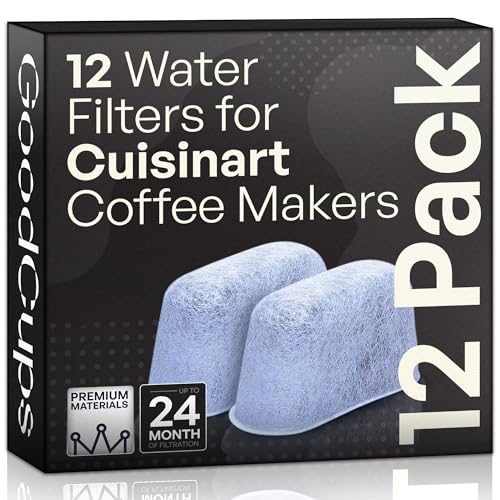 | Reliable Compatibility | Compatibility: Fits all Cuisinart coffee maker models (12-cup, Grind & Brew, etc.) | Filter Type: Charcoal (activated carbon) water filter | Removes Impurities: Removes calcium, chlorine, odors | VIEW LATEST PRICE | Read Our Analysis |
| Cuisinart-Compatible Charcoal Water Filters (12-Pack) |  | Model-Specific Fit | Compatibility: Designed for all Cuisinart models (lists many specific Cuisinart model numbers) | Filter Type: Charcoal (activated carbon) water filter | Removes Impurities: Removes chlorine, odors, calcium and other impurities | VIEW LATEST PRICE | Read Our Analysis |
| Premium 12-Pack Charcoal Water Filters for Keurig | 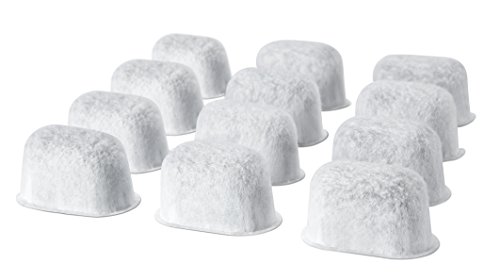 | Keurig Specialist | Compatibility: Compatible with Keurig machines (Keurig 1.0 & 2.0 models purchased after Aug 2007) | Filter Type: Charcoal (activated carbon) water filter | Removes Impurities: Reduces impurities, calcium, chlorine, odors | VIEW LATEST PRICE | Read Our Analysis |
| GOLDTONE Coffee & Charcoal Water Filter Set (Fits Cuisinart) | 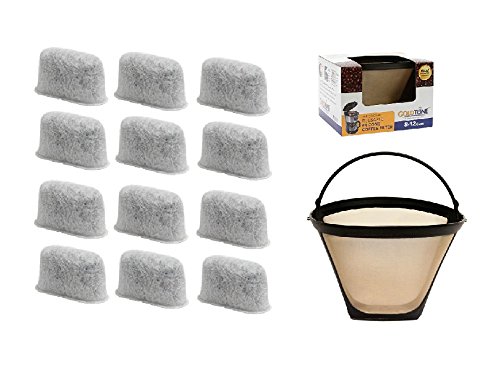 | Reusable Combo | Compatibility: Fits most Cuisinart coffee maker models (replaces original #4 cone water filter) | Filter Type: Activated carbon (charcoal) water filters | Removes Impurities: Removes odors and impurities (activated carbon) | VIEW LATEST PRICE | Read Our Analysis |
| GoldTone Activated Carbon Water Filters for Cuisinart | 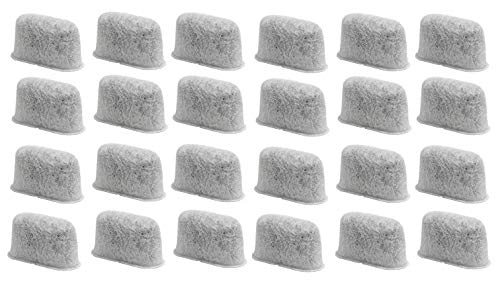 | Long-Term Supply | Compatibility: Specifically designed for use with Cuisinart coffee makers | Filter Type: Activated carbon (charcoal) water filters | Removes Impurities: Removes chlorine, odors, calcium and other impurities | VIEW LATEST PRICE | Read Our Analysis |
More Details on Our Top Picks
GoodCups Charcoal Water Filters for Cuisinart (12-Pack)
Should you own a Cuisinart coffee maker and want a simple, reliable way to improve taste and protect your machine, the GoodCups Charcoal Water Filters (12-pack) are a smart pick; you’ll get filters that fit all Cuisinart models—12-cup, Grind and Brew, and grinders—old or new. They remove calcium, chlorine, and odors with high-absorption charcoal, which sharpens flavor and helps extend brewer life. Filters are designed for ideal water flow to prevent clogs and keep operations smooth. You’ll replace them in seconds without tools, trust a brand utilized by thousands, and appreciate recyclable materials supporting environmental responsibility.
- Compatibility:Fits all Cuisinart coffee maker models (12-cup, Grind & Brew, etc.)
- Filter Type:Charcoal (activated carbon) water filter
- Removes Impurities:Removes calcium, chlorine, odors
- Pack Quantity / Supply:12-pack
- Replacement Interval / Recommendation:Implied monthly replacement (standard practice) / easy to replace
- Easy Installation / Use:Easy to replace within seconds without tools
- Additional Feature:Prevents brewer clogs
- Additional Feature:Recyclable filter materials
- Additional Feature:Fits grind-and-brew
Cuisinart-Compatible Charcoal Water Filters (12-Pack)
In case you want a straightforward, cost-effective way to keep your Cuisinart brewer tasting fresh, this 12-pack of charcoal filters is a smart pick—especially should you own one of the many compatible models (like DCC-1100, DGB-500, or DCC-1000). You’ll remove chlorine, odors, calcium, and other impurities before brewing, so your coffee’s flavor and aroma improve and your machine lasts longer. Each filter meets or exceeds original performance standards and measures about 1-7/8″ x 3/4″ x 1″ for a proper fit. Replace filters every 30 days (more in hard-water areas); installation’s quick and inexpensive.
- Compatibility:Designed for all Cuisinart models (lists many specific Cuisinart model numbers)
- Filter Type:Charcoal (activated carbon) water filter
- Removes Impurities:Removes chlorine, odors, calcium and other impurities
- Pack Quantity / Supply:12-pack
- Replacement Interval / Recommendation:Replace every 30 days (or more often in hard water)
- Easy Installation / Use:Easy to install; simple replacement
- Additional Feature:Detailed model list
- Additional Feature:Meets/exceeds standards
- Additional Feature:Precise filter dimensions
Premium 12-Pack Charcoal Water Filters for Keurig
In case you’re after consistent, great-tasting Keurig brews and don’t want to fuss with frequent replacements, the Premium 12-Pack Charcoal Water Filters are a smart pick—each individually sealed cartridge gives you a year’s supply and fits most Keurig models made after August 2007, including Keurig 1.0 and 2.0 series. You’ll find them compatible with Elite, Classic, Ultra, Special Edition, Ultimate, Platinum, and K200–K500 machines. The charcoal reduces calcium, chlorine, odors, and other impurities to improve flavor. Replace every two months or after 60 tank refills; in hard-water areas, swap more often to keep extraction consistent.
- Compatibility:Compatible with Keurig machines (Keurig 1.0 & 2.0 models purchased after Aug 2007)
- Filter Type:Charcoal (activated carbon) water filter
- Removes Impurities:Reduces impurities, calcium, chlorine, odors
- Pack Quantity / Supply:12-pack (one-year supply noted)
- Replacement Interval / Recommendation:Replace every 2 months or every 60 tank refills (more often in hard water)
- Easy Installation / Use:Individually sealed refills; straightforward replacement schedule
- Additional Feature:Individually sealed refills
- Additional Feature:One-year supply packaging
- Additional Feature:Keurig 1.0 & 2.0
GOLDTONE Coffee & Charcoal Water Filter Set (Fits Cuisinart)
Should you want a durable, cost-saving filter setup that fits most Cuisinart machines, the GOLDTONE Coffee & Charcoal set is a smart pick because it pairs a reusable stainless-steel #4 cone with a year’s supply of activated charcoal cartridges to cut odors and impurities before brewing. You’ll get one GoldTone #4 cone (8–12 cup) and twelve activated carbon filters, each meant to last about a month. The reusable cone is made in the USA from surgical‑grade stainless steel for longevity and consistent extraction. Together they replace original Cuisinart #4 filters, improving flavor while reducing waste and ongoing costs.
- Compatibility:Fits most Cuisinart coffee maker models (replaces original #4 cone water filter)
- Filter Type:Activated carbon (charcoal) water filters
- Removes Impurities:Removes odors and impurities (activated carbon)
- Pack Quantity / Supply:12 water filters (plus one reusable cone filter) — one-year supply
- Replacement Interval / Recommendation:Recommended one month per filter (one-year supply)
- Easy Installation / Use:Simple replacement; reusable cone included for convenience
- Additional Feature:Includes reusable #4 cone
- Additional Feature:Surgical-grade stainless mesh
- Additional Feature:Made in USA
GoldTone Activated Carbon Water Filters for Cuisinart
Should you own a Cuisinart coffee maker and want consistently better-tasting brews, GoldTone activated carbon filters are a smart choice. You’ll remove chlorine, odors, calcium, and other impurities that dull flavor, so your coffee tastes cleaner and more vivid. These filters are made to fit CUISINART machines, ensuring reliable performance and easy installation. Each filter uses activated carbon charcoal for consistent filtration aligned with Cuisinart standards. The pack includes 24 replacements, giving you about two years of supply in case you swap monthly. Use them to maintain water quality and preserve the true character of your coffee.
- Compatibility:Specifically designed for use with Cuisinart coffee makers
- Filter Type:Activated carbon (charcoal) water filters
- Removes Impurities:Removes chlorine, odors, calcium and other impurities
- Pack Quantity / Supply:24-pack (two-year supply)
- Replacement Interval / Recommendation:Suggested one-month filter life (two-year supply with 24 filters)
- Easy Installation / Use:Straightforward replacement (designed for Cuisinart; monthly swap)
- Additional Feature:24-count two-year supply
- Additional Feature:Activated carbon consistency
- Additional Feature:Cuisinart-standard performance
Factors to Consider When Choosing Coffee Maker Water Filters
At the time of choosing a coffee maker water filter, you’ll want to check the filter material (like activated carbon or ion exchange) and whether it’s compatible with your machine. Consider measurable performance—what it removes, flow rate, and how often you’ll need replacements. Also weigh environmental impact and build quality so you get durable, eco-friendly filters that suit your routine.
Filter Material Type
Because the filter material determines what stays in your cup and what gets left behind, choosing the right type is key: pick filters with activated carbon should you want cleaner-tasting coffee. Activated carbon (charcoal) strongly absorbs chlorine, odors, calcium, and other impurities that dull flavor and aroma, so it noticeably improves brew quality. Make sure the material balances adsorption with adequate porosity — you need good flow to avoid clogs and keep your machine running smoothly. Higher-quality materials also protect internal parts, reducing scale and wear and extending the coffee maker’s lifespan. Many charcoal-based options are made from recyclable materials, so you can cut waste without sacrificing performance. Prioritize reputable brands that test adsorption rates and flow characteristics.
Compatibility With Machines
Pick a filter that’s made to fit your coffee maker’s exact model and series so you won’t run into leaks, clogs, or poor flow. Check size and shape specifications against your machine’s manual or product page; dimensions matter for a secure seal and proper water passage. Make sure the filter lists compatibility with both newer and older versions of your model so you don’t lose filtration performance after an update or replacement. Filters designed for a specific brand often cover multiple series or variations, but confirm fit for your exact unit. A mismatched or loosely seated filter can cause leaks, reduced flow, and premature wear on parts. Choose one that matches the manufacturer’s specs for reliable installation and operation.
Filtration Performance Metrics
Although it’s easy to focus just on brand and fit, you should prioritize measurable filtration performance—how well a filter removes chlorine, calcium, odors, and other contaminants directly affects taste, aroma, and machine health. Check for activated charcoal or similar absorbent media, since strong adsorption removes off-flavors and volatile compounds that mask coffee’s subtleties. Look at metrics for calcium reduction and scale prevention; effective filters cut buildup, protecting heating elements and maintaining consistent extraction. Assess flow-rate stability and resistance to clogging so brewing time and contact extraction remain predictable. Seek independent test results or manufacturer data on contaminant removal percentages and flow consistency under real-use conditions. Those concrete metrics tell you whether a filter preserves flavor while safeguarding your machine.
Replacement Frequency Needs
Once you’re deciding how often to change your coffee maker filter, consider beyond the “every 30 days” rule and factor in your water hardness, usage frequency, and taste sensitivity. Most filters are designed for about 30 days of use, but hard water can force you to swap them sooner to prevent mineral buildup and maintain water purity. Replace filters regularly to avoid clogging that slows flow and degrades extraction consistency. Timely changes also keep chlorine, calcium, odors, and other impurities from tainting flavor. Sticking to a schedule protects internal parts from scale and contaminants, which can extend your machine’s working life. Check local water hardness and your brew habits to tailor replacement intervals.
Environmental And Build Quality
Changing filters on schedule helps keep your brewer running well, but you should also weigh environmental impact and build quality during choosing replacements. Look for filters made from recyclable materials and individually sealed refills to cut waste and keep cartridges fresh until use. Activated carbon charcoal delivers reliable impurity removal while staying durable, so you won’t sacrifice performance for sustainability. Should you prefer reusable options, pick ones with surgical-grade stainless steel mesh or similar high-quality construction to extend service life and lower replacement frequency. Also prioritize designs that maintain peak water flow; they prevent clogs, protect internal components, and help your machine last longer. Balancing recyclability, sealed packaging, sturdy materials, and flow efficiency gives you both better coffee and less environmental harm.
Frequently Asked Questions
How Often Should I Replace Filters if I Use Bottled Water?
Should you use bottled water, you’ll typically replace filters every 2–3 months or after about 60 tank fills, but check your maker’s recommendations; heavy mineral content or frequent brewing could mean changing them monthly to preserve flavor and performance.
Can Charcoal Filters Remove Fluoride From Water?
No — charcoal filters won’t remove fluoride effectively. You’ll still have fluoride in your water unless you use specialized methods like reverse osmosis, distillation, or activated alumina, so choose those provided that fluoride removal matters to you.
Are These Filters Compostable or Recyclable?
Some are recyclable, but most charcoal/activated carbon filter housings aren’t fully compostable; you’ll need to separate biodegradable parts (paper/wood) from plastic or metal casings, then recycle or compost each component per local rules.
Will Filters Affect Espresso Machine Performance?
About 60% of machine failures trace to water quality, so yes — using proper filters can improve espresso performance through reducing scale, protecting valves and boilers, and keeping extraction consistent; you’ll save maintenance time and preserve flavor.
Do Filters Need Priming Before First Use?
Yes, you should prime filters before initial use; rinse them under cold water and soak in case recommended, then flush with a full brew cycle to remove fines and carbon dust so your machine and espresso extraction perform properly.