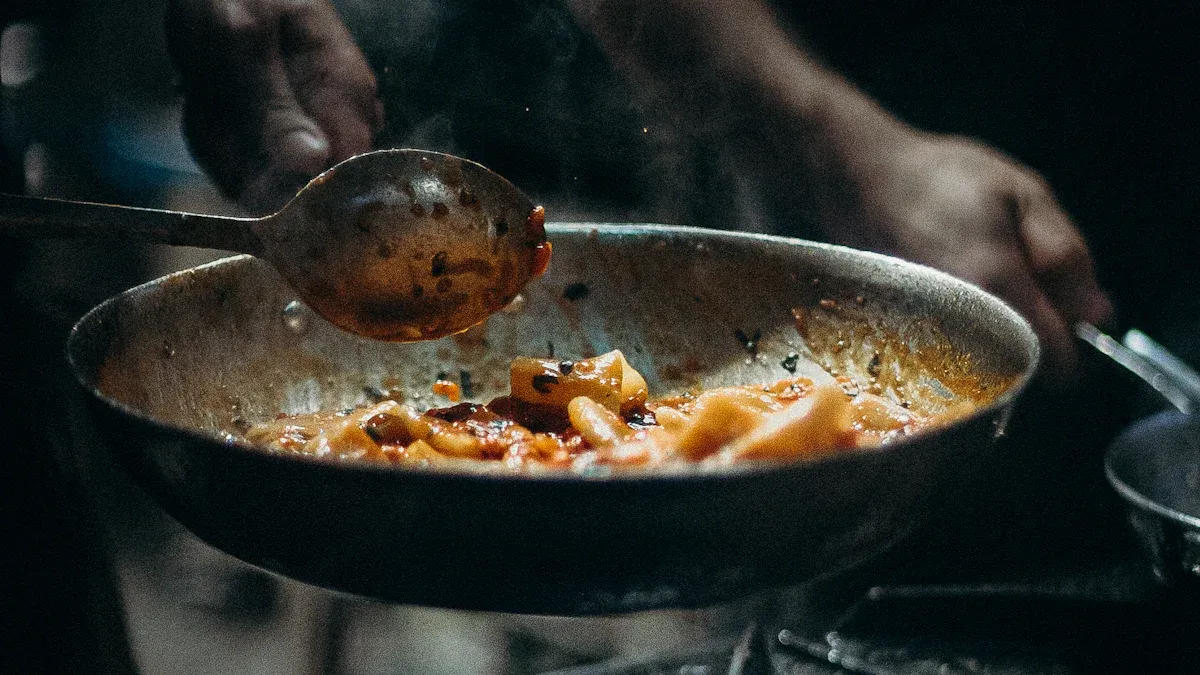
Using cookware correctly is essential for cooking success. You might not realize it, but common cookware mistakes can really impact your meals. For instance, many people ignore proper cleaning methods, which can damage surfaces, especially non-stick ones. Others misuse utensils, like using metal tools on non-stick cookware, leading to scratches. By avoiding these mistakes and following some kitchen tips, you can keep your cookware in great shape and enjoy better cooking experiences.
Key Takeaways
Use silicone, wood, or plastic utensils on non-stick cookware to prevent scratches and extend its lifespan.
Understand the heat tolerance of your cookware to avoid warping and harmful fumes; keep non-stick pans below 500°F.
Always dry your cookware thoroughly after washing to prevent rust and maintain performance; consider hand washing for delicate materials.
Store cast iron pans with a thin layer of oil and ensure they are completely dry to prevent rust and maintain seasoning.
Use protective layers like paper towels between stacked pans to avoid scratches and damage, ensuring your cookware lasts longer.
Wrong Utensils
Metal Utensils on Non-Stick
Using metal utensils on non-stick cookware can lead to significant problems. Many people don’t realize that metal tools can scratch the non-stick surface. This damage compromises the coating’s integrity, making it less effective. Here are some key points to consider:
Metal utensils can scratch the non-stick surface, compromising the coating’s integrity.
Damaged non-stick layers can lead to food sticking, making cooking less enjoyable.
Using metal utensils may chip the coating, risking ingestion of small particles.
Frequent use of metal utensils can shorten the lifespan of non-stick cookware, leading to more replacements.
Many brands state that using metal utensils voids the warranty, leaving you without repair options.
To keep your non-stick pans in great shape, opt for utensils made from silicone, wood, or plastic. These materials are gentle on the surface and help maintain the non-stick properties. Remember, taking care of your cookware is part of good cookware safety.
Material Compatibility
Understanding material compatibility is crucial for successful cooking. Different cookware materials react differently with various utensils. Using the wrong combination can lead to poor cooking results and even health risks. Here’s a quick look at some common materials and their compatibility:
Material Type | Compatibility with Induction Cookware | Reason for Incompatibility |
|---|---|---|
All-Copper | Incompatible | Weakly magnetic or non-magnetic, insufficient eddy currents. |
Non-Magnetic Aluminum | Incompatible | Weakly magnetic or non-magnetic, insufficient eddy currents. |
Enamel Cookware | Incompatible | Weakly magnetic or non-magnetic, insufficient eddy currents. |
Using incompatible materials can also pose health risks. For instance, aluminum can leach into food, especially when cooking acidic foods. Copper may react with certain ingredients, leading to harmful reactions. On the other hand, stainless steel and glass are safer options as they are non-reactive.
By choosing the right utensils and understanding material compatibility, you can enhance your cooking experience and avoid common cookware mistakes. Remember these kitchen tips to keep your cookware in top shape!
Overheating Cookware
High Heat Risks
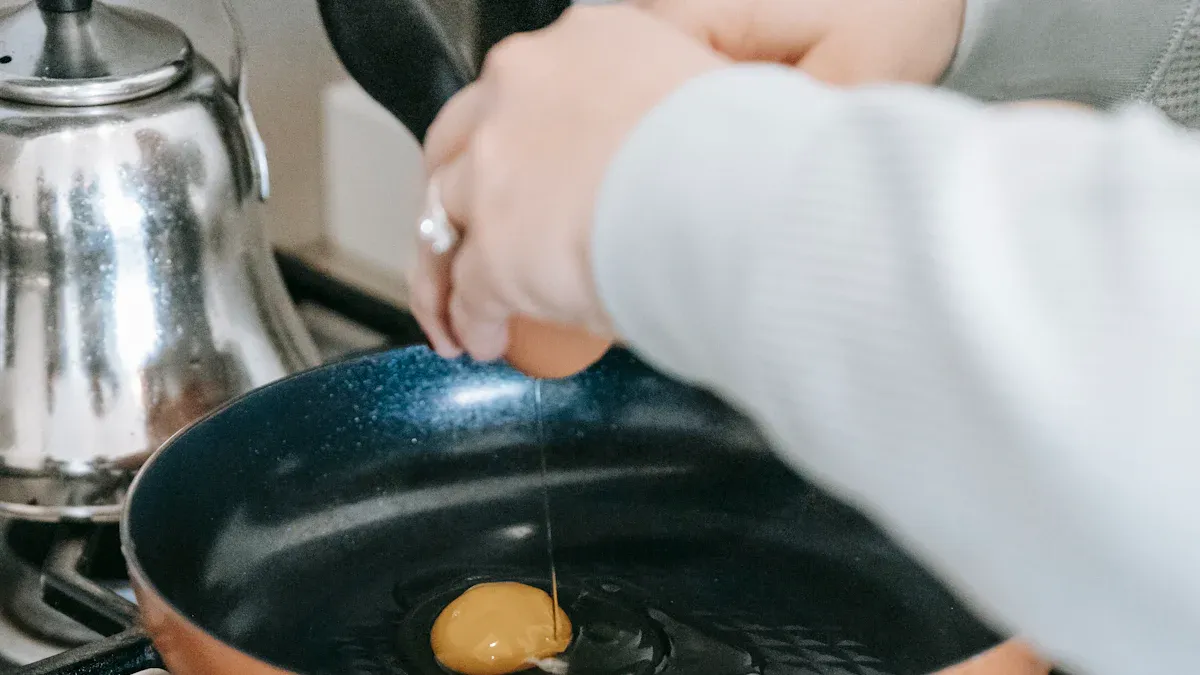
Using high heat unnecessarily can lead to several problems with your cookware. Here are some common consequences of overheating:
Rapid temperature changes can warp your pans.
Non-stick pans are especially vulnerable; high heat can degrade their coating.
Overheating may release toxic fumes from non-stick coatings.
Cheaper cookware often warps more easily due to thinner materials.
Uneven heating from mismatched burner sizes can worsen warping.
When you cook, it’s essential to keep an eye on the heat. For instance, non-stick cookware can start to break down when temperatures exceed 500°F. This degradation can release harmful fumes that might cause flu-like symptoms in people and pose health risks to pets, especially birds. The American Cancer Society notes that normal cooking usually doesn’t produce dangerous fumes, but issues arise when temperatures exceed 600°F.
Heat Tolerance
Understanding the heat tolerance of your cookware is crucial for safe and effective cooking. Different materials have different maximum heat tolerances. Here’s a quick look at some popular cookware materials:
Cookware Material | Maximum Heat Tolerance |
|---|---|
Stainless Steel | 500°F+ (often oven-safe) |
Non-Stick | 350-450°F (varies by coating) |
Knowing these limits helps you avoid cookware mistakes. For example, when preheating the pan, make sure you don’t exceed the recommended temperatures. This practice not only protects your cookware but also enhances your cooking results. By following these kitchen tips, you can enjoy delicious meals without damaging your pans.
Cleaning Mistakes: Not Drying Properly
When it comes to cookware, one common mistake you might make is not drying properly after washing. This simple step can significantly impact the longevity and performance of your pans. Here’s why it matters and how you can do it right.
Drying Techniques
To prevent rust and water spots on your cookware, you should always dry it thoroughly. Here are some effective drying techniques:
Use a clean towel to dry the cookware completely after washing. Make sure to cover all areas, including handles and rivets.
If your cookware still feels damp, place it on a low burner for 2–3 minutes. This method helps evaporate any remaining moisture, especially important for cast iron and carbon steel.
By following these techniques, you can keep your cookware in great shape and avoid common cookware mistakes.
Hand Cleaning Benefits
You might wonder whether hand cleaning is worth the effort compared to tossing your pans in the dishwasher. The truth is, hand washing offers several advantages, especially for delicate materials. Here’s why you should consider it:
Hand washing helps maintain the performance, finish, and structural integrity of your cookware.
It’s the safest method for delicate cookware, preserving its shine and stainless steel surface.
You avoid exposure to harsh detergents and reduce the risk of scratching from dishwasher racks.
In fact, a 2015 study published in Food Protection Trends found that dish towels can become contaminated with bacteria from raw meat and poultry. This suggests that while towel drying may seem convenient, it can promote bacterial growth on cookware if proper hygiene practices aren’t followed.
Air drying may require more space and isn’t as effective as towel drying in preventing bacterial growth. Proper hand washing and regular towel turnover can help reduce risks associated with towel drying. Remember, using soap or steel wool can damage your cookware, so stick to gentle cleaning methods.
By taking the time to dry your cookware properly and opting for hand cleaning, you can enhance your cooking experience and ensure your pans last longer. These kitchen tips will help you avoid common mistakes and keep your cookware in top condition.
Storing Cookware: Storing Cast Iron
Best Practices for Cast Iron
Storing cast iron pans properly is key to keeping them in great shape. Here are some best practices to follow:
After cleaning, always apply a thin layer of neutral oil to the pan’s surface. This helps maintain the seasoning.
Ensure your cast iron pan is bone-dry before storing it. Moisture can lead to rust, which is a common enemy of cast iron cookware.
Store your pan in a dry, well-ventilated area. If your pan has a lid, keep it slightly ajar to allow air circulation.
After rinsing, heat the pan on low for 1-2 minutes to ensure it is completely dry before storage. A light coat of oil while the pan is still warm helps seal the surface.
By following these kitchen tips, you can prevent rust and keep your cast iron cookware ready for your next meal.
Preventing Scratches
When it comes to storing cast iron pans, preventing scratches is just as important. Here’s how you can protect your cookware:
Place paper towels or pan protectors between stacked pans. This creates a buffer and prevents scratches.
Avoid stacking non-stick pans directly on top of each other without protective layers. This helps maintain their performance.
Consider using dedicated pot and pan protectors for better stacking and protection. These can be found at most kitchen supply stores.
If you must stack your pans, use soft cloths or paper plates to create a barrier between them.
Improper storage can lead to scratches and damage, which can affect the performance of your pans. A survey by Good Housekeeping found that 68% of homeowners reported damage to their cookware due to improper storage practices. By taking these simple steps, you can extend the life of your cast iron pans and enjoy cooking with them for years to come.
In summary, avoiding common cookware mistakes can significantly enhance your cooking experience. Remember to use the right utensils, manage heat properly, and store your cookware with care. By following these tips, you not only protect your pans but also improve the quality of your meals. Research shows that using the right cookware can boost the nutritional value of your food, especially with materials like cast iron. So, take these insights to heart and enjoy cooking with confidence! 🍳
FAQ
What should I use to clean non-stick cookware?
Use a soft sponge or cloth with mild dish soap. Avoid abrasive cleaners or steel wool, as they can scratch the non-stick surface.
How can I tell if my cookware is oven-safe?
Check the manufacturer’s label or website. Most stainless steel and cast iron cookware is oven-safe, while some non-stick pans may have lower heat tolerances.
Is it safe to use aluminum cookware?
Yes, aluminum cookware is safe for most cooking. However, avoid cooking acidic foods in uncoated aluminum, as it can react and affect flavor.
How often should I season my cast iron pans?
Season your cast iron pans after every few uses or whenever they look dull. This helps maintain their non-stick surface and prevents rust.
Can I stack my cookware?
Yes, but use protective layers like paper towels or pan protectors to prevent scratches. This keeps your cookware in good condition for longer.