You rush home after a long day, and the last thing you want is to spend hours in the kitchen. With 33% of individuals struggling to find time for meal prep during weekdays, time-saving cooking solutions become essential. You can save time in the kitchen without sacrificing nutrition or taste. By adopting specific cooking habits, you can streamline your meal preparation and enjoy healthy eating tips daily.
Key Takeaways
Plan your meals weekly to save time and reduce food waste. This habit makes cooking easier and keeps your meals organized.
Pre-cut ingredients ahead of time to speed up meal preparation. Store them properly for quick access during busy weeknights.
Adopt one-pot meals to simplify cooking and cleanup. These meals combine all ingredients in one pot, saving you time and effort.
Meal Prep for Efficiency
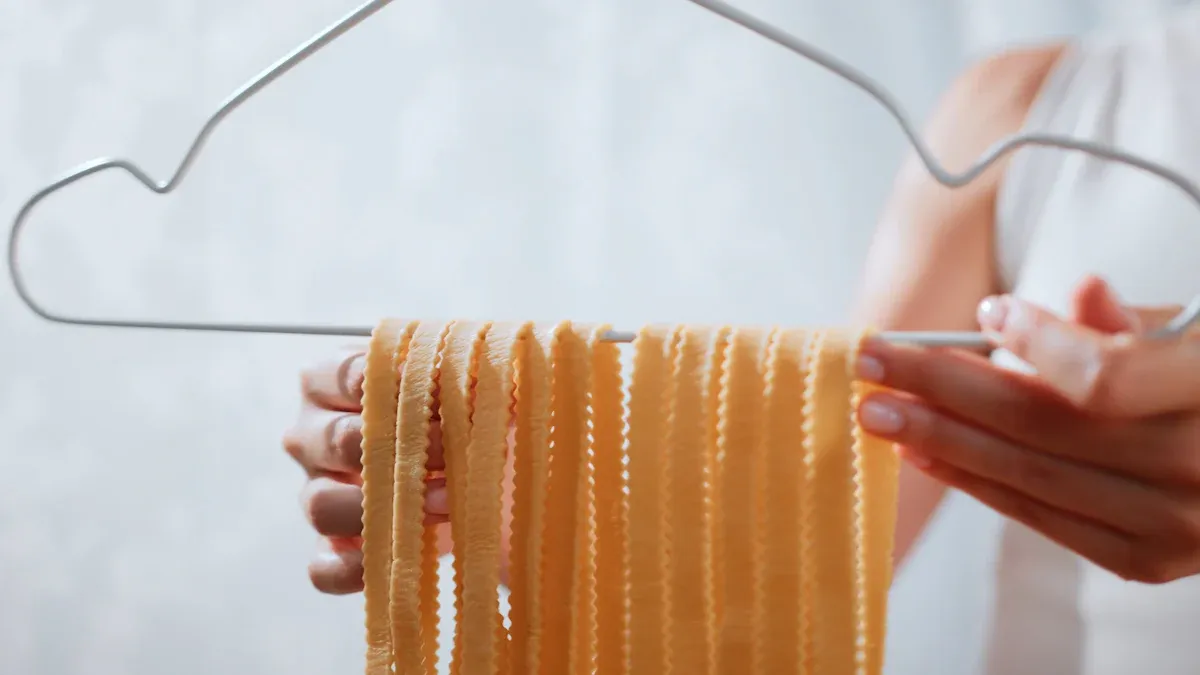
When it comes to saving time in the kitchen, meal prep is your best friend. By planning your meals ahead of time, you can streamline your cooking process and make weeknight dinners a breeze. Let’s dive into two key strategies: weekly menu planning and pre-cutting ingredients.
Weekly Menu Planning
Creating a weekly menu can significantly cut down on your cooking time. Here’s why you should consider it:
Saves Time on Planning: Repeating menus helps you streamline your meal preparation routines. You won’t waste time deciding what to cook each day.
Reduces Food Waste: Preparing meals in advance not only saves time but also promotes healthier eating choices. You’ll know exactly what you need to buy and use.
Eliminates Daily Prep: Weekly meal prep means you can skip daily food preparation and cleanup. This can save you a lot of time during busy weeks.
Quick Reheating: Dedicating one day for meal prep allows you to simply reheat meals throughout the week. This reduces daily cooking time and keeps your evenings stress-free.
To get started, set aside a specific day each week to plan your meals. Write down your menu, make a shopping list, and stick to it. This habit will transform your cooking routine.
Pre-Cutting Ingredients
Pre-cutting ingredients is another fantastic way to save time. Here are some tips to maximize your efficiency:
Batch Prep: Designate specific days for all food prep. Complete all cutting, washing, and marinating before cooking.
Prep Ahead of Time: Slice fruits and vegetables in advance. Store them in the fridge for several days, ready for quick use.
Use Kitchen Gadgets: Employ tools like food processors and mandolins to speed up the cutting process. They can save you a lot of time.
Blanching: Quickly prepare vegetables by blanching them. This reduces their cooking time and keeps them vibrant.
Consider Pre-Cut Options: If you’re really short on time, think about buying pre-cut vegetables and fruits. They can be a lifesaver on busy nights.
Pre-cutting vegetables eliminates lengthy washing and chopping processes, saving you significant time during meal preparation. This method allows for quicker meal assembly, especially during hectic weeknights when every minute counts. Proper storage techniques, like using a damp paper towel, help maintain the quality of prepped vegetables, making them ready for quick use.
By incorporating these meal prep strategies into your routine, you’ll find that cooking becomes less of a chore and more of an enjoyable experience.
Time-Saving Cooking Techniques
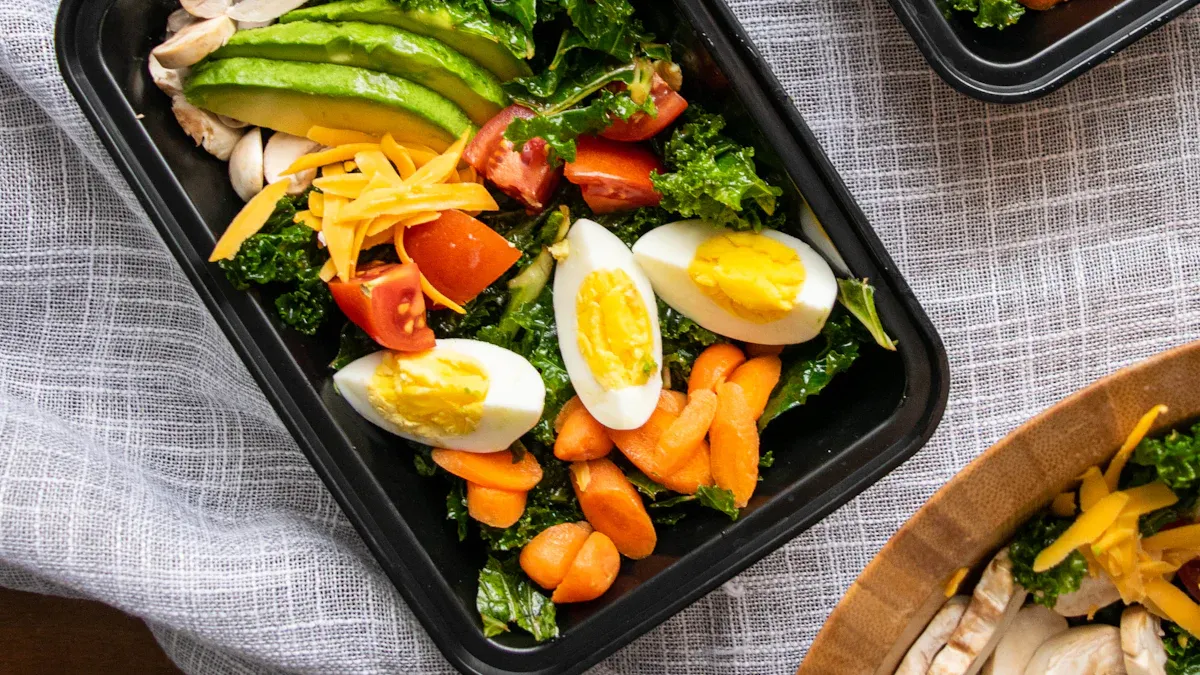
When you’re short on time, adopting efficient cooking techniques can make a world of difference. Two standout methods are one-pot meals and the idea of cooking once, eating twice. Let’s explore how these techniques can save you time and effort in the kitchen.
One-Pot Meals
One-pot meals are a fantastic way to simplify your cooking process. They allow you to combine all your ingredients in a single pot, which means less cleanup and more time to enjoy your meal. Here are some benefits of one-pot meals:
Easy Preparation: You can throw everything into one pot and let it cook. This method is perfect for busy weeknights.
Flavorful Dishes: Cooking ingredients together allows flavors to meld, creating delicious meals.
Nutritional Balance: You can easily include proteins, grains, and vegetables in one dish, making it easier to achieve a balanced meal.
Here’s a quick look at the nutritional advantages and limitations of one-pot meals:
Aspect | Advantages ✅ | Limitations ❗ |
|---|---|---|
Calorie Control | Lower calorie intake due to controlled portions and cooking oils | Depends on recipe choices—high-fat sauces can increase calories |
Sodium & Sugar | Significantly lower levels when not using processed ingredients | Packaged seasonings or condiments may still add excess sodium |
Nutrition Quality | Higher intake of vegetables, fiber, and essential nutrients | Requires knowledge of balanced meal composition |
By choosing wholesome ingredients and avoiding processed options, you can create nutritious one-pot meals that save time and keep you healthy.
Cooking Once, Eating Twice
The concept of cooking once and eating twice is a game-changer for busy individuals. This technique involves preparing larger quantities of food so you can enjoy leftovers in different ways. Here’s how it works:
Batch Cooking: When you prepare a large quantity of a dish, you save time and have meals ready for the week.
Meal Planning: Select versatile ingredients that can be used in multiple meals. This reduces food waste and saves money.
Repurposing Ingredients: Get creative with your leftovers! You can transform them into entirely new dishes, maximizing your cooking efforts.
Freezing Leftovers: Store meals in the freezer for quick access on busy days. This ensures you always have a nutritious option available.
Here are some creative ideas for using leftovers:
Combine leftover meat with vegetables and gravy to make savory meat pies.
Add leftover meat to soups or stews for added protein and flavor.
Turn cold, leftover rice into fried rice by sautéing it with vegetables and soy sauce.
Mix leftover pasta with vegetables and cheese to create a delicious pasta salad.
Blend leftover fruit with yogurt to make a nutritious smoothie.
By implementing these time-saving cooking techniques, you can enjoy delicious meals without spending hours in the kitchen. Embrace the simplicity of one-pot meals and the efficiency of cooking once to make your weeknight dinners a breeze.
Smart Kitchen Hacks
When it comes to saving time in the kitchen, smart kitchen hacks can make a huge difference. By using the right tools and techniques, you can streamline your cooking process and enjoy healthy meals without the hassle. Let’s explore some essential kitchen tools and effective freezing methods that will enhance your cooking efficiency.
Essential Kitchen Tools
Having the right kitchen tools can significantly speed up your meal preparation. Here’s a list of must-have tools that can help you cook faster and more efficiently:
Pressure Cooker: Cooks food quickly while retaining nutrients and flavors.
Mandolin: Slices fruits and vegetables quickly and precisely for even cooking.
Salad Spinner: Removes excess moisture from greens for better dressing adherence.
Blender: Essential for creating smoothies, soups, and sauces.
Food Processor: A multitasker that chops, slices, shreds, and blends ingredients.
Using these tools can dramatically reduce your cooking time. For example, a food processor can cut preparation time dramatically by mixing, slicing, shredding, and chopping various ingredients. A pressure cooker traps steam to increase cooking temperature, significantly reducing cooking time for grains, meats, and beans.
Here’s a quick look at how these tools impact your meal preparation time:
Kitchen Tool | Impact on Meal Preparation Time |
|---|---|
Food Processor | Cuts preparation time dramatically by mixing, slicing, shredding, and chopping various ingredients. |
Pressure Cooker | Traps steam to increase cooking temperature, significantly reducing cooking time for grains, meats, and beans. |
Slow Cooker | Allows for unattended cooking, freeing up time for other tasks while the meal cooks. |
Immersion Blender | Blends foods directly in their container, simplifying the process of puréeing soups and making sauces. |
Chef’s Knife | A high-quality knife speeds up cutting and chopping; keeping it sharp enhances safety and efficiency. |
Food Scales | Saves time by weighing ingredients directly, eliminating the need for measuring by volume. |
Bite-Sized Food Cutter | Creates small food pieces quickly, ideal for preparing meals for infants and toddlers. |
Freezing for Freshness
Freezing is a fantastic way to preserve the freshness of your ingredients and save time on busy days. Here are some effective freezing techniques to keep in mind:
Use a pre-freezing treatment, such as blanching vegetables or adding ascorbic acid to fruit.
Freeze produce using the bulk, tray, or puree method.
Pay attention to the quantity being packaged to help maintain texture.
When freezing, remember these tips for specific ingredients:
Fresh fruit can generally be frozen as-is.
Most vegetables should be blanched before freezing to stop enzyme activity.
Meat should be wrapped tightly using a sturdy material like freezer paper or foil.
Cooked rice and pasta freeze well.
Bread can be frozen sliced or whole, wrapped tightly.
Eggs should not be frozen in their shells; crack and whisk first.
For fresh herbs and sauces, freeze them in ice cube trays for premeasured portions. Top herb portions with olive oil to prevent discoloration.
Here’s a table showing how long you can freeze common ingredients while maintaining optimal taste and nutrition:
Ingredient | Freezing Time |
|---|---|
Bacon and sausage | 1 to 2 months |
Casseroles | 2 to 3 months |
Frozen entrees | 3 to 4 months |
Uncooked ground meat | 3 to 4 months |
Uncooked poultry parts | 9 months |
Fruits and Vegetables | 8 – 12 months |
Poultry | 6 – 9 months |
Fish (fatty) | 3 – 6 months |
Fish (lean) | 6 – 8 months |
Cured or Processed Meat | 1 – 2 months |
Cheese | 6 – 8 months |
Cream (all kinds) | 2 months |
Egg whites/yolks | 1 year |
By implementing these smart kitchen hacks, you can make your cooking experience more efficient and enjoyable. With the right tools and freezing techniques, you’ll find that preparing healthy meals becomes a breeze.
You’ve learned some great time-saving cooking habits that can transform your kitchen experience. Embrace meal prep, try big-batch recipes, and utilize one-pot meals to make cooking easier. With a little planning and the right tools, you can enjoy healthy recipes without the stress. Start implementing these strategies today, and watch how cooking becomes both quick and enjoyable!
FAQ
What is meal prep?
Meal prep involves planning and preparing meals in advance, saving you time during busy weekdays.
How can I make one-pot meals?
Combine proteins, grains, and vegetables in one pot. Cook everything together for a quick, flavorful dish.
How long can I freeze leftovers?
Most leftovers can be frozen for 2 to 3 months while maintaining taste and quality.