Cooking temperatures play a vital role in ensuring food safety and quality, which is why a Cooking Temperature Guide is essential. Proper cooking prevents foodborne illnesses by killing harmful bacteria. Using a food thermometer helps you achieve the right internal temperatures for meats, poultry, seafood, and eggs. This practice enhances flavor and maintains moisture, making your meals more enjoyable.
Key Takeaways
Cook poultry and eggs to a minimum internal temperature of 165°F to eliminate harmful bacteria.
Use a food thermometer to ensure meats reach safe internal temperatures, like 145°F for beef and pork.
Prevent cross-contamination by keeping raw and cooked foods separate and practicing good hygiene.
Safe Internal Temperatures
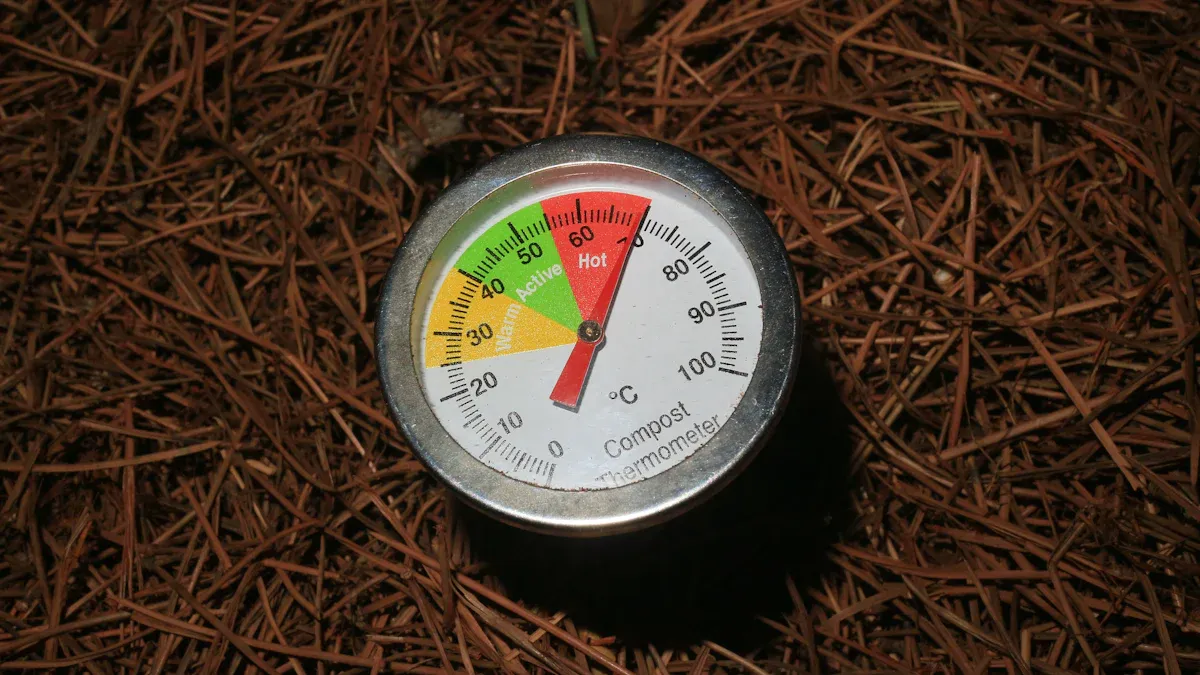
Understanding safe internal temperatures is crucial for cooking various foods. Each type of food has a specific temperature that ensures safety and quality. Here’s a breakdown of the safe internal temperatures for common foods:
Poultry and Eggs
Cooking poultry and eggs to the right temperature is essential to eliminate harmful bacteria like Salmonella. Here are the safe minimum internal temperatures:
Poultry Type | Safe Minimum Internal Temperature |
|---|---|
Whole bird, breasts, legs, thighs, wings, ground poultry, giblets, sausage, and stuffing inside poultry | 165°F (74°C) |
Turkey must be cooked to an internal temperature of 165°F (74°C) to ensure safety.
Cooking at slightly lower temperatures can be safe if maintained for a sufficient duration.
For eggs, the recommended safe temperatures are:
Egg Dish | Safe Temperature | Guidelines for Doneness |
|---|---|---|
Omelets, frittatas and recipes with added liquid | 160°F | Eggs will be thickened with no visible liquid egg remaining. |
Scrambled eggs, fried eggs over easy, over hard, and basted | 144-158°F | Cook until whites are completely set, and the yolks begin to thicken but are not hard. |
Poached eggs | 144-158°F | Cook until the whites are completely set, and the yolks begin to thicken but are not hard. |
To ensure food safety, experts recommend cooking eggs to a minimum temperature of 160°F maintained for 2 minutes or an end temperature of 165°F.
Meats and Ground Meats
Cooking meats to the proper internal temperature is vital for safety. Here are the safe internal temperatures for various meats:
Ground pork should always be cooked to 160°F (71°C).
Ground beef should also reach an internal temperature of 160°F (71°C).
For whole cuts of meat, the safe internal temperatures are:
Meat Type | Safe Internal Temperature |
|---|---|
Beef, Steak or Roast | 145°F (65°C) (rest for 3 minutes) |
Veal | 145°F (65°C) |
Lamb, Chops | 145°F (65°C) |
Pork | 145°F (65°C) |
Seafood and Shellfish
Seafood requires careful cooking to ensure safety. The U.S. Food and Drug Administration (FDA) recommends cooking seafood to an internal temperature of 145°F (63°C). Here are the safe internal temperatures for various seafood:
Seafood Type | Safe Internal Temperature | Notes |
|---|---|---|
Finfish | 145°F (63°C) | Flesh should be opaque and flake easily. |
Shellfish (shrimp, lobster, crab) | Cook until flesh is pearly and opaque | Ensures safety from harmful bacteria. |
Scallops | Cook until milky white or opaque | Should be firm to the touch. |
To prevent foodborne illness, seafood should be cooked to an internal temperature of 145°F for at least 15 seconds. This ensures that the flesh becomes opaque and flaky.
Leftovers and Casseroles
When reheating leftovers, it is crucial to reach the right temperature to eliminate any bacteria that may have developed during storage. The entire mass of all cooked and refrigerated potentially hazardous food must be reheated to at least 165°F (74°C) within two hours. Here are some guidelines:
The USDA Food Safety and Inspection Service advises reheating leftovers until they reach an internal temperature of 165°F (74°C).
Soups and sauces should be heated to a rolling boil for safety.
For casseroles, ensure they reach an internal temperature of 165°F (74°C) for safe consumption. Use an instant-read thermometer to verify the temperature. The edges of the casserole should be bubbling actively, and any visible liquid should be clear.
By following these safe internal temperatures, you can ensure that your meals are both delicious and safe to eat.
Cooking Temperature Guide Essentials
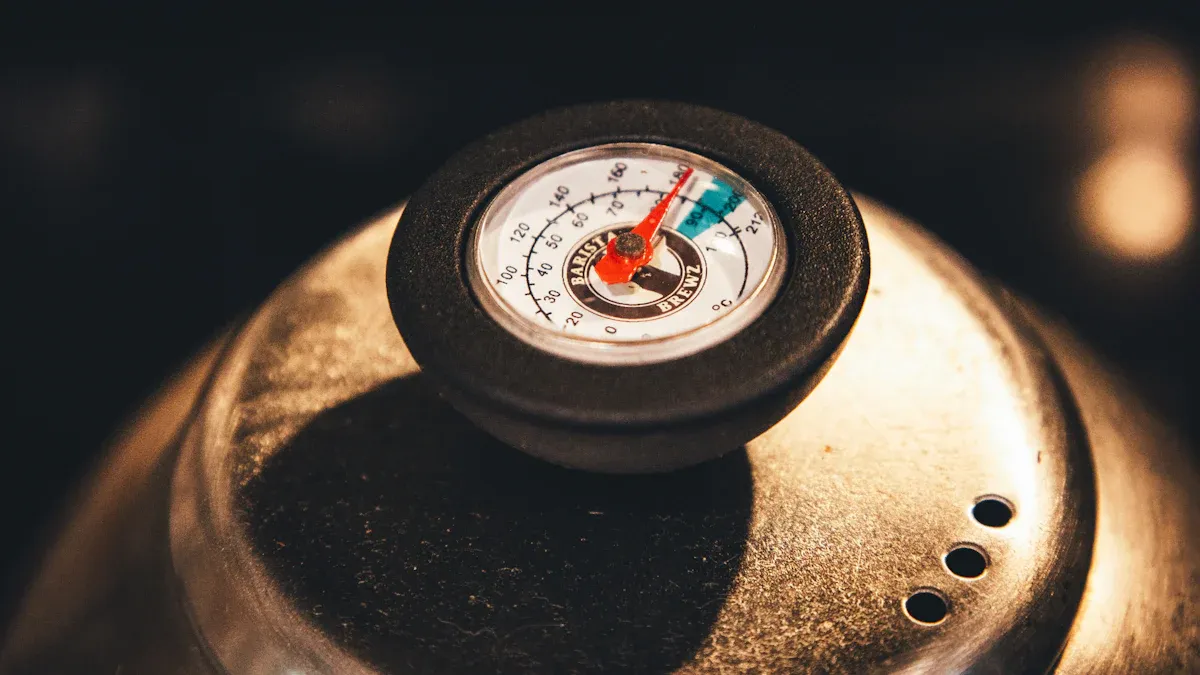
Using a food thermometer is essential for achieving proper cooking temperatures. It helps you ensure that your food is safe to eat and cooked to perfection. Here’s what you need to know about the types of food thermometers and how to use them effectively.
Types of Food Thermometers
You can find several types of food thermometers in home kitchens. Each type serves a specific purpose. Here’s a list of common thermometers:
Thermocouple: Provides fast readings in 2-5 seconds, mostly used in professional settings.
Digital Instant-Read: Popular for home use, gives readings in about 10 seconds.
Infrared: Measures surface temperature but is not suitable for internal checks.
Dial Oven-Safe: Designed to remain in food while cooking, but offers slower readings.
Dial Instant-Read (Bi-Metallic): Common for roasts and casseroles, faster than oven-safe types.
Fridge/Freezer: Monitors air temperature in cold storage.
Disposable Temperature Indicators: Single-use, quick readings for specific temperature ranges.
Pop-Up: Used in poultry, indicates when the food reaches a safe temperature.
Oven Cord: Remains in food while cooking, with the base unit outside.
Liquid-Filled: Traditional type, measures internal temperature but can give false readings.
Candy/Jelly/Deep Fry Thermometers: Measures high temperatures for specific cooking tasks.
How to Use a Food Thermometer
To ensure accurate readings, follow these steps when using a food thermometer:
Insert the probe into the thickest part of the meat, avoiding bone, fat, cartilage, and gristle.
For poultry, check the temperature in two locations: the thickest part of the breast and thigh.
For unevenly shaped meats, check multiple spots with the thermometer.
For thinner cuts, insert the thermometer sideways to avoid inaccurate readings.
Allow enough time for the thermometer to stabilize; instant-read thermometers should be left in for 30 seconds for an accurate reading.
Monitor carryover cooking by checking the temperature as the meat rests.
Tip: Test your thermometer’s accuracy using the boiling point or freezing point method. Adjust the thermometer to match the known temperature. Recalibrate your thermometer regularly to maintain accuracy.
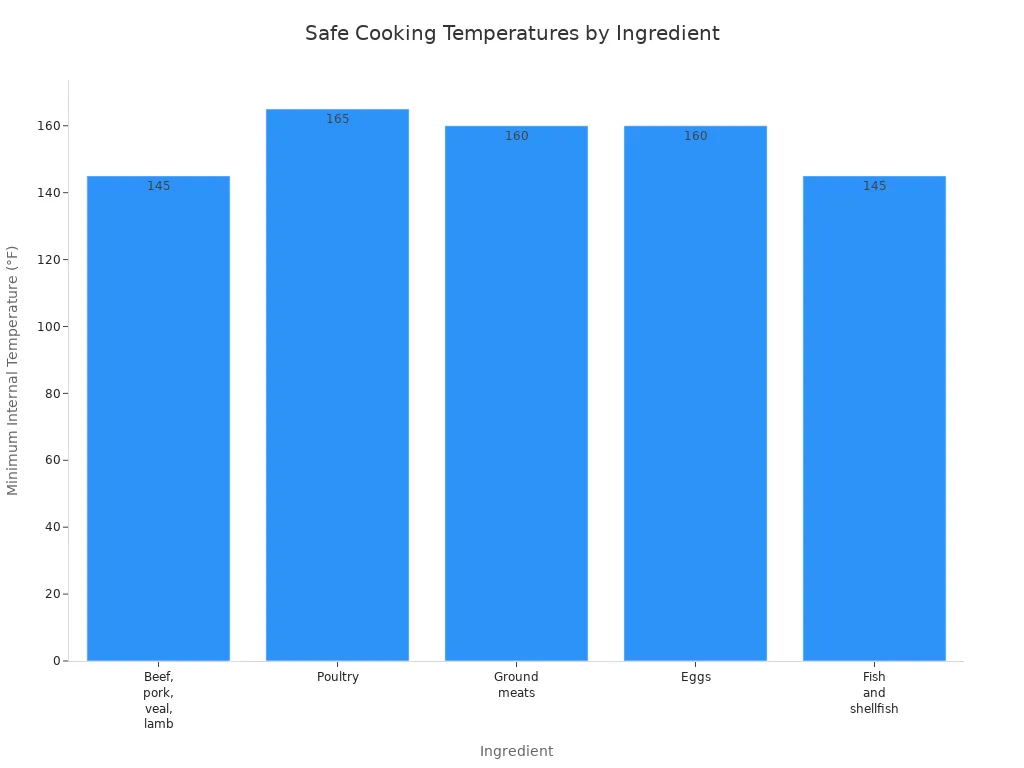
Using a food thermometer can significantly reduce the risk of undercooked food. For example, cook beef, pork, veal, and lamb (steaks, chops, roasts) until they reach 145°F and let them rest for 3 minutes. Ground meats should reach 160°F, while poultry needs to be cooked to 165°F. Following these guidelines ensures that you achieve proper cooking temperatures and enjoy safe, delicious meals.
By understanding the types of thermometers and how to use them, you can enhance your cooking skills and ensure food safety in your kitchen.
Safe Cooking Practices

Cross-Contamination Prevention
Preventing cross-contamination is crucial in your kitchen. It helps keep your food safe from harmful bacteria. Here are some common sources of cross-contamination you should watch out for:
Food-to-food: Raw meat touching cooked meat in storage.
People-to-food: Handling raw meat and then touching cooked food without washing hands.
Equipment-to-food: Using the same cutting board for raw meat and fresh vegetables.
Sponges and towels: These can harbor bacteria due to multiple uses.
Kitchen faucets and stove knobs: Common hiding spots for germs.
To avoid cross-contamination, follow these best practices:
Proper food safety training: Educate everyone in your kitchen about safe food handling.
Store foods and chemicals separately: Keep raw and ready-to-eat foods apart.
Emphasize strict food hygiene: Wash hands and surfaces regularly.
Maintain a regular cleaning schedule: Clean kitchen surfaces and equipment often.
Monitor your operations: Implement a Food Safety Management System to ensure compliance.
Proper Food Storage
Proper food storage is essential for maintaining food safety. Store perishable foods in the refrigerator at or below 40°F (4°C) and in the freezer at 0°F (-18°C) or lower. These temperatures significantly reduce the risk of foodborne illnesses.
Cooked foods should be consumed within three to four days when stored in the refrigerator. This guideline helps prevent spoilage and keeps your meals safe. Always remember to keep ready-to-eat items separate from raw foods.
By following these safe cooking practices, you can ensure that your meals are not only delicious but also safe to eat.
Monitoring cooking temperatures is essential for food safety and quality. Remember these key points:
Cook meats to safe internal temperatures.
Use a food thermometer for accuracy.
Prevent foodborne illnesses with proper practices.
Food Type | Safe Cooking Temperature |
|---|---|
Beef | 145°F (medium-rare) |
Chicken (whole or ground) | 165°F |
Pork | 145°F (with a 3-minute rest time) |
Adopting these practices ensures delicious and safe meals.
FAQ
What is a safe cooking temperature for chicken?
Cook chicken to a minimum internal temperature of 165°F (74°C) to ensure safety.
How can I check if my food is cooked properly?
Use a food thermometer to check the internal temperature. Refer to a temperature cheat sheet for guidance.
Why is it important to use a food thermometer?
A food thermometer ensures your food reaches safe temperatures, preventing foodborne illnesses.