Cooking efficiently saves you time and makes your meals more enjoyable. However, common kitchen mistakes can slow you down and lead to frustration. For instance, not tasting as you go can result in unbalanced flavors, and failing to read the entire recipe might mean missing crucial steps. By recognizing and correcting these mistakes, you can enhance both your cooking speed and the quality of your dishes. So, let’s dive into the kitchen habits that might be holding you back!
Key Takeaways
Always read the entire recipe before cooking. This helps you gather ingredients and understand the steps, leading to a smoother cooking experience.
Use sharp knives for safety and efficiency. Dull knives can cause accidents and slow down your prep time, making cooking frustrating.
Avoid overcrowding the pan. Give your food space to cook evenly and develop flavor, ensuring a delicious meal every time.
Preheat your oven for even cooking. This simple step helps achieve the right texture and prevents food from being undercooked or overcooked.
Practice mise en place by organizing your ingredients before cooking. This saves time and reduces stress, allowing for a more enjoyable cooking process.
Not Reading Recipes
Importance of Preparation
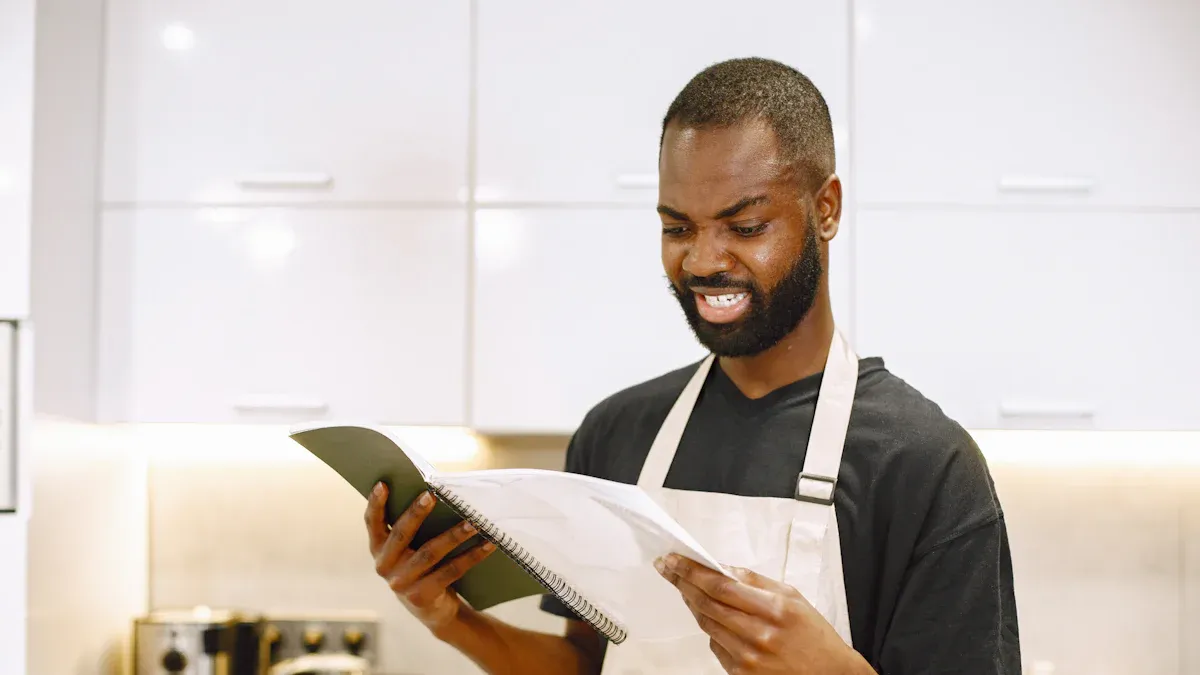
When you step into the kitchen, preparation is key. Reading the entire recipe before you start cooking can make a world of difference. Here’s why:
Grasp Necessary Ingredients: Knowing what you need helps you gather everything beforehand. This way, you won’t find yourself scrambling for missing items while your dish is cooking.
Understand Recipe Terminology: Familiarizing yourself with terms reduces confusion. You’ll feel more confident and less stressed as you cook.
Assess Preparation and Cooking Times: By checking the times, you can choose recipes that fit your schedule. This promotes effective time management and keeps you on track.
Consequences of Skipping Steps
Skipping steps in a recipe can lead to several common kitchen mistakes. Here are some pitfalls to watch out for:
Chaos in the Kitchen: If you don’t gather all your ingredients first, you might end up with meat cooking while you search for spices. This can lead to overcooked or burnt food.
Incorrect Substitutes: Using the wrong ingredient can drastically change the flavor of your dish. This might ruin your meal and waste your time.
Mistakes in the Cooking Process: Not reading the recipe thoroughly can result in errors that affect the overall outcome. You might miss crucial steps that ensure your dish turns out perfectly.
By taking the time to read the entire recipe, you set yourself up for success. Preparation is not just about gathering ingredients; it’s about creating a smooth cooking experience. So, next time you cook, make sure to give that recipe a good read!
Using Dull Knives
Safety Hazards
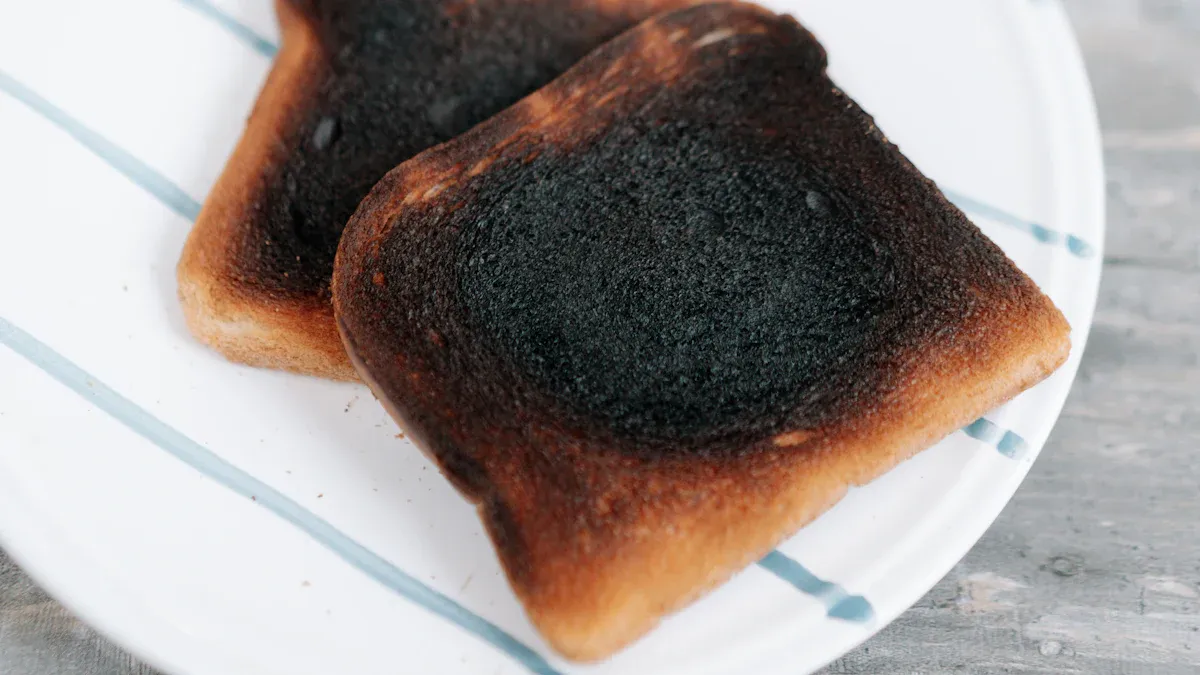
Using dull knives in the kitchen can lead to serious safety issues. When your knife isn’t sharp, you have to apply more pressure to cut through food. This increases the risk of slipping, which can cause accidents. Here are some common safety hazards associated with dull knives:
Dull knives require more force to cut, increasing the risk of slipping and injury.
The need for excessive pressure can lead to loss of control when cutting through tough food.
Poor cutting techniques often arise from using dull knives, raising the chances of accidents.
Hand fatigue and frustration can lead to less careful handling of knives.
When you struggle with a dull knife, you might find yourself holding knives wrong or using unsafe techniques. This can lead to cuts and injuries that could easily be avoided with a sharp blade.
Impact on Cooking Time
Dull knives not only pose safety risks but also slow down your cooking process. A sharp knife allows for faster and more precise cutting, which significantly reduces the time you spend on food preparation. In contrast, dull knives require greater force and effort. This leads to longer preparation times and an increased risk of accidents due to slipping.
Imagine trying to chop vegetables for a stir-fry with a dull knife. You’ll spend more time struggling to get through the food, which can be frustrating. Instead of enjoying the cooking process, you might feel rushed and stressed. By keeping your knives sharp, you can streamline your cooking and make the experience much more enjoyable.
So, take a moment to check your knives. If they’re dull, consider sharpening them before your next cooking session. You’ll notice a significant difference in both safety and efficiency!
Overcrowding the Pan
Effects on Cooking Temperature
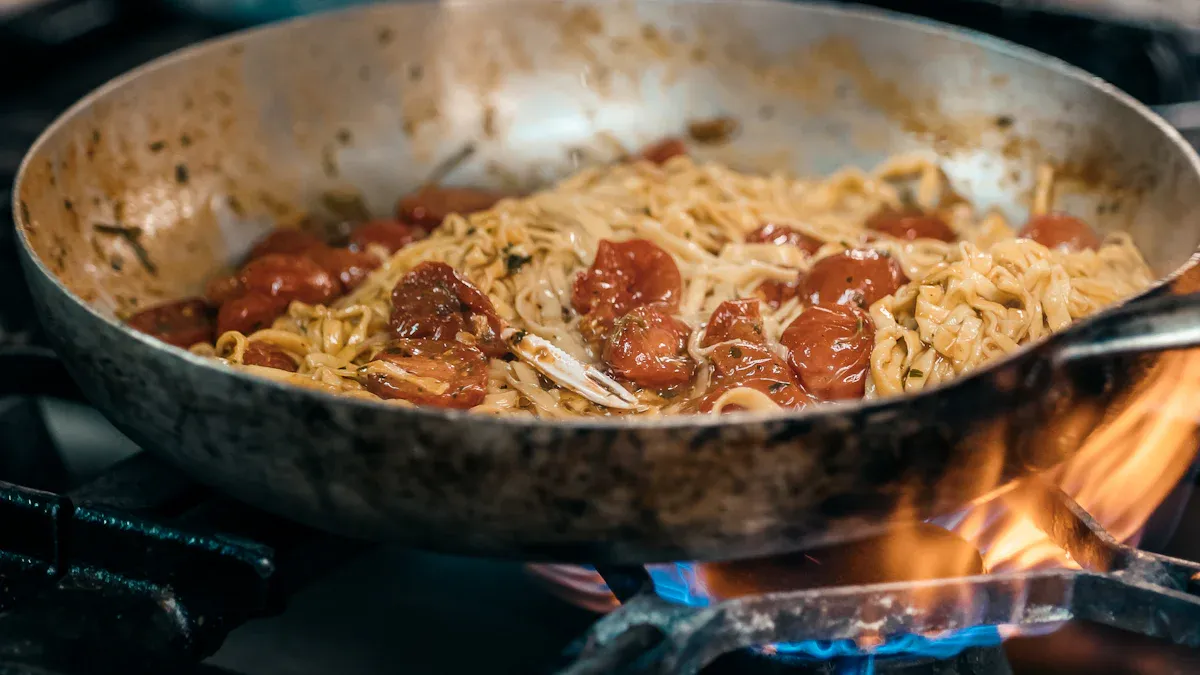
Overcrowding the pan is a common mistake that can lead to burning your foods and ruin your cooking experience. When you pack too much into the pan, several things happen:
Heat Drop: Adding too much food cools the pan, slowing the cooking process. This means your food won’t cook evenly.
Trapped Steam: Moisture from the food can’t evaporate properly, so it steams instead of browning. This results in bland flavors.
No Direct Contact: Without space, food doesn’t get the sear it needs for deep flavor and texture. You miss out on that delicious crust!
Uneven Cooking: Some pieces overcook while others remain underdone. This inconsistency can be frustrating, especially when you’re aiming for a perfect meal.
The Maillard reaction, which is essential for developing flavor, occurs at high temperatures. When overcrowding the pan, water collects at the bottom, preventing the necessary heat for this reaction. As a result, your food may lack the depth and complexity you desire.
Solutions for Better Results
To avoid the pitfalls of overcrowding, consider these simple solutions:
Cook in Batches: This helps maintain temperature and ensures each piece cooks properly.
Keep Food Pieces Apart: Aim for at least an inch of space between items. This allows hot air to circulate and promotes even cooking.
Use Multiple Pans: If you have a lot to cook, don’t hesitate to grab another pan. It’s better than cramming everything into one.
Start with Longer-Cooking Items: Begin with foods that take longer to cook, then add those that require less time. This way, everything finishes at the same time.
By following these tips, you’ll enhance your cooking results and enjoy a more satisfying kitchen experience. Remember, a little space goes a long way in achieving delicious meals!
Not Preheating the Oven
Importance of Even Cooking
Preheating your oven is a crucial step that many people overlook. When you skip this step, you risk uneven cooking and disappointing results. Here’s why preheating matters:
Even Cooking: Starting with a hot oven ensures that your food cooks evenly. If you place food in a cold oven, it can leak liquid instead of steaming, leading to uneven textures.
Better Texture: Foods like cakes and muffins rise better when they start cooking in a preheated oven. This helps achieve that light and fluffy texture you love.
Food Safety: Proper preheating reduces the risk of foodborne illnesses. Cooking food at the right temperature from the start helps kill harmful bacteria.
Here’s a quick look at how not preheating affects different foods:
Food Item | Effect of Not Preheating the Oven |
|---|---|
Cakes | Rise higher and exhibit finer texture due to leaveners having more time to work before the edges set. |
Muffins | Rise higher as leavening agents have more time to act before the batter sets in the heat. |
Quick Breads | Bake more evenly, preventing a tough crust while allowing the center to cook thoroughly. |
Fruit Pies | Brown evenly and beautifully, with thorough cooking of the filling without over-browning the crust. |
Tips for Proper Preheating
To ensure your oven is ready for action, follow these simple tips:
Select the Right Setting: Choose ‘bake’ or ‘broil’ and set the desired temperature. Avoid opening the door during preheating to keep the heat inside.
Adjust for Convection Ovens: If you’re using a convection oven, lower the temperature by 25ºF to account for the different heating method.
Timing is Key: Preheating usually takes about 10-15 minutes for 350ºF. Higher temperatures may require more time.
Use an Oven Thermometer: This tool helps you check if your oven reaches the right temperature. Many modern ovens have built-in indicators, but a thermometer gives you an accurate reading.
Monitor Your Food: Set a timer and keep an eye on your dishes. Rotate them if you notice uneven browning.
By following these tips, you’ll ensure your oven is ready to deliver perfectly cooked meals every time. So, don’t skip that preheating step—it’s essential for achieving delicious results!
Ignoring Mise en Place
Benefits of Organization
When you ignore mise en place, you miss out on some serious benefits that can transform your cooking experience. Here’s why getting organized matters:
Efficiency: Prepping ingredients in advance allows for a smoother cooking process without interruptions for measuring or chopping. You’ll find that everything flows better when you have everything ready to go.
Safety: An organized workspace minimizes the risk of accidents, such as spills and burns. With everything at hand, you can focus on cooking instead of searching for tools or ingredients.
Consistency: Pre-measured and prepared ingredients lead to more uniform flavors and textures. This ensures high-quality results every time you cook.
Professionalism: Adopting this method enhances your culinary skills and instills a sense of discipline, much like what you’d find in professional kitchens.
Time-Saving Techniques
Implementing mise en place can save you a ton of time in the kitchen. Here are some effective techniques to consider:
Technique | Description |
|---|---|
Pre-measuring ingredients | Measure out ingredients in advance to avoid delays during cooking. |
Clean as you go | Maintain a tidy workspace by cleaning during prep, reducing post-cooking cleanup time. |
Timing the cooking process | Start with longer cooking items first to ensure all dishes are ready simultaneously. |
Schedule prep days | Dedicate time to prepare ingredients in advance, such as chopping and marinating, to save time during the week. |
Proper preheating of equipment | Ensure equipment is preheated to achieve optimal cooking results, preventing issues like uneven cooking or burning. |
To make the most of your cooking time, consider these additional tips:
Read your recipe thoroughly to understand each step and gather necessary ingredients and tools.
Gather all tools and equipment before starting to ensure a smooth cooking process.
Prep ingredients by measuring and chopping them in advance for efficiency.
Organize your workspace to keep everything within reach for a more enjoyable cooking experience.
By embracing mise en place, you’ll not only speed up your cooking but also elevate the quality of your meals. So, next time you cook, take a moment to prep those ingredients and enjoy the benefits of an organized kitchen!
Adding Ingredients in the Wrong Order
Importance of Timing
Timing plays a crucial role when you’re adding ingredients during cooking. If you don’t pay attention to when you add each component, you might end up with a dish that’s overcooked or undercooked. Here’s why timing matters:
Texture and Flavor: Different ingredients require varying cooking times. For example, adding delicate herbs too early can cause them to lose their flavor.
Preventing Mistakes: Keeping track of when to add each ingredient can mean the difference between a delicious meal and a kitchen disaster. You want everything to come together perfectly!
How to Layer Flavors Correctly
Layering flavors correctly can elevate your dishes from ordinary to extraordinary. Here are some tips to help you master this technique:
Start with Salt: Salt enhances flavors and is essential for taste.
Add Fat: Incorporating fat adds richness and smooth texture to your meals.
Introduce Acid: Acid brightens dishes and balances flavors, making them more vibrant.
Consider Heat: Different cooking methods alter ingredients chemically, providing unique textures and flavors.
To achieve a balanced flavor profile, follow the 70-20-10 rule. Use 70% foundation ingredients, like onions and garlic, 20% supporting ingredients, such as spices, and 10% accent ingredients, like fresh herbs. This approach helps you avoid overwhelming your palate with too many strong flavors at once.
Also, remember to balance flavor intensities. Strong flavors need equally strong partners. For instance, if you’re using a rich sauce, pair it with something light to create contrast. Lastly, think about texture pairings. Combining crunchy elements with creamy ones can enhance the overall experience of your dish.
By mastering the art of adding ingredients in the right order, you’ll create meals that are not only delicious but also visually appealing. So, next time you cook, pay attention to timing and flavor layering to elevate your culinary skills!
Cooking can be a joy, but common mistakes can slow you down. You’ve learned about the importance of reading recipes, using sharp knives, and preheating your oven. Each of these habits can make a big difference in your kitchen efficiency.
Tip: Take a moment to reflect on your cooking habits. Are there areas where you can improve? Implementing these tips can help you cook faster and enjoy your time in the kitchen more. Happy cooking! 🍳
FAQ
What are some common cooking mistakes to avoid?
Common cooking mistakes include not reading recipes, using dull knives, and overcrowding pans. These errors can lead to uneven cooking and wasted time. Always prepare your ingredients and tools beforehand for a smoother experience.
How can I improve my cooking efficiency?
To improve efficiency, practice mise en place, read recipes thoroughly, and set a timer. Avoid walking away from a hot pan and check on your food regularly to prevent burning or overcooking.
Why is tasting food important while cooking?
Tasting food as you cook helps you adjust flavors and seasoning. It ensures your dish turns out delicious and balanced. Don’t forget to add salt at the right moments for the best results!
How can I prevent kitchen errors?
Prevent kitchen errors by organizing your workspace, measuring ingredients ahead of time, and using a meat thermometer. These steps help you avoid underestimating the amount of time needed for cooking.
What should I do if I forget to set a timer?
If you forget to set a timer, keep an eye on your food and check it frequently. This way, you can avoid overcooking and ensure everything is cooked to perfection.