Cooking can feel overwhelming, especially when you’re just starting out. Mastering basic home cooking techniques, however, can change that. When you learn to chop, sauté, and season, you build confidence in the kitchen. This newfound skill set transforms cooking from a chore into a delightful activity.
Studies show that individuals with better home cooking techniques prepare home-cooked meals more often. They tend to make healthier choices too, especially when it comes to feeding their families. By learning essential kitchen tools and home cooking techniques, you foster creativity and problem-solving skills, making the process of cooking at home enjoyable and fulfilling. So, let’s dive in and explore these fundamental techniques together!
Essential Knife Skills
When you step into the kitchen, having good knife skills can make a world of difference. Not only do they help you prepare meals faster, but they also keep you safe. In fact, improper knife handling leads to many kitchen injuries. In 2012, over 350,000 people suffered lacerations from knives. Dull knives are particularly dangerous because they require more pressure, increasing the risk of slipping and cutting yourself. By mastering knife skills, you can avoid these common pitfalls and enjoy cooking more.
Proper Grip and Handling
To start, let’s talk about how to hold your knife correctly. A proper grip is essential for safety and efficiency. Here’s a simple technique to follow:
Grip Technique: Shape your free hand into a claw. Tuck your four fingers behind your middle finger to stabilize the food. Always keep your fingertips behind the knife edge. This way, you protect your fingers while cutting.
Knife Selection: Begin with three essential knives:
A serrated knife for bread and soft foods.
A chef’s knife for versatile tasks.
A paring knife for detailed work.
Using the right knife for each task makes cutting easier and safer.
Basic Cuts and Techniques
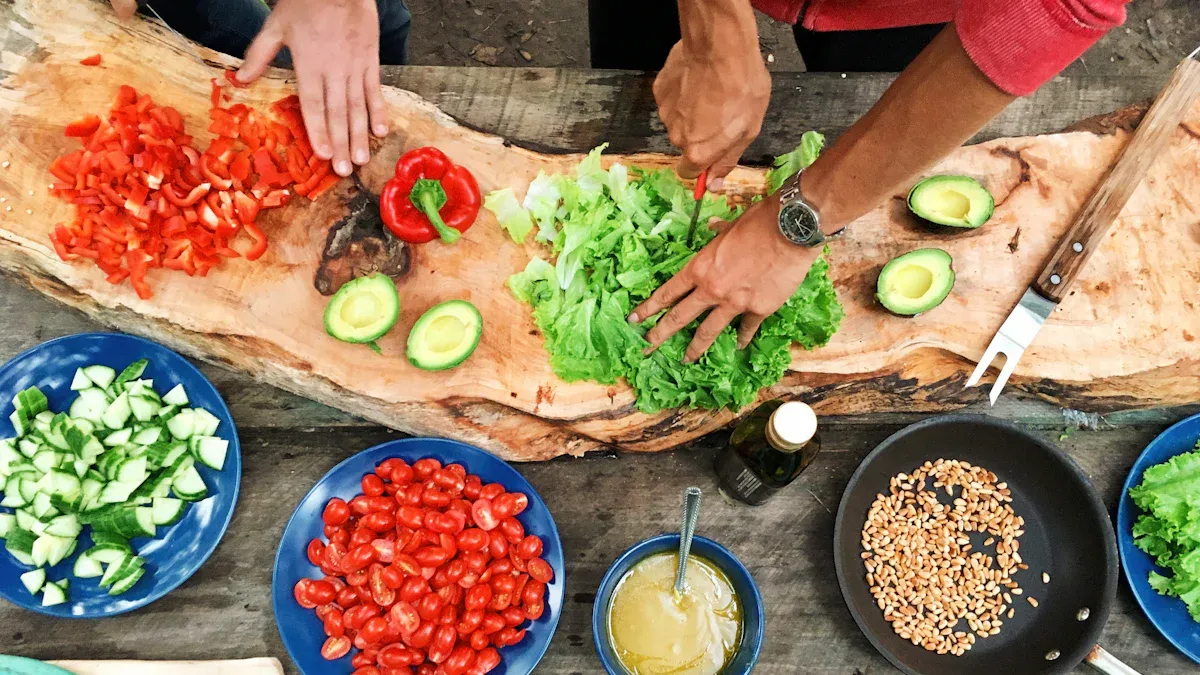
Now that you know how to grip your knife, let’s explore some basic cuts you should learn. These techniques will help you prepare ingredients efficiently:
Slice: Cut food into thin pieces.
Bias Slice: Cut at an angle for a more attractive presentation.
Mince: Chop food into very small pieces.
Dice: Cut food into uniform cubes.
Wedges: Cut food into triangular shapes.
Chiffonade: Roll leafy greens and slice them into thin strips.
Mastering these techniques not only improves your cooking skills but also enhances the quality of your meals. Uniform cuts cook evenly and look more appealing on the plate.
Remember, practice makes perfect! Start with soft foods like cucumbers or cooked potatoes to build your confidence. As you improve, you can tackle tougher ingredients.
Tip: Always use a stable cutting board. This helps prevent accidents and keeps your knife sharp longer.
By honing your knife skills, you’ll find that cooking becomes quicker and more enjoyable. You’ll also feel more confident in the kitchen, allowing you to explore new recipes and techniques.
Common Challenges
As a beginner, you might face some challenges while learning knife skills. Here are a few to watch out for:
Using a dull knife can make cutting harder and more dangerous.
Not using the claw grip puts your fingers at risk.
Cutting on hard surfaces can dull your knives quickly.
Rushing through cuts can lead to accidents.
Using the wrong knife for the job can make tasks more difficult.
By being aware of these challenges, you can take steps to improve your skills safely.
Healthy Cooking Techniques
When it comes to cooking, choosing the right methods can make a big difference in your health. Healthy cooking techniques not only preserve the nutrients in your food but also enhance flavors without adding unnecessary fats. Let’s explore three popular methods: boiling and blanching, steaming, and roasting.
Boiling and Blanching
Boiling and blanching are two cooking methods that involve water, but they serve different purposes.
Boiling: This method cooks food in rapidly bubbling water. While it’s quick, it can lead to nutrient loss, especially for vitamins like C and B complex. If you boil your vegetables for too long, you might lose a significant amount of their nutritional value.
Blanching: This technique involves briefly boiling food and then plunging it into ice water. It helps maintain the color and texture of vegetables while minimizing nutrient loss. Here are some benefits of blanching:
Preserves nutrients better than boiling.
Keeps vegetables vibrant and crunchy.
Prepares ingredients for freezing.
Tip: To get the most out of your vegetables, try blanching instead of boiling. It’s a simple way to keep your food healthy and appealing!
Steaming
Steaming is another fantastic method that retains more nutrients compared to boiling. When you steam vegetables, you cook them with the steam from boiling water, which helps preserve their vitamins and minerals. Here are some key points about steaming:
Steaming retains a higher percentage of β-carotene compared to boiling.
It prevents significant loss of ascorbic acid, which can drop by 9.83% to 70.88% in boiled vegetables.
This method is recommended for maintaining the nutritional quality of your ingredients.
Steaming is not only healthy but also easy. You can use a steamer basket or even a microwave-safe dish with a lid.
Roasting
Roasting is a dry cooking method that uses hot air to cook food evenly. It’s a great way to enhance the natural flavors of your ingredients without adding much fat. Here’s how roasting compares to frying:
Cooking Method | Oil Usage | Calorie Content | Health Risks |
|---|---|---|---|
Roasting | Minimal | Lower | Fewer risks |
Frying | Significant | Higher | Harmful compounds present |
Roasting vegetables and meats can bring out their sweetness and create a delicious caramelized exterior. Plus, it’s a versatile method that works well with various ingredients.
Note: Preheat your oven with a sheet pan to achieve better browning and flavor when roasting.
Incorporating these healthy cooking techniques into your routine can elevate your meals. They help you prepare delicious recipes while keeping your food nutritious. So, next time you’re in the kitchen, consider boiling, blanching, steaming, or roasting your ingredients for a healthier twist!
Master Basic Cooking Techniques
Mastering basic cooking techniques is essential for any beginner chef. These skills not only boost your confidence but also expand the variety of recipes you can create. Let’s explore two fundamental methods: sautéing and stir-frying, as well as simmering and poaching.
Sautéing and Stir-Frying
Sautéing and stir-frying are both quick cooking methods that enhance flavors and textures.
Sautéing involves cooking food in a small amount of oil over medium to high heat. You’ll want to cut your ingredients into small, uniform pieces for even cooking. This technique builds rich flavors quickly, allowing you to experiment with different ingredients.
Stir-Frying, on the other hand, uses very high heat in a wok. You constantly move the ingredients around to ensure they cook evenly. This method is a hallmark of Asian cooking and results in a balanced dish with layers of texture and taste.
Here’s a quick comparison of the two:
Technique | Sautéing | Stir-Frying |
|---|---|---|
Origin | French word ‘sauter’ meaning ‘to jump’ | Hallmark of Asian cooking |
Heat | Medium to high heat, minimal fat | Very high heat in a wok |
Food Movement | Gently moved with a spatula | Constantly moved for even cooking |
Cooking Time | Short, ideal for quick meals | Quick cooking, adding ingredients in stages |
Outcome | Lightly browned exterior, tender interior | Balanced dish with layers of texture and taste |
Simmering and Poaching
Simmering and poaching are gentle cooking methods that help maintain the integrity of your ingredients.
Simmering cooks food in hot liquid at a temperature between 185°F and 205°F. This method allows flavors to meld together, resulting in fork-tender foods. It’s perfect for soups and stews.
Poaching involves cooking food in a slightly cooler liquid, typically between 160°F and 180°F. This technique is great for delicate items like eggs or fish, as it helps maintain their texture without making them mushy.
Here’s a quick look at the differences:
Cooking Method | Temperature Range (°F) | Temperature Range (°C) |
|---|---|---|
Simmering | 185 – 205 | 85 – 96 |
Poaching | 160 – 180 | 71 – 82 |
By learning to master these basic cooking techniques, you’ll find that cooking at home becomes more enjoyable. You’ll be able to whip up delicious home-cooked meals with ease!
Seasoning and Flavoring
Seasoning plays a crucial role in cooking. It enhances the natural flavors of your ingredients and creates balance in your dishes. With the right herbs and spices, you can elevate a bland meal into something extraordinary. Here’s how to get started with seasoning and flavoring your food.
Understanding Herbs and Spices
Herbs and spices are your best friends in the kitchen. They add depth to every bite and can transform your recipes. Here are some key points to remember:
Seasoning enhances natural flavors.
It creates balance in dishes.
The right combination can elevate a bland dish into a masterpiece.
Experimenting with different herbs and spices can lead to delightful discoveries. Don’t hesitate to try new combinations!
Balancing Flavors
Balancing flavors is essential for delicious meals. Here are some basic cooking tips to help you achieve that perfect taste:
Salt: Just a pinch can bring out the natural taste of vegetables, meats, or grains.
Fat: Ingredients like olive oil or butter carry flavor and add richness.
Acid: A splash of lemon juice or vinegar can brighten up your dish.
Heat: Cooking methods like roasting or grilling unlock new layers of flavor.
Aromatics: Ingredients like garlic and onions offer instant depth and aroma.
As a beginner, you might worry about over-seasoning. Remember, it’s generally worse to under-season than to over-season your food. Here are some tips to help you balance flavors effectively:
Taste your dish along the way to adjust flavors as needed.
Season your food at every stage of cooking to build flavors effectively.
Use a clean spoon each time you taste to maintain food safety.
Tasting your dish throughout the cooking process allows you to make adjustments, ensuring that flavors are balanced before serving. This method works particularly well for soups and sauces, which benefit from gradual seasoning.
By learning to season and balance flavors, you’ll create meals that are not only tasty but also enjoyable to prepare. So, get creative and have fun with your ingredients!
Food Safety Basics
Food safety is crucial in cooking. It helps prevent foodborne illnesses, which can be serious. In fact, the CDC reports that the percentage of foodborne disease outbreaks linked to home-prepared food rose from 9% to 12% between 2009 and 2015. This shows how important it is to handle food safely.
Safe Food Handling Practices
To keep your kitchen safe, follow these essential tips:
Wash your hands: Always wash your hands with warm water and soap for at least 20 seconds before and after handling food. This is especially important after touching raw meat, poultry, or eggs.
Clean surfaces: Make sure to wash cutting boards, utensils, and surfaces thoroughly between uses. This helps prevent cross-contamination.
Cook food properly: Use a food thermometer to ensure that meat, poultry, fish, and eggs reach safe internal temperatures.
Chill promptly: Refrigerate or freeze food within 2 hours after cooking or purchasing. This keeps harmful bacteria from growing.
Remember, following the four main steps—Clean, Separate, Cook, and Chill—can significantly reduce your risk of foodborne illness.
Proper Storage Techniques
Storing food correctly is just as important as handling it safely. Here are some tips to keep your food fresh and safe:
Refrigerate at the right temperature: Keep your refrigerator between 35°F and 38°F (1.7°C and 3.3°C) to slow spoilage.
Store raw meat separately: Use a separate container on the lowest shelf to prevent juices from dripping onto other foods.
Use airtight containers: These help keep air and moisture out, preserving food quality.
Freeze excess food: Freezing can extend the shelf life of perishable items.
By practicing safe food handling and proper storage techniques, you can enjoy cooking while keeping your meals safe and delicious!
Mastering home cooking techniques is essential for every beginner. These skills not only make cooking easier but also boost your confidence in the kitchen. Remember the first time you tried to crack an egg? It probably ended up with shell in the bowl. Now, it’s a breeze, right? Each successful dish reinforces your abilities and encourages you to tackle more complex recipes.
To enhance your cooking experience, practice regularly. Here are some tips to help you along the way:
Find reliable recipes online to build your comfort level.
Repeat recipes to improve your skills.
Use resources like YouTube for valuable tips.
By embracing these techniques, you’ll enjoy cooking more and create delicious meals for yourself and your loved ones!