
Everyday cookware and bakeware play crucial roles in your daily cooking and baking. Understanding their specific uses can significantly enhance your culinary experiences. For example, choosing the right pots and pans helps you execute tasks effectively. Different materials, such as aluminum and cast iron, serve distinct purposes that lead to better meal quality. Efficient everyday cookware can save energy while improving food outcomes. Knowing how to select the right tools makes everyday cooking enjoyable and rewarding.
Key Takeaways
Choose the right cookware material, like ceramic or stainless steel, to avoid harmful chemicals.
Understand the specific uses of frying pans and sauté pans for better cooking results.
Use proper cleaning techniques to extend the life of your cookware and bakeware.
Experiment with different bakeware types to enhance your baking outcomes.
Store cookware properly to prevent damage and maintain performance.
Cookware Types
Frying and Sauté Pans
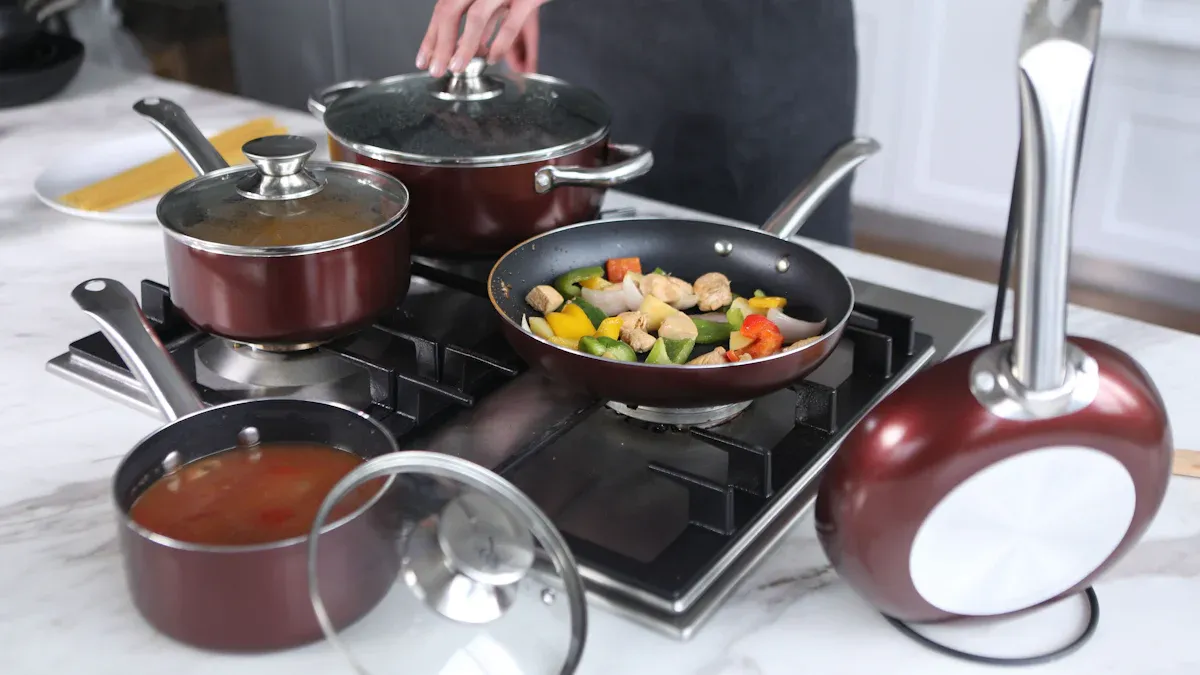
Frying and sauté pans are essential tools in any kitchen. You use frying pans for high-temperature cooking, perfect for searing meats and frying eggs. Their flat bottoms and low sides allow for easy flipping and turning of food. In contrast, sauté pans have higher sides and a wider surface area. This design helps you control heat better, making them ideal for simmering sauces or cooking vegetables.
When selecting between these two, consider the following:
Frying Pan: Best for quick cooking methods like frying and browning.
Sauté Pan: Ideal for dishes that require both searing and simmering, such as chicken in a sauce.
Tip: Use a frying pan for foods that need direct heat, like steaks. Choose a sauté pan for dishes that require liquid, like stir-fries.
Saucepans and Stockpots
Saucepans and stockpots are versatile cookware that you can use for various tasks. A saucepan typically has tall sides and a lid, making it perfect for boiling water, making sauces, or reheating soups. Stockpots, on the other hand, are larger and designed for cooking large quantities of food, such as pasta or stocks.
Here’s a quick comparison of their sizes and uses:
Size (cm) | Capacity (ml) | Recommended Use |
|---|---|---|
14 | 1000 | 1-2 people |
16 | 1400 | 2-3 people |
18 | 2000 | 3-4 people |
20 | 2800 | 5 people |
22 | 3800 | Up to 7 people |
24 | 5000 | Up to 10 people |
Note: Use a saucepan for delicate sauces and a stockpot for hearty stews. The tall sides of a saucepan help prevent boil-overs, while stockpots are perfect for making large batches.
Woks and Specialty Pans
Woks and specialty pans bring unique benefits to your cooking. Woks have a wide, shallow design that allows for quick heating and even cooking. They are perfect for stir-frying, deep-frying, and steaming. The high sides help contain ingredients while tossing them, making it easier to cook larger portions.
Specialty pans, like grill pans or crepe pans, enhance specific recipes. For example, a grill pan gives you those beautiful grill marks on meats and vegetables, while a crepe pan allows you to make thin, delicate crepes with ease.
Feature | Description | Benefit for Cooking Methods |
|---|---|---|
Design | Wide, shallow, and concave shape | Facilitates quick and even heating |
Heat Efficiency | Heats up faster and distributes heat evenly | Ideal for high-heat cooking methods |
Versatility | Suitable for stir-frying, deep-frying, steaming, boiling, and braising | Adaptable for various cooking techniques |
Tip: Use a wok for quick meals that require high heat. Specialty pans can elevate your cooking by allowing you to explore different cuisines.
Bakeware Essentials
Baking Sheets and Pans
Baking sheets and pans are fundamental in any kitchen. You can use them for various tasks, such as baking cookies, roasting vegetables, or preparing sheet cakes. Here are some common uses for baking sheets and pans:
Baking cookies and biscuits on flat cookie sheets.
Using half-sheet pans for larger batches of cookies or scones.
Employing smaller eighth-sheet pans for quick tasks like toasting nuts.
When selecting baking sheets, consider the material. Aluminum pans are popular because they conduct heat well, ensuring even baking. Experts recommend bare aluminum for its efficient heat conduction and quick cooling properties. This choice helps achieve perfect browning on your baked goods.
Muffin and Cake Pans
Muffin and cake pans serve different purposes in baking. Muffin pans are designed for baking muffins, cupcakes, and even savory items like egg cups. They often come with nonstick finishes for easy release. You can find them made from materials like aluminum or silicone, each offering unique benefits.
Cake pans, on the other hand, need to heat evenly over time. This feature minimizes doming, which aids in stacking and frosting. Professional bakers suggest using nonstick pans for both muffins and cakes. This choice ensures easy release and consistent baking results.
Casserole Dishes
Casserole dishes are perfect for one-pot meals and baked recipes. They allow you to cook stews, casseroles, and even baked pasta dishes. Their design minimizes washing up, making cleanup easier. You can use them on the stovetop and in the oven, which adds versatility to your cooking.
When choosing casserole dishes, consider the material. Glass and ceramic options are popular for their durability and heat resistance. Enameled cast iron dishes are also excellent for high-heat cooking. They retain heat well and provide even cooking, making them ideal for hearty meals.
Healthy Cookware Options
Non-Stick Cookware
Non-stick cookware offers convenience in the kitchen. You can easily cook without food sticking to the surface. This feature makes cleanup quick and simple. However, not all non-stick options are created equal. Some traditional non-stick coatings, like Teflon, can pose health risks. When overheated, Teflon can release harmful chemicals, leading to concerns about long-term safety.
Here are some benefits and drawbacks of non-stick cookware:
Benefits of Non-Stick Cookware | Drawbacks of Non-Stick Cookware |
|---|---|
Effortless food release | Heat limitations |
Durability | Coating concerns |
Easy cleanup | |
Versatility | |
Affordability |
To ensure safety, consider alternatives like ceramic-coated non-stick cookware. These options are often PFAS-free and do not leach harmful substances into your food.
Cast Iron and Carbon Steel
Cast iron and carbon steel cookware are excellent choices for health-conscious cooking. They provide a natural non-stick surface when seasoned properly. Cooking with cast iron can even increase your dietary iron intake. Studies show that acidic foods cooked in cast iron can absorb iron, which is beneficial for those with iron deficiencies.
Here are some advantages of using cast iron and carbon steel:
Cooking with cast iron increases iron intake, especially when cooking acidic foods.
Cast iron cookware does not contain harmful chemicals found in many modern non-stick pans.
It provides even heat distribution, preserving vitamins and preventing overcooking.
Cooking with cast iron enhances flavor and texture, creating a crispy layer on foods.
Carbon steel cookware also allows for small amounts of iron to leach into food, which can be advantageous for individuals with iron deficiencies.
Both materials are durable and environmentally friendly, reducing the need for frequent replacements. They can last a lifetime with proper care, making them a wise investment for your kitchen.
Maintenance Tips
Cleaning Techniques
Proper cleaning techniques can significantly extend the lifespan of your cookware and bakeware. Here are some effective methods you can use:
Vinegar and Baking Soda Method: Mix 2 tablespoons of white vinegar with 1 tablespoon of baking soda and 1 cup of water. Bring this mixture to a boil, then reduce the heat and simmer for 5 minutes. Let the pan cool, rinse, and wash with soap and water.
Soap and Water Method: Use mild dish soap and warm water. A soft sponge or cloth works best to scrub away food residue. Rinse thoroughly and dry with a towel.
Baking Soda and Dish Soap Method: Create a paste with baking soda and dish soap. Apply it to burnt or sticky areas and let it sit for several hours. Wash with soap and water, then dry.
Tip: Always allow your cookware to cool before cleaning. This prevents warping and damage.
Storage Solutions
Storing your cookware and bakeware properly can prevent damage and prolong their usability. Here are some best practices:
Use pot protectors to cushion your cookware and prevent scratches.
Implement drying mats to streamline cleanup and maintain cleanliness.
Organize your cookware with dedicated storage solutions to save space and avoid damage.
Improper storage can lead to issues like bacterial growth and compromised performance. Ensure that your kitchen tools remain clean and accessible to prevent cross-contamination during food preparation. Regularly clean your cookware with appropriate cleaners to avoid damage and maintain their quality.
Note: Frequent temperature changes can cause thermal stress, leading to material fatigue. Store your cookware in a stable environment to avoid these issues.
By following these maintenance tips, you can keep your cookware and bakeware in excellent condition, ensuring they serve you well for years to come.
Choosing the right cookware and bakeware is essential for successful cooking and baking. Here are some key takeaways to consider:
Material Choice: Opt for ceramic nonstick or stainless steel to avoid harmful chemicals.
Health Considerations: Avoid traditional nonstick coatings that release harmful compounds.
Maintenance Tips: Proper care extends the life of cookware; for example, hand wash nonstick pans and avoid temperature shocks.
Experimenting with different types can also improve your cooking outcomes. For instance, metal pans create crisper exteriors, while glass bakeware ensures even baking. By exploring various options, you can enhance your culinary skills and enjoy delicious meals.
Tip: Don’t hesitate to try new cookware and bakeware. Each type can bring unique benefits to your kitchen adventures! 🍳
FAQ
What is the best material for everyday cookware?
You should consider stainless steel or ceramic cookware for everyday use. Both materials offer durability and even heat distribution. Ceramic cookware is non-reactive and safe for cooking acidic foods.
How do I choose the right size of cookware?
Select cookware based on the number of servings you typically prepare. For small meals, use smaller pans. For larger gatherings, opt for bigger pots or pans to accommodate your needs.
Can I use metal utensils on ceramic cookware?
Avoid using metal utensils on ceramic cookware. Metal can scratch the surface and damage the non-stick coating. Instead, use silicone or wooden utensils to preserve the integrity of your cookware.
How do I maintain my ceramic cookware?
To maintain your ceramic cookware, hand wash it with mild soap and a soft sponge. Avoid abrasive cleaners. Store it carefully to prevent chips and scratches.
Is ceramic cookware safe for high-heat cooking?
Ceramic cookware is generally safe for high-heat cooking, but check the manufacturer’s guidelines. Some ceramic cookware can withstand high temperatures, while others may not. Always follow the recommended temperature limits.